Overweight indoor cats often find it tough to stay active, especially when their environment is the same every day. Lack of movement can contribute to unwanted weight gain, which is more than just a cosmetic issue. Obesity in cats can increase the risk of diabetes and mobility problems such as osteoarthritis. [1]. The good news is that indoor cat exercise doesn’t have to be boring or stressful. Games for obese cats can feel just like play, and I’ve found plenty of practical activities that work for cats with different ages and personalities. For a step-by-step breakdown on why exercise is so important and how to create a plan, check out my guide on how to help overweight cats exercise before jumping into new games.
Why Indoor Play Is Important for Overweight Cats
According to 2021 AAHA/AAFP Feline Life Stage Guidelines, although an indoor lifestyle protects cats from many outdoor hazards, it can also contribute to obesity, behavioral problems, and poorer welfare when opportunities for physical activity and mental stimulation are limited. Providing an enriched environment—including interactive play—is essential for maintaining both physical and psychological well-being. [1]
The AAFP-AAHA Feline Life Stage Guidelines note that reduced play activity can make cats more prone to weight gain. The guidelines also cite a study in which cats that participated in three daily play sessions lasting 10–15 minutes each lost about 1% of their body weight over one month without any dietary restrictions. [1,2]
A lot of people notice that their indoor cats burn far fewer calories than outdoor cats, sometimes spending most of the day snoozing on the couch. Play is more than just fun; it’s a way for cats to mimic hunting, which not only gets them moving but also challenges their mind. [3] When my cat is bored, I’ve noticed he tends to snack more or bug me for treats. Keeping him busy with mental stimulation is a simple way to avoid boredom-related eating.
Regular activity doesn’t just burn calories. It helps cats build up their muscles, move more easily, and even gives a boost to their confidence. For overweight cats, even a little more movement each day goes a long way. Short, enjoyable play sessions can be more effective and less stressful than one long workout. My cat always appreciates a quick game spread throughout the day rather than being pushed to play for a long stretch.
Before You Start Playing
If your cat has arthritis, heart disease, or any other health concerns, it’s really important to talk to your veterinarian before starting any new exercise routine. Overweight cats can tire easily, so start with short sessions lasting five to ten minutes. Make sure to let your cat rest whenever they show signs that they had enough. They may show signs that they have had enough, such as panting after intense activity or refusing to keep going. If your cat pants, stop the session and allow them to rest. If the panting does not quickly resolve or occurs without an obvious reason, contact your veterinarian. Recognizing these cues signals cat owners that it’s time to stop and let the cat take a break.
Gradual improvement is safer and more comfortable for cats than pushing for big changes all at once. Watching for small signs of progress helps keep motivation up. Stay patient and celebrate even little wins. Also, monitoring changes in your cat’s attitude and comfort levels can help you adjust your approach to fit their needs better over time. If you’re not sure where to start, your veterinarian can help you tailor an activity plan just right for your cat’s current health status.
Best Indoor Games for Overweight Cats
Different cats enjoy different styles of play. I experiment with a variety of games to find what sparks the most excitement in my own cats. Here are some indoor cat exercise ideas that are especially good for heavier or less athletic cats. These options can be mixed and matched to match your cat’s mood or physical abilities, keeping things new.
Wand Toy Chase
The AAFP and ISFM Feline Environmental Needs Guidelines recommend interactive play that mimics natural hunting behaviors to help keep cats physically active and mentally stimulated. [3]
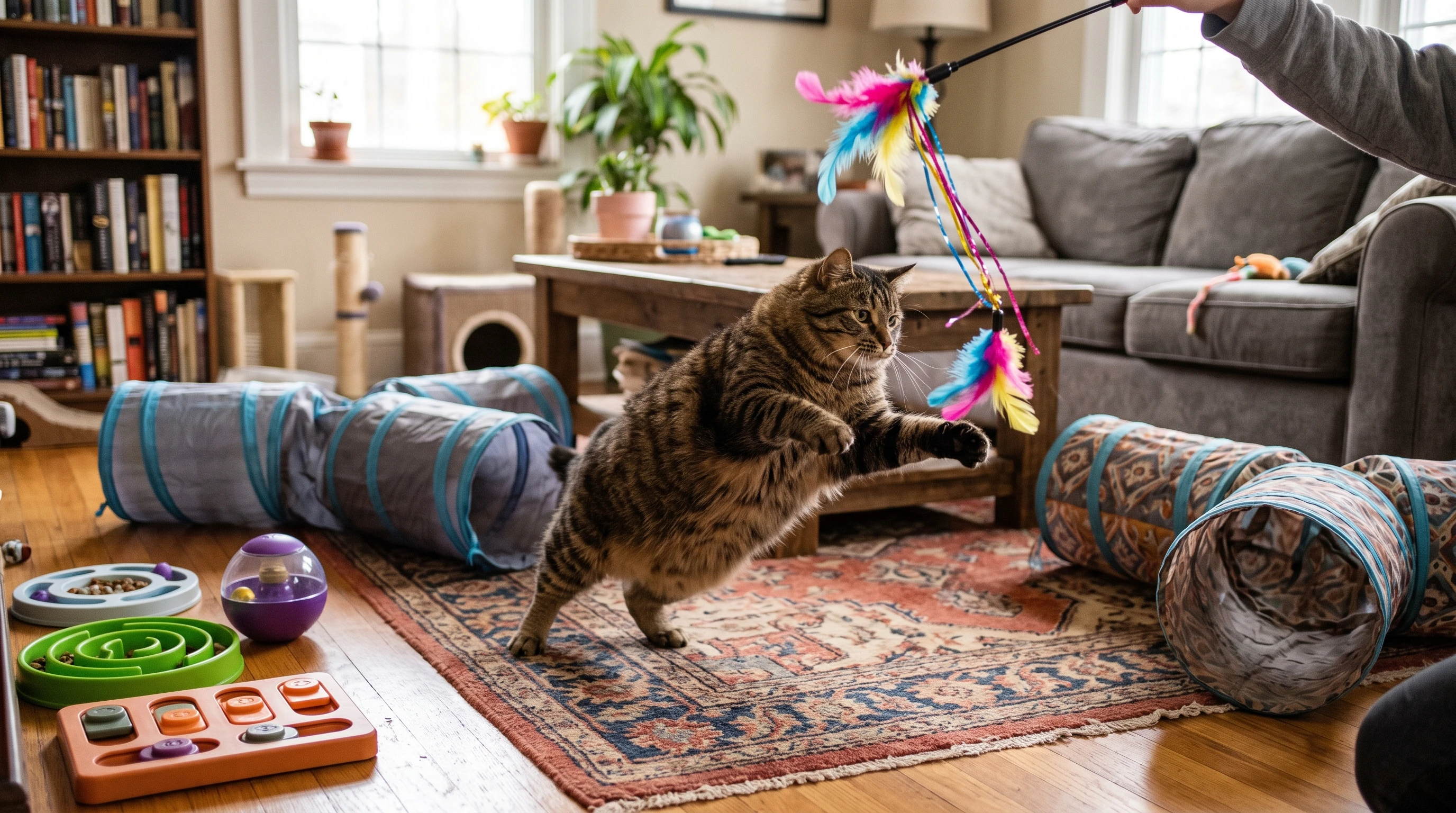
Wand toys work great by mimicking the movements of flying prey, like birds or insects. My trick is to encourage stalking first, since it stimulates both the mind and body. Keeping the toy close to the ground helps cats who are less eager to jump. I avoid dangling it too high or making my cat leap repeatedly, which keeps the game fun and safe. Sometimes, changing the speed or direction of the toy can reignite a cat’s interest and make playtime a bit more exciting and interesting.
Treat Treasure Hunt
You can try to hide small pieces of dry food or special treats around the house. Early on, you may want to pick obvious hiding spots so your cat gets the idea. Once they understand, you can try gradually making things more challenging. This game keeps cats moving and thinking, and it slows down mealtime, which can make feeding more engaging for cats trying to manage their weight. Try to rotate the hiding spots or use different rooms for extra variety. For this activity, owners may opt to use foraging toys, paper plates, empty toilet paper rolls, or even paper bags. Be as creative as you want!
Puzzle Feeders
Meal times become an opportunity for enrichment with puzzle feeders. The cat works for every kibble, which naturally slows their eating pace and provides mental stimulation. [3] I recommend starting with simple puzzle feeders before moving to more complex ones. Every cat learns at a different pace, and the goal is to create a positive experience. For shy or less confident cats, make sure the puzzle is easy at first to build curiosity and prevent frustration.
Cardboard Box Adventure
Old boxes can get a new life in any home. You can cut holes and windows to create tunnels, then hide toys or a sprinkle of treats inside. I’m sure any cat would love exploring these homemade forts, which encourages movement and satisfies curiosity without any additional cost involved. Change up the box arrangement now and then to keep the adventure fresh and spark even more exploration.
Ball Chase
Soft balls, ping pong balls, or pompoms are easy to roll down the hallway. Rather than throwing them, I roll so my cat can pounce and chase at her own speed. For timid cats, I keep the activity gentle and cheerful, encouraging them to try to play. You can even create a mini “goal” using a shoebox for your cat to score points!
Laser Pointer Games (Used Correctly)
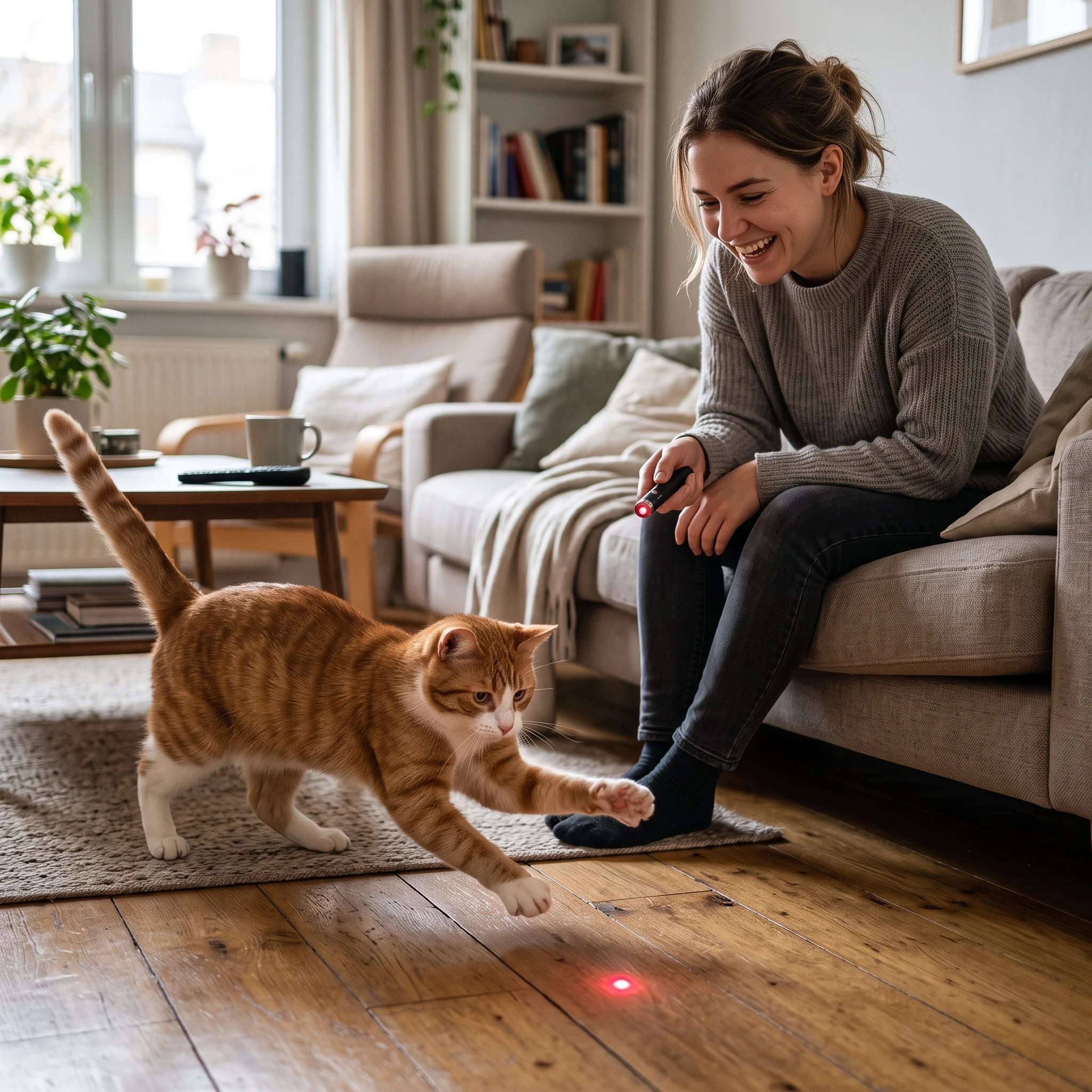
Laser pointers are a big hit among cats, but try to move the dot in smooth, realistic motions that mimic the movements of prey. Once your cat’s interest is at its highest, switch to a real toy or offer a treat for them to catch at the end. This helps make the game more satisfying. The 2024 AAFP Intercat Tension Guidelines note that laser pointers can cause frustration if a cat cannot “catch” something at the end of play. [4]
Make sure you never shine the pointer directly into or near your cat’s eyes, and always watch your cat’s reactions closely.
Stair Games (If Safe)
If you have stairs and your cat is healthy enough, gently tossing a soft toy onto the first or second step encourages a little bit of climbing. Never force a cat to keep running up and down, and avoid stairs entirely if the cat has joint problems. For some cats, even walking up and down one or two steps is quite enough. Gradually making the game a bit more dynamic can help if your cat seems to enjoy the challenge.
DIY Obstacle Course
Using pillows, boxes, blankets, and tunnels, build a simple course that encourages your cat to weave, crawl, or walk around. The focus stays on gentle movement, not big jumps, so even overweight or older cats can join in. Letting your cat lead the way and explore the course at their own pace builds confidence and makes the game more interactive.
Toy Rotation Day
Cats get bored easily when the same old toys are always out. I find that rotating my cat’s toys each week keeps things fresh. Only keeping a few out at a time makes each new toy extra exciting when it reappears. If you add new textures or scents by putting toys in a bag with a little catnip for a day, it helps make them even more appealing.
Catnip or Silvervine Play Session
Some cats become more playful after being exposed to catnip or silvervine, making playtime more engaging. Since not every cat responds to these plants, introduce them in moderation and observe your cat’s reaction. If your cat becomes overly excited or loses interest, simply end the session and let them settle down. Make sure to offer fresh water afterwards.
Read more: 20 Indoor Activities To Keep Your Cat Entertained: DIY Cat Playtime Activities
Puzzles And Challenges For Indoor Cats
How Long Should Overweight Cats Play?
You should aim for several short play sessions every day, beginning with five to ten minutes and slowly working up. What matters more is being consistent. [1,2] Over time, little bursts of movement add up to steady, healthy weight loss. I always try to remind myself that progress is gradual, and there’s no need to rush. Checking in with your veterinarian during routine appointments can help keep your cat’s exercise and weight goals on track.
Tips to Keep Your Cat Interested
Keeping playtime new and exciting makes a real difference. I highly suggest rotating between toys, making sure the cat is having fun and is mentally stimulated, and being sure to offer plenty of praise. Matching games to my cat’s personality keeps things fun for both of us, and I find that playing before meals lines up with the natural “hunt-eat-groom-sleep” cycle that cats naturally follow. If my cat loses interest quickly, I try switching up the style of play or even the room to recapture his curiosity.
Support Exercise With Proper Hydration
As any cat becomes more active, be sure to watch his water intake closely. [5] Wet food can help boost moisture, especially if the cat isn’t a regular drinker. Water fountains encourage some cats to drink more, and placing water bowls in several spots makes water easy to find. [5] For more tips on this, check out my Water Intake Guide for Cats. There, I share practical ways to help your cat stay well-hydrated. If your cat seems to be drinking less after new activities, try tweaking their water bowl setups, or you can also talk to your vet for advice on promoting healthy hydration.
Common Mistakes to Avoid
- Starting with play sessions that last too long
- Using only one toy, which results in your cat getting bored rather quickly
- Handing out too many treats during games
- Expecting your cat to lose weight quickly
- Ignoring your cat’s need for rest
- Pushing your cat to play when they’re not interested
Paying attention to these issues helps any cat owner keep playtime fun and prevents setbacks. Adjusting your routine based on your cat’s mood and energy makes playtime a positive, low-stress activity for both of you. Avoiding common traps like overfeeding treats or ignoring fatigue can mean better long-term success.
Frequently Asked Questions
How many times a day should I play with my overweight cat?
Try to aim for several short play sessions a day. Even five minutes each time can add up and help provide more daily activity. [1,2] As your cat gains stamina, you can add sessions or make existing ones a little longer.
What if my cat refuses to play?
Some cats are reluctant at first, especially if they’ve been inactive. Try different types of toys, use treats for motivation, or sometimes just placing an interactive toy on the floor to pique their interest. Gradual encouragement usually pays off over time. Being patient and tuning in to your cat’s preferences helps playtime become something they look forward to each day.
Are laser pointers safe for overweight cats?
Laser pointers can be used safely when you avoid fast, erratic movements, never point the laser at their eyes, and always end with a real toy or treat so the cat doesn’t feel frustrated by the “uncatchable” dot. [4] Make sure the sessions are short to reduce overexertion. Monitor your cat for any signs of frustration or tiredness and adjust accordingly.
Can older overweight cats still play?
Older cats often enjoy gentle games. Make sure to pay close attention to their comfort, use low-impact activities, and check in with the vet if you have any concerns. Simple games like slow wand toy movements or easy treat hunts on flat surfaces work well for seniors. Always adapt activities to your cat’s current mobility.
Which toys burn the most calories?
Toys that encourage full-body movement, like wand toys and rolling balls, can provide more opportunities for physical activity than toys that involve little movement. The key is to keep your cat interested and moving at their own pace so the routine remains a positive experience for them.
Every bit of movement really matters for indoor cats that need to shed a few pounds. Always focus on making exercise feel like play, helping your cat feel happy and confident. Trying out different indoor games for overweight cats, adjusting as you go, and supporting activity with healthy food and hydration have proven to be a winning strategy for many cat owners. Regular play not only makes your cat fitter but also deepens your bond and brings more joy into your daily routine.
References
1. Quimby, J., Gowland, S., Carney, H. C., DePorter, T., Plummer, P., & Westropp, J. (2021). 2021 AAHA/AAFP feline life stage guidelines. Journal of Feline Medicine and Surgery, 23(3), 211–233. https://doi.org/10.1177/1098612X21993657
2. Clarke, D. L., Wrigglesworth, D., Holmes, K., Hackett, R., & Michel, K. (2005). Using environmental and feeding enrichment to facilitate feline weight loss. Journal of Animal Physiology and Animal Nutrition, 89, 427. https://doi.org/10.1111/j.1439-0396.2005.00611_1.x
3. Ellis, S. L. H., Rodan, I., Carney, H. C., Heath, S., Rochlitz, I., Shearburn, L. D., Sundahl, E., & Westropp, J. (2013). AAFP and ISFM feline environmental needs guidelines. Journal of Feline Medicine and Surgery, 15(3), 219–230. https://doi.org/10.1177/1098612X13477537
4. Rodan, I., Ramos, D., Carney, H., DePorter, T., Horwitz, D. F., Mills, D., & Vitale, K. (2024). 2024 AAFP intercat tension guidelines: Recognition, prevention and management. Journal of Feline Medicine and Surgery, 26(7). https://doi.org/10.1177/1098612X241263465
5. Cornell Feline Health Center. (2021). Hydration. Cornell University College of Veterinary Medicine. https://www.vet.cornell.edu/departments-centers-and-institutes/cornell-feline-health-center/health-information/feline-health-topics/hydration