
Caring for my cats’ hydration is one of those areas that truly makes a big difference in their long-term health. I’ve seen how easily water needs for cats can be misunderstood, especially since cats often seem uninterested in their water bowl. In this guide, I’m sharing how to help your cat stay hydrated, how much water they actually need, and what you can do if they just won’t drink enough.
Why Cats Don’t Tend to Drink a Lot of Water
I often notice that cats drink much less water than many other pets. According to VCA, this goes back to their wild ancestry. Cats originally evolved as desert animals, so their bodies are super efficient at conserving water. In the wild, a cat’s water mostly comes from the small prey they hunt, like rodents and birds, which are typically about 60% to 70% water. Domestic cats have inherited this same tendency. If your cat eats lots of dry food, though, they might not be getting the moisture their body needs. That’s a big reason why cats can easily get dehydrated. [1]
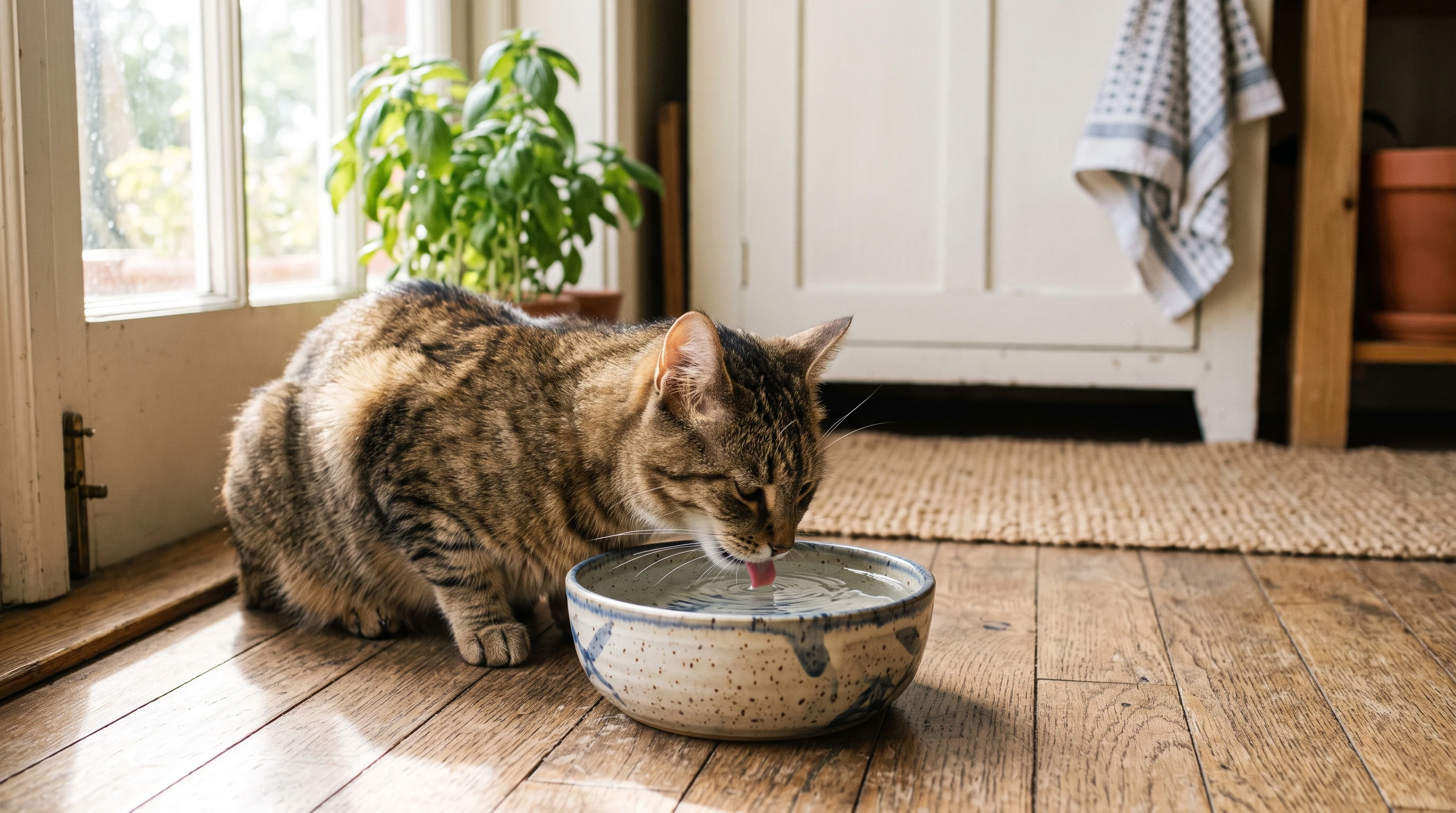
Some cats just don’t seem interested in their water bowl. I’ve noticed that many prefer running water, like the kind they’d find in nature, instead of still water. The material and cleanliness of both the water and water bowl also matters. A shallow, clean, ceramic or glass bowl placed away from food and litter often gets more use. If your cat ignores their water, adjusting these small things can help a lot.
How Much Water Your Cat Should Have Each Day
The right amount of water for a cat depends on their weight, diet, and age. A healthy adult cat should usually consume about 60 milliliters (roughly two ounces) of water per kilogram (2.2 pounds) of body weight every day. For example, a 4-kilogram (about nine-pound) cat should get about 240 milliliters (eight ounces) of water daily. That includes all the water they get from their food along with what they drink from their bowl or fountain. [2]
Cats that eat only dry food are at greater risk of not getting enough water, since dry kibble contains less than 10% moisture. According to Cornell Feline Health Center, wet food can contain up to 80% water. If a cat eats wet food, they will tend to drink a bit less, since the meal provides more hydration. [1, 2]
Weather and activity level can also mix things up, but aiming for about one cup (eight ounces) per average-sized cat is a helpful estimate. [2]
Ways to Tell If My Cat Is Drinking Enough Water
My best tool for tracking hydration is observation. I watch for several signs to check if my cat is drinking enough. Some helpful cues include:
- Urine Output: I keep an eye on my cat’s normal litter box habits and watch for noticeable changes in urine output or concentration.
- Skin Elasticity: If I gently pinch the skin over their shoulders, it should quickly return to normal. Slow skin snapback can mean dehydration. [3]
- Gum Condition: Healthy cat gums feel moist and slippery, not sticky or dry. [3]
- Energy and Appetite: A well-hydrated cat is alert, interested in food, and playful. [3]
If I notice more concentrated urine or see them visiting the water bowl but not drinking, it’s a sign to watch closely. Constipation, dry stools, or vomiting are also hints that a cat could use more hydration.
Can Cats Get Enough Water from Wet Food Alone?
Many cats can meet a big part of their fluid needs through wet food, especially if they eat it exclusively. Canned foods usually have 70% to 80% water, making each meal a reliable source. In my experience, a cat on wet food may not drink much from the bowl at all but still stays healthy and hydrated. [1, 4] For a three-ounce can of wet food, there’s about 2.5 ounces (75 milliliters) of water already in it. If your cat eats two cans each day, they’re getting about 150 milliliters from food. Subtract that from their overall needs and you’ll see that wet food gives most cats a solid head start.
Still, it’s important to always offer fresh water. Cats on a mix of wet and dry foods, or who eat mostly dry food, need to drink more water on their own to stay balanced. For these cats, encouraging water intake supports their kidneys and urinary tract health. [1, 5]
What I Do to Encourage My Cat to Drink More Water
Sometimes, despite my efforts, I simply can’t monitor all my cats to see if they’re getting enough water. If you’re in the same situation, or simply finding ways to help ensure your cat stays hydrated, there are practical ways to help them drink more. [1, 5] Here are a few tips that have worked for me:
- Use Multiple Bowls: I put a few water bowls around the house, so my cats always have options within reach.
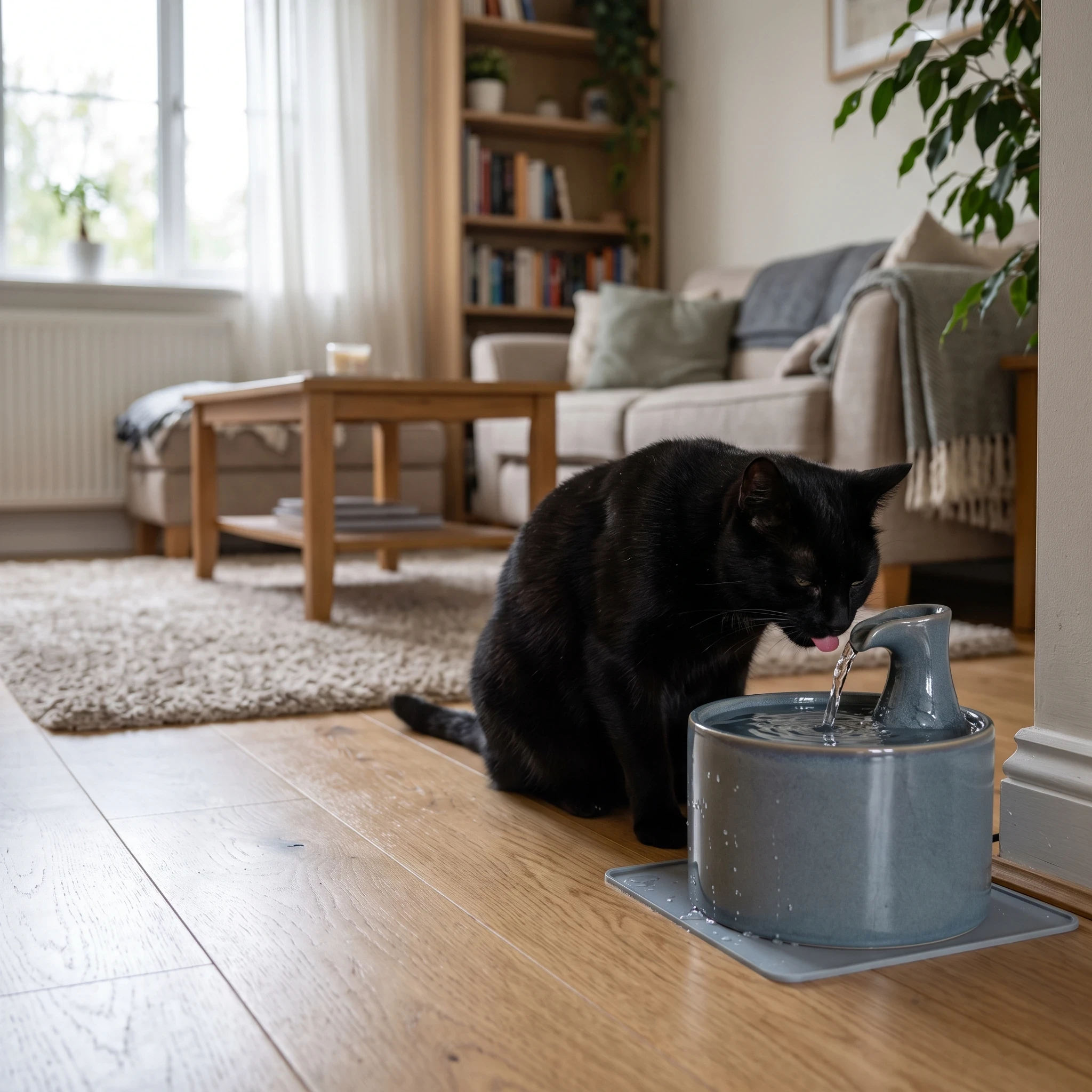
- Try a Pet Fountain: Many cats are drawn to moving water. Fountains keep it fresh and interesting.
- Vary Bowl Materials: Glass or ceramic bowls are usually preferred over plastic, which can hold on to smells.
- Move Water Away from Food and Litter: My cats like their water far from their food and litter box. This seems to make a difference.
- Keep Water Fresh: I change the water at least once or twice daily, especially if the cats have been playing nearby or if the bowl is in a sunny area.
- Mix Water with Food: Adding a splash in their food, wet or dry, softens kibbles and gives them hydration in a different form.
Switching up wet food flavors or offering cat-friendly broths (unsalted and without onions or garlic) can also tempt even a hesitant cat to lap up a little more liquid. [1] Each cat has their own preferences, so I like to experiment with what works best.
How to Rehydrate a Cat Quickly
If I think my cat is at risk of dehydration, like after illness, vomiting, diarrhea, or a heat wave, I focus on fast options to help them hydrate. Here’s what usually makes the biggest difference: [1, 3]
- Offer Wet Food or Broth: Tempting my cat with high-moisture canned food or plain, unseasoned chicken broth (cool and safe for cats) helps quickly.
- Use a Water Dropper or Syringe: For cats who stop drinking, giving small mouthfuls of water or broth via a syringe can help. I only do this gently and if my cat is alert and safe to handle. Always make sure to aim the syringe or dropper into the side of their cheeks, and not directly in their throat, as this could cause them to inhale the water and can lead to aspiration pneumonia. [3, 5]
- Set Up a Fountain: Cool, moving water can spark a cat’s interest more than a regular bowl.
- Veterinary Support: If a cat is lethargic, has sunken eyes, or isn’t eating, visit the veterinarian immediately. Sometimes, they’ll need fluids under the skin or IV fluids, and only a vet should provide those. [1, 3]
Quick action is important if cats show signs of illness or heat stress, since dehydration can cause other problems fast.
Common Obstacles to Proper Hydration
I’ve noticed a few things that often stop cats from drinking the water they need:
- Bowl Type, Size, or Cleanliness: Cats pick up on odd tastes or smells. Even a slight film in the bowl can turn them off.
- Bowls in Busy or Loud Spots: My cats are less likely to drink if the area feels stressful.
- Picky Preferences: Some cats want cold water, moving water, or bowls that don’t touch their whiskers.
- Health Issues: Dental pain or other health issues can lower a cat’s thirst signals. These cats sometimes need hands-on help getting enough water.
Staying aware of these obstacles goes a long way in making sure your cat drinks enough and stays hydrated. [1, 5]
Hydration and Cat Health: Why It Matters
Keeping a cat properly hydrated supports almost every part of their body. Kidneys, urinary system, digestion, and skin health all take a hit from dehydration. [1] Cats are especially at risk for kidney and bladder problems without enough water. Even small drops in intake can concentrate urine and make crystals or stones more likely. [5]
As a cat gets older or if their health changes, water plays an even bigger role. Proper hydration helps support normal body functions, including digestion, temperature regulation, and the delivery of nutrients and oxygen to tissues. [1] I see hydration as a simple but crucial piece of their overall health, especially as they age or go through lifestyle changes.
Frequently Asked Questions About Cat Water Intake
How do I know if my cat drinks enough if I never see her drink?
I always check her litter box habits and overall appearance. If she eats a wet food diet, she may get a large portion of her water from food and may not drink much from the bowl. [1, 4] If I notice changes in her drinking, urination, appetite, or energy, I contact my veterinarian.
Should I worry if my indoor cat doesn’t drink from the bowl but eats wet food?
Usually, there’s no cause for concern. My cat may ignore her bowl for days, but wet food provides plenty of moisture. [1, 4] I just keep fresh water out in case she wants it.
What’s the fastest way to get water into my cat if she’s not drinking?
High-moisture foods or cat-safe broths can provide additional moisture. If a cat is not eating or drinking, especially if this continues or is accompanied by illness, contact a veterinarian rather than relying on home rehydration alone. [1, 3]
Can cats drink flavored water, like with tuna juice?
Sometimes a splash of tuna juice (from tuna packed in water, not oil or seasoned) can tempt a cat, but I only recommend that it be offered as an occasional treat to prevent extra salt in their diet. [1]
Is it normal for my cat to drink more as she gets older?
Older cats often drink a bit more if their kidneys aren’t as efficient. If there’s a sudden spike in their water intake, you may ask your veterinarian about it. [1, 4]
Hydration Is One of the Best Ways I Keep My Cat Healthy
Staying aware of my cat’s water needs, keeping their water options clean and available, and troubleshooting little issues really pays off for their kidney, urinary, and total health. [1, 5] Watching how much they eat, monitoring their drinking habits, and catching bathroom changes early help me spot problems before they grow. Every cat has their own preferences, so I keep trying new things to help them stay happy and hydrated each day.
References:
1. Cornell Feline Health Center. Hydration. Cornell University College of Veterinary Medicine.
https://www.vet.cornell.edu/departments-centers-and-institutes/cornell-feline-health-center/health-information/feline-health-topics/hydration
2. VCA Animal Hospitals. How to Get Your Cat to Drink More Water.
VCA Animal Hospitals
3. Merck Veterinary Manual. Evaluation and Initial Treatment of Dog and Cat Emergencies.
Merck Veterinary Manual
4. Cornell Feline Health Center. How Often Should You Feed Your Cat? Cornell University College of Veterinary Medicine.
Cornell University College of Veterinary Medicine
5. Feline Veterinary Medical Association. Hydration / Water Intake Guidance. Conference Proceedings.
Feline Veterinary Medical Association