Picture a day that went badly. The morning meeting ran long, an email arrived that you read three times, and you got home with your shoulders up around your ears. Then a cat walks over, pushes its head into your hand, and something in the room changes. So can cats help reduce stress? Often, yes, though the details are more interesting than a slogan about pets being good for you.
This article follows that kind of day and looks at where a cat helps, what research supports, and where the evidence is still thin.
🐾 Purr-lease Note: As an Amazon Associate I earn from qualifying purchases. This means FelineGo may earn a small commission when you purchase through some of the Amazon links on this site, at no extra cost to you. These commissions help support FelineGo and our mission to create helpful content for cat parents. Thank you for supporting our little corner of the cat world! 🐱💕
Why a purring cat makes a hard day feel softer
The effect starts before you think about it. A cat that settles beside you gives you something to attend to that is not your inbox. You notice its weight, its warmth, the slow rise and fall of its ribs. Your attention moves from the thing you were replaying to something small and present.
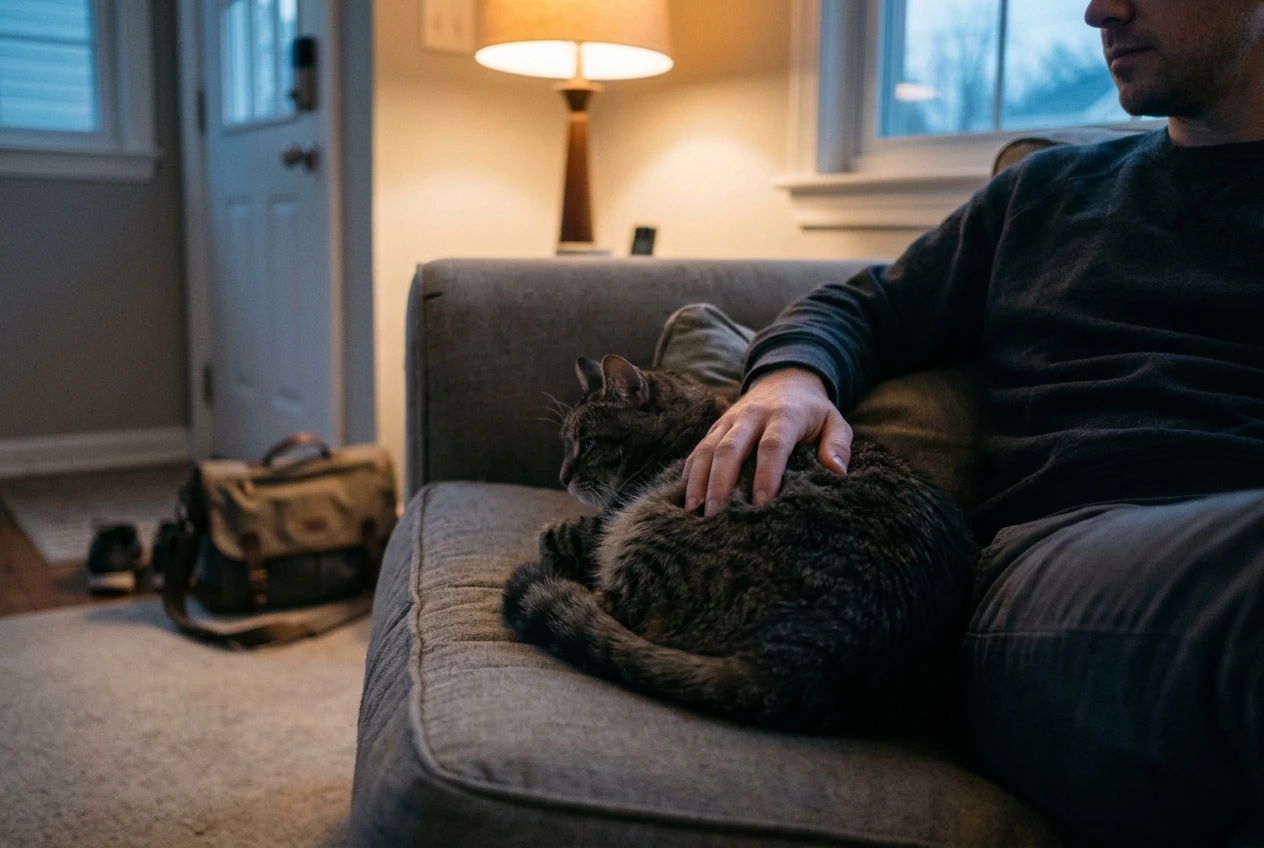
The purr adds to this. It is a steady, low, rhythmic sound, and many people find steady rhythmic sounds calming in the way they find rain or a fan calming. It also tells you something about the animal: a cat that purrs against you is usually relaxed enough to stay put, and a relaxed animal in your space makes the space feel safer.
None of this requires a medical explanation. Part of the comfort is plain company, and part is that the cat’s calm is easy to borrow.
What we actually know about purring and calm (and what is still just a nice theory)
It helps to separate three kinds of claims.
Reasonably well supported: Many people report feeling less stressed when they spend time with a pet, and several studies have found lower self-reported stress after time with animals. Most of these studies are small, and people who choose to own cats may differ from people who do not, so the research shows an association more than a guarantee.
Plausible but unproven: Some researchers have suggested that the low-frequency vibration of a purr might have a soothing effect on people, or even support healing. This is a hypothesis. The idea that a cat’s purr lowers your blood pressure or heals you has not been established, and anyone claiming it as fact is going further than the evidence.
Worth remembering: Cats do not only purr when they are content. They can also purr when they are frightened, in pain, or at the vet. So purring is not a reliable sign of happiness, and it is worth reading the rest of the cat’s body at the same time: loose posture, soft eyes, and relaxed ears suggest a calm cat. A tense body with a purr suggests something else.
The honest summary is that cats probably help many people feel calmer, the mechanism is only partly understood, and you do not need the mechanism to benefit.
The warm lap effect: why sitting still with a cat works
A cat on your lap does something a phone, a podcast, or a cup of tea cannot quite do together: it gives you a reason to stop moving. Most of us find it hard to sit still without a task. With a cat asleep on your legs, staying still becomes the considerate thing to do, and that gives you permission to rest.
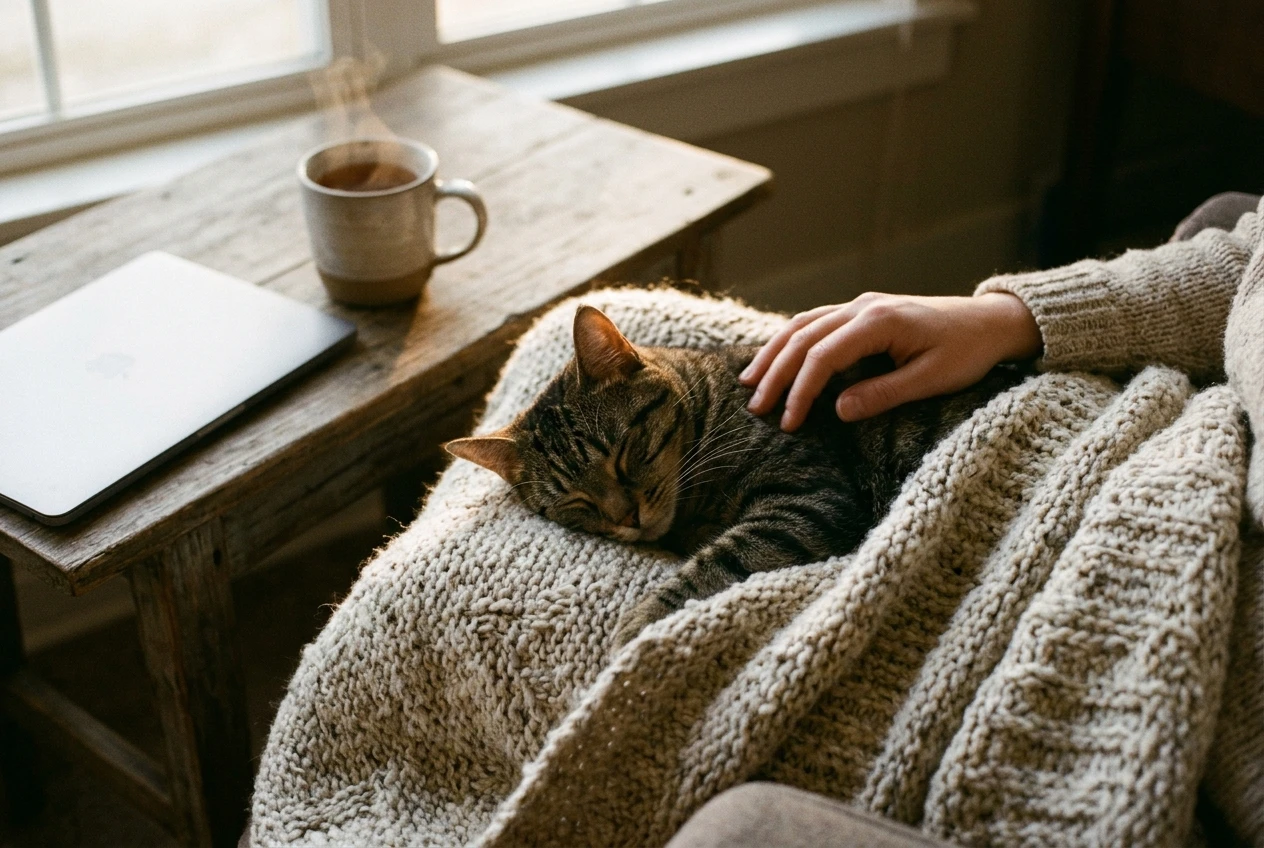
Several things happen at once:
- Physical warmth. A warm weight on the lap is comforting for many people, and warmth tends to encourage muscles to loosen.
- Slow, repetitive touch. Stroking a cat is a simple, rhythmic action. People often slow their breathing without noticing when they do it.
- A pause in screen time. If one hand is stroking a cat, you are less likely to scroll with it.
Gentle touch with an animal is also associated with feelings of bonding and comfort. Researchers have studied hormones involved in this, but the findings are not simple enough to promise a particular physical result. What you can say with confidence is that many people find ten quiet minutes with a cat noticeably settling.
The cat has to want to be there. A cat held against its will is not relaxed and will not make you feel relaxed for long. Let it choose the lap, and let it leave when it wants to.
How feeding and play routines give your day a steady rhythm
#ad | Affiliate links below.
Stress often grows when days feel shapeless. A cat brings a structure that is hard to ignore, because cats like predictable times for meals and play, and they will remind you when you are late.
A simple routine might look like this:
- A morning meal at a similar time each day.
- A short play session, either in the morning or after you finish work.
- An evening meal.
- A quiet period afterward when the cat settles down.
These fixed points give you small anchors in the day. They also pull you away from work at moments you might otherwise skip. Feeding the cat is a two-minute task with a clear end and a clear result: the cat eats, and you did something useful. On a day when little else feels finished, that counts for something.
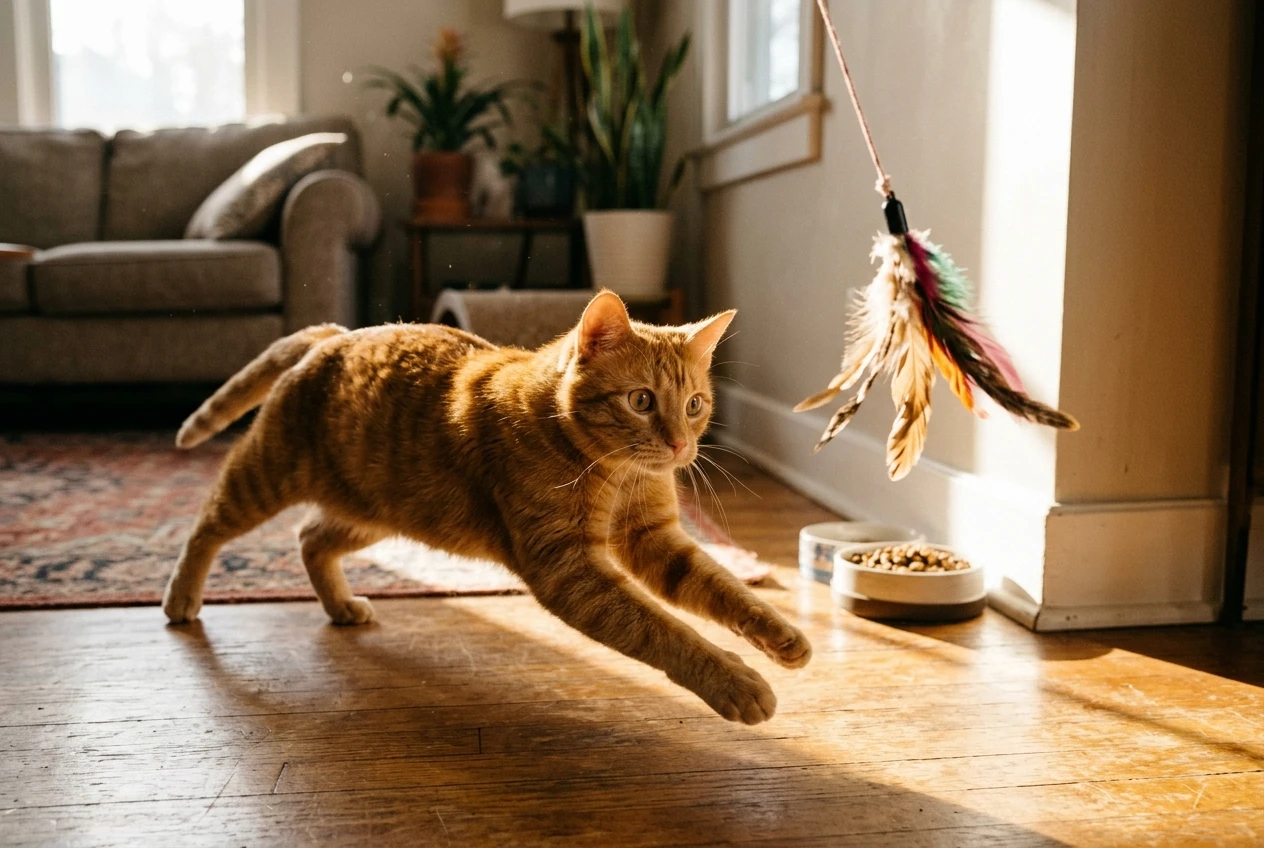
Play is especially useful. A feather wand or a small toy gets you moving and laughing, and cats are entertaining to watch when they stalk and pounce. Ten minutes of play tends to interrupt a stressful train of thought because it is hard to worry and watch a cat chase a string at the same time. It is also good for the cat, which is likely to be calmer afterward too.
Whether routines with a pet reduce stress in a measurable way has not been settled, but the logic is sound. Regular routines are widely recommended for steadier mood and sleep, and a cat makes you keep one.
Small moments that lower the volume: the morning greeting, the evening curl-up
Not every benefit comes from a long session on the sofa. Some are brief.
The morning greeting. Many cats meet their owners at the start of the day, with a head-butt, a chirp, or a walk around the legs. It is a small moment of being noticed. Starting the day with something that is plainly glad to see you may set a gentler tone than starting with a phone alert.
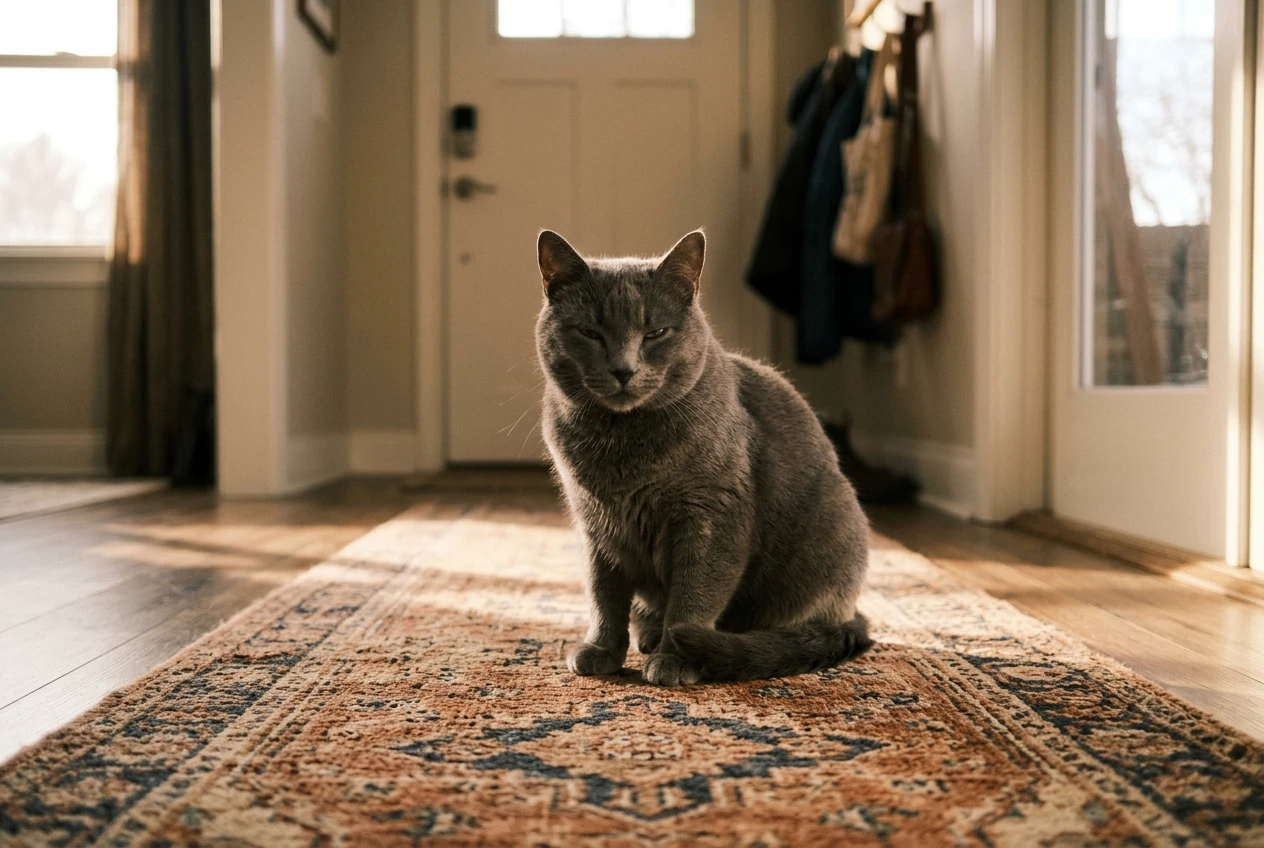
The slow blink. When a relaxed cat looks at you and slowly closes its eyes, it is generally read as a sign of comfort. If you slow-blink back, many cats respond in kind. It takes a few seconds and tends to make people smile.
The doorway welcome. Coming home to a cat that trots over to the door is a different experience from coming home to an empty hallway.
The evening curl-up. Many cats choose a favorite spot near their owner in the evening. Having a sleeping animal close by while you read or watch something can make the room feel quieter, even if nothing else about the evening is different.
None of these moments solves a problem. Together they add many small points of ease to a day, and that is often what a stressful week needs.
When a cat adds stress instead, and how to keep the relationship easy
#ad | Affiliate links below.
A cat is not a guaranteed source of calm, and pretending otherwise would be unfair to both of you. There are times when a cat adds to your load.
Common sources of strain include:
- Night-time activity. A cat that wakes you at 4 a.m. can cost you sleep, and lost sleep raises stress.
- Scratching and litter problems. Furniture damage or accidents outside the litter box are frustrating, and they can also be signs of a medical or environmental problem.
- Cost and responsibility. Food, litter, and veterinary care take money and time, and unexpected vet bills are a real worry for many households.
- Allergies. If you or someone in your home reacts to cats, that needs to be dealt with before it can be enjoyable.
- A mismatch in temperament. A shy cat will not become a lap cat on demand, and a very active young cat may not suit a very quiet household.
Most of these have practical fixes. Feeding a small meal late in the evening can reduce early waking for some cats, and a scratching post placed near the spot being scratched often redirects the behavior. If a cat suddenly changes its habits, such as avoiding the litter box, hiding, or eating much less, a vet visit is the right first step, because sudden changes often have a physical cause.
If you are thinking of getting a cat, consider your schedule, your budget, and your tolerance for mess and noise first. Adult cats from shelters often have settled personalities, which makes it easier to find one that matches the pace of your home.
How to get more calm out of the cat you already have
#ad | Affiliate links below.
If you already share your home with a cat, a few habits make the most of it.
Let the cat set the terms. Offer a hand to sniff and wait for the cat to come to you. Cats that choose contact tend to enjoy it more, and so do their owners.
Pair the cat with a pause. Choose one part of the day, such as right after work, and sit with the cat for ten minutes without your phone. Treat it as a break in its own right.
Keep the routine steady. Feed and play at similar times each day. Predictability is good for the cat, and it gives your day a few reliable points.
Play before you rest. A short play session first often leaves the cat ready to settle in your lap afterward.
Notice the cat’s signals. Learn what a relaxed cat looks like and what an overstimulated one looks like. A twitching tail or flattened ears mean it is time to stop, and respecting that keeps the cat willing to come back.
Make a comfortable spot nearby. A blanket on the sofa or a bed near your desk lets the cat stay close without being on you, which suits cats that like company but not constant handling.
So, can cats help reduce stress? For many people they do, through company, touch, routine, and small daily moments of connection. The science on purring and health is still developing, and a cat is not a treatment for anxiety or any medical condition. If stress feels heavy or constant, talking to a doctor or a mental health professional is the right step, and a cat can be a good companion alongside that support.