Cat kidneys do a lot of quiet work. They filter waste from the blood, hold on to water, and help regulate blood pressure and minerals like phosphorus. When they start to fail, the cat often looks fine for a long time. That is why chronic kidney disease (CKD) tends to be found at a routine senior checkup instead of on the day it begins.
If your cat has been diagnosed, or you are watching an older cat and wondering, this guide covers chronic kidney disease in cats diet questions in plain English. It sorts what published veterinary research supports from what is just popular advice. Your vet makes the decisions, because the right plan depends on your cat’s bloodwork, stage of disease, weight, and appetite. This article gives you the background to ask better questions.
🐾 Purr-lease Note: As an Amazon Associate I earn from qualifying purchases. This means FelineGo may earn a small commission when you purchase through some of the Amazon links on this site, at no extra cost to you. These commissions help support FelineGo and our mission to create helpful content for cat parents. Thank you for supporting our little corner of the cat world! 🐱💕
Why Kidneys Are a Big Deal for Cats (and Why CKD Sneaks Up on Us)
CKD is common in older cats. A study that sampled cats from different age groups found that the share of cats with CKD climbed with age, so a senior cat is a reasonable cat to screen even when nothing seems wrong [6].
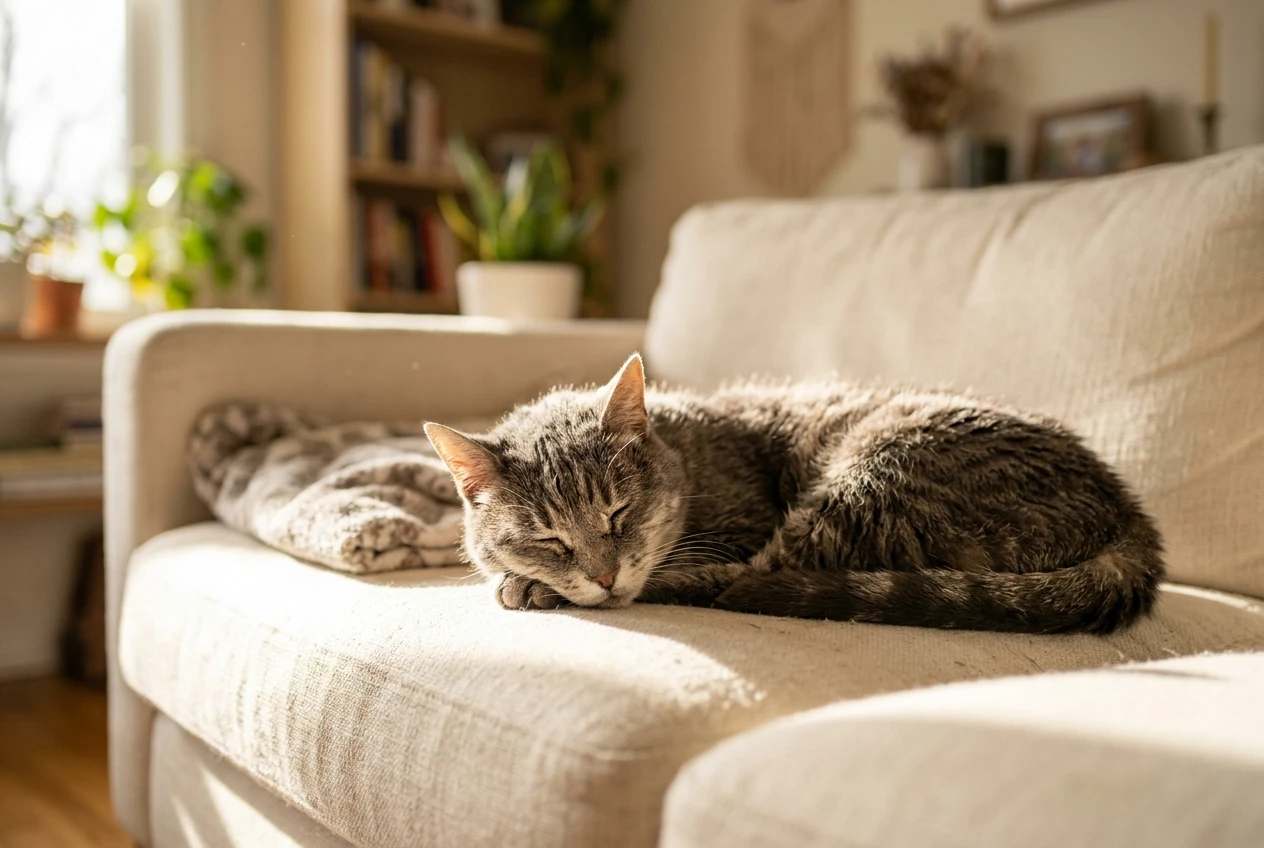
It is easy to miss because the early signs are mild, and they look like ordinary aging:
- Drinking and peeing more than before
- Slow weight loss
- A coat that looks duller or scruffier
- A pickier appetite, or a bit of nausea
- Sleeping more
Blood and urine tests find CKD before most of these show up. Vets commonly use a staging system from the International Renal Interest Society (IRIS), which groups cats into stages 1 to 4 using bloodwork and urine results [1]. The stage matters because the dietary advice changes with it. Nothing below replaces a staging workup.
What the Research Says About Renal Diets, and What It Doesn’t
Of all the things owners can change, the renal diet has the strongest evidence behind it. Renal diets are veterinary diets formulated with restricted phosphorus and controlled protein, usually with added nutrients intended to support kidney patients, such as omega-3 fatty acids.
Here is what the published research shows:
- A 2006 study of cats with naturally occurring CKD found that cats eating a renal diet had fewer uremic crises and fewer kidney-related deaths than cats eating their regular food [3].
- A 2000 study of cats with chronic renal failure found longer survival in the cats managed with a renal diet than in those on a maintenance diet [4].
- A 2005 retrospective study looked back at cats with chronic renal insufficiency that had been fed different commercial diets, and reported on how survival differed by diet [5].
On the strength of this body of work, the IRIS treatment recommendations and the International Society of Feline Medicine (ISFM) consensus guidelines both recommend a renal diet for cats in the later stages of disease, with the exact stage and timing left to the vet [1][2].
Some limits are worth knowing about:
- The studies are small. Several of them followed a modest number of cats, and one of those listed above looked backward at records instead of assigning diets in advance. That leaves room for other explanations.
- Phosphorus restriction has the best support. Guidelines put the most weight on controlling phosphorus. The role of lowering protein is less settled, and the guidelines stress that senior cats still need enough calories and protein to avoid losing muscle [1][2].
- A renal diet only works if the cat eats it. A cat that refuses the food and loses weight is not better off. Guidelines treat appetite and body condition as priorities of their own [1][2].
- Early-stage cats are a gray area. Evidence for starting a renal diet in the earliest stage is weaker than for later stages, so this is a conversation to have with your vet and not a rule to apply on your own.
Homemade diets deserve a caution. Balancing phosphorus, protein, and calories by hand is difficult. If you want to cook for a CKD cat, ask your vet about a consultation with a board-certified veterinary nutritionist instead of working from an internet recipe.
Wet Food, Dry Food, and the Moisture Question
Many owners hear that wet food is better for cats with kidney trouble. The reasoning is sound, but the details need care.
Wet food is mostly water, so a cat eating it takes in far more fluid with meals than a cat eating dry kibble. One controlled study in healthy cats found that when dietary water intake went up, urine became more dilute [7]. That study looked at urinary tract health and not CKD, so it supports the idea that food moisture raises total water intake. It does not prove that wet food slows kidney disease.
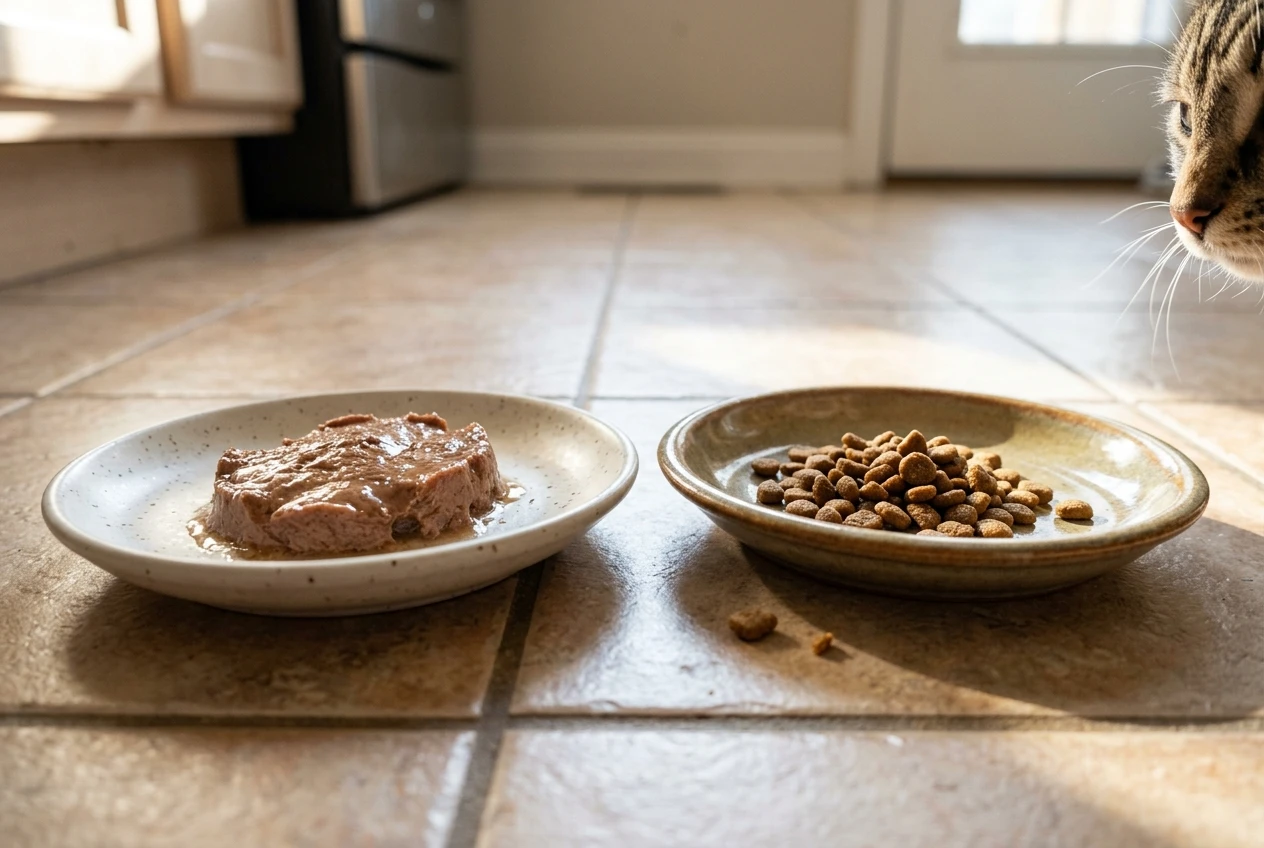
The popular claim that dry food causes kidney disease is also not established by the studies cited here. What the CKD research supports is the formulation of the diet, meaning its phosphorus level and overall nutrient profile [1][2][3][4].
This leads to a practical point. A prescription renal diet in the form your cat will actually eat is usually a better choice than a non-renal wet food your cat likes more. Renal diets come in both wet and dry versions. If your cat only accepts the dry renal diet, ask your vet whether that is fine and how to add moisture some other way.
Some cats will eat a renal wet food and others will walk away from it. Cats are individuals, and flavors and textures differ by brand. Your vet can often point you to several options within the renal category.
Does Getting a Cat to Drink More Actually Help?
Cats with CKD often drink more because their kidneys lose some of their ability to concentrate urine. They pass more urine, and they need more water to keep up. Dehydration is a real risk, and it is one reason the guidelines pay close attention to hydration [1][2].
Whether pushing a cat to drink more changes how fast the disease progresses is a different question. We did not find strong controlled evidence on that. What the guidelines do say is that keeping the cat hydrated is part of good management, and that cats who cannot keep up on their own may need fluids given by the vet or at home [1][2].
So a sensible way to think about it is that more water is a comfort and safety measure, and a well-supported one, but it is not a proven way to slow the disease. Fluid therapy, including fluids given under the skin, is a medical treatment. Your vet decides whether your cat needs it, how much, and how often, so please do not try it without instruction.
Hydration Helpers Worth a Look: Fountains, Extra Bowls, and Tasty Water Tricks
#ad | Affiliate links below.
None of the following has been proven in CKD cats the way the renal diet has. They are low-risk ideas that fit what we know about cats, and many owners find them worth a try. Run any food-based trick past your vet first, because a CKD cat’s diet is carefully controlled.
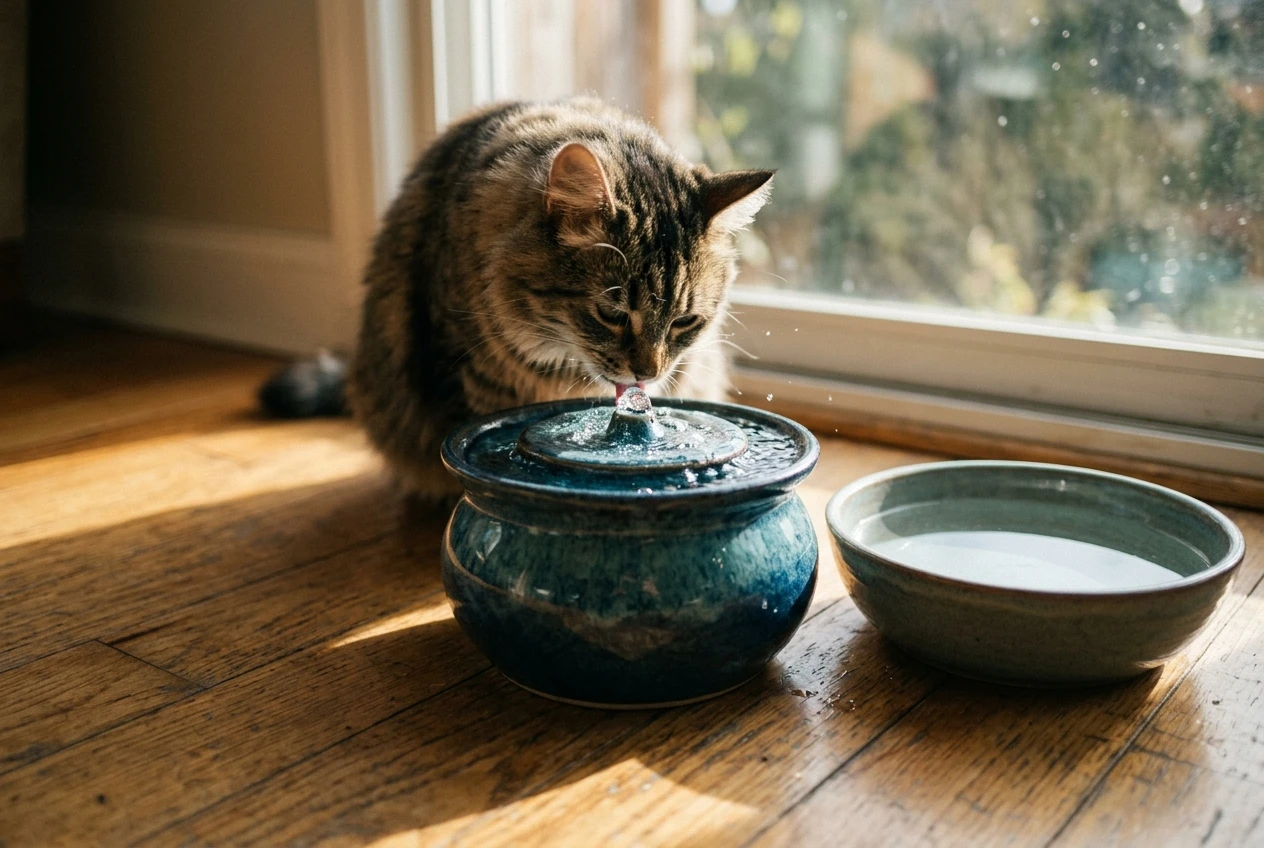
- Water fountains. Some cats prefer moving water. Others ignore the fountain or are startled by the noise, so watch your own cat’s reaction.
- More bowls in more places. A cat with CKD may not want to walk far when it feels unwell. Water stations near the bed, the favorite window, and the food spot make drinking easier. Clean them daily.
- Wide, shallow bowls. Some cats dislike bowls that touch their whiskers. This is a popular belief, and the research is thin, but a wider bowl costs little to test.
- Fresh water often. Many cats lose interest in stale water, so refilling it is an easy habit.
- Water added to wet food. Stirring a little warm water into a wet renal diet raises moisture, and plenty of cats like the resulting gravy. Ask your vet how much is appropriate.
- Cat-safe flavored water. Some owners add a splash of the liquid from tuna packed in water. Salt, onion, and garlic are real hazards in human foods, and sodium may matter for your cat, so ask your vet before offering anything like this.
- Ice cubes and bowls with a floating treat. Some cats find these fun. Again, check with your vet about what is safe to use.
Track what works by noticing how much water disappears each day. A sudden change in drinking or urination is something to report to your vet.
Transitioning a Picky Cat to a Kidney-Friendly Diet Without a Standoff
This is the part where good intentions and cat stubbornness meet. A cat that is nauseated, or that simply dislikes a new food, may refuse to eat. A cat that stops eating for too long can become seriously ill. The guidelines treat adequate calorie intake as a key goal, and they do not push owners to force a diet change if the cat is refusing food [1][2].
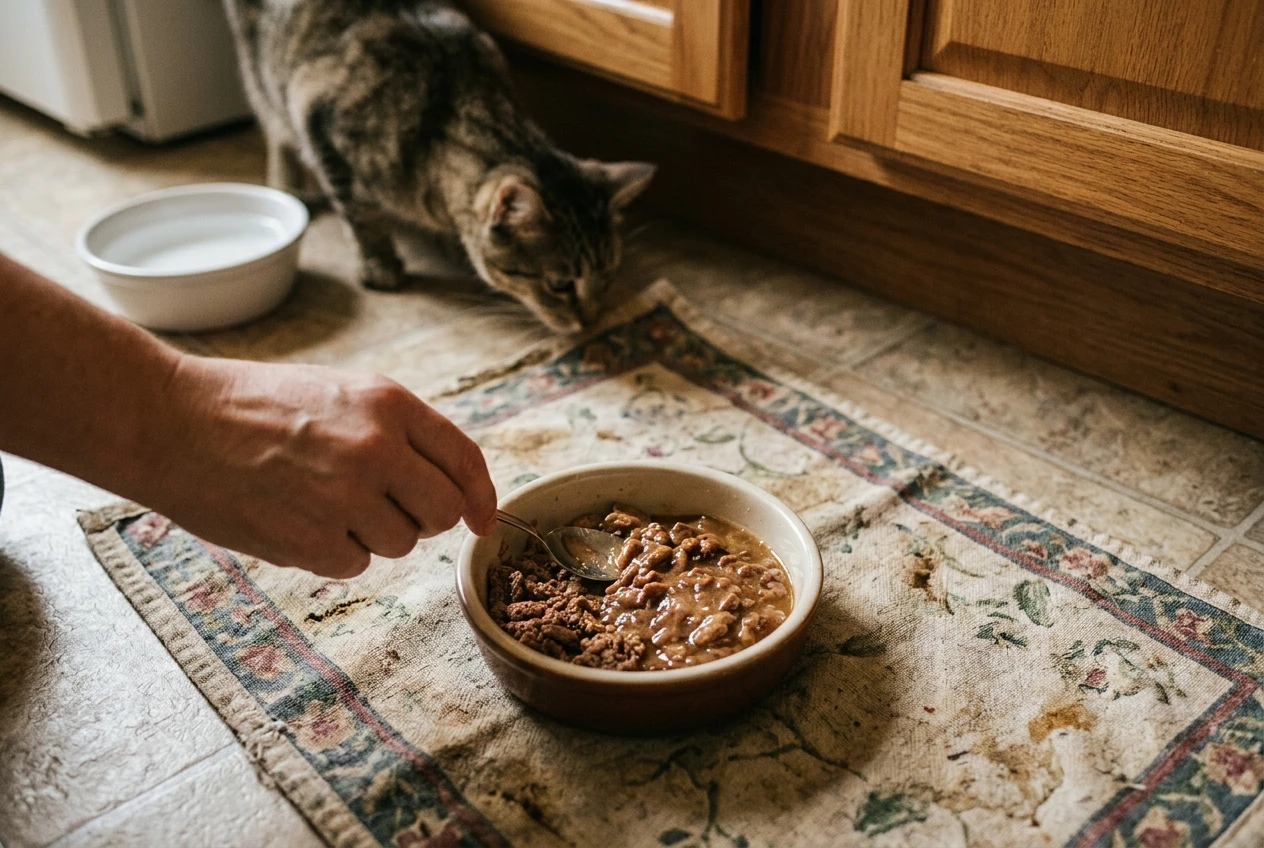
A gentle approach that vets commonly suggest:
- Go slowly. Mix a small amount of the new food into the old food, and shift the proportion over days to weeks, depending on your cat. Your vet can give you a schedule.
- Try different flavors and textures. Pâté, chunks, and gravy styles taste and feel different. If one is rejected, another may work.
- Warm it slightly. Warm food smells stronger, and many cats find it more appealing. Test the temperature so it is not hot.
- Offer small portions often. Some cats do better with several small meals than with two big ones.
- Keep the bowl area calm. A stressed cat may not eat. A quiet spot away from household traffic helps. Our guide to setting up a cat food station goes through where and how to place bowls.
- Do not let the cat go hungry. If your cat refuses the new food for a day or so, call your vet, and do not wait it out. The vet may suggest a different renal diet, a temporary return to the old food, or treatment for nausea or low appetite.
Whatever the plan, a cat that eats something is generally safer than a cat that eats nothing. Let your vet decide how strict to be during the transition.
Questions to Bring to Your Vet Before You Change Anything
Appointments go quickly, so write your questions down beforehand. These are worth asking:
- What stage is my cat’s CKD, and what do the bloodwork and urine results show?
- Should my cat start a renal diet now, or is it too early at this stage?
- Which renal diets do you recommend, and are there wet and dry options?
- How should I transition my cat, and over what period?
- What should I do if my cat refuses the new food?
- Does my cat need extra fluids, and if so, should we do that at the clinic or at home?
- Are there treats I can safely give?
- Is my cat’s weight and muscle condition where it should be?
- Should my cat take any medication for nausea, blood pressure, or phosphorus levels?
- How often should we recheck bloodwork and blood pressure?
- Which warning signs should send me straight to the clinic?
Bring a note of how much your cat eats and drinks, along with any changes in energy, vomiting, or litter box habits. Those details help your vet more than you might expect.
A Cat-Parent Shopping List That Fits What the Evidence Supports
#ad | Affiliate links below.
Here is a list organized by how strong the support is.
Backed by the strongest evidence, and decided by your vet
- The renal diet your vet recommends, in the textures your cat will accept. Prescription diets usually need a vet’s authorization.
Reasonable, low-risk tools for hydration and feeding
- A cat water fountain, if your cat likes moving water
- Several water bowls to place around the house
- Wide, shallow bowls or plates for food and water
- Small airtight containers or can covers to keep opened wet food fresh in the fridge
- A kitchen scale for portioning food and one for tracking your cat’s weight at home
Nice to have for comfort
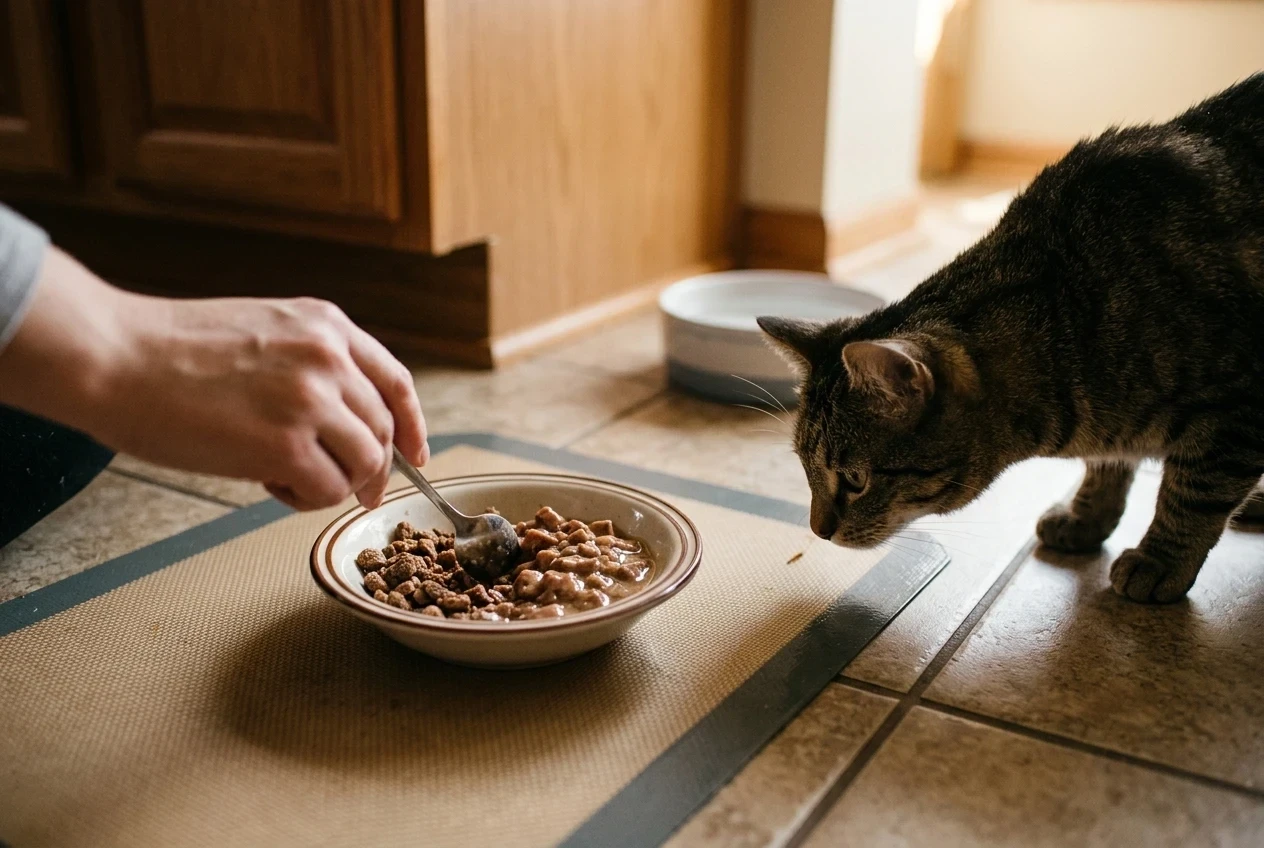
- A quiet, low-traffic feeding mat or placemat
- Easy-to-clean bowls in ceramic or stainless steel
Treat the second and third groups as comfort and convenience, not as proven treatments. They make it easier to follow your vet’s plan, and the plan itself is what matters.
Final Thoughts
A CKD diagnosis is a lot to take in, and the evidence gives owners something clear to act on. A renal diet is the best-supported change, hydration deserves steady attention, and your vet is the person who ties these together for your particular cat.
Browse the kidney-friendly feeding and hydration gear we like on Amazon, and check with your vet before you change your cat’s diet. For more on related topics, see our guide to holistic care for urinary issues.
References
- International Renal Interest Society (IRIS). Treatment recommendations for CKD in cats. iris-kidney.com.
- Sparkes AH, Caney S, Chalhoub S, et al. ISFM consensus guidelines on the diagnosis and management of feline chronic kidney disease. Journal of Feline Medicine and Surgery. 2016;18(3):219-239. View source
- Ross SJ, Osborne CA, Kirk CA, Lowry SR, Koehler LA, Polzin DJ. Clinical evaluation of dietary modification for treatment of spontaneous chronic kidney disease in cats. Journal of the American Veterinary Medical Association. 2006;229(6):949-957. View source
- Elliott J, Rawlings JM, Markwell PJ, Barber PJ. Survival of cats with naturally occurring chronic renal failure: effect of dietary management. Journal of Small Animal Practice. 2000;41(6):235-242. View source
- Plantinga EA, Everts H, Kastelein AMC, Beynen AC. Retrospective study of the survival of cats with acquired chronic renal insufficiency offered different commercial diets. Veterinary Record. 2005;157(7):185-187. View source
- Marino CL, Lascelles BDX, Vaden SL, Gruen ME, Marks SL. Prevalence and classification of chronic kidney disease in cats randomly selected from four age groups and in cats recruited for degenerative joint disease studies. Journal of Feline Medicine and Surgery. 2014;16(6):465-472. View source
- Buckley CMF, Hawthorne A, Colyer A, Stevenson AE. Effect of dietary water intake on urinary output, specific gravity and relative supersaturation for calcium oxalate and struvite in the cat. British Journal of Nutrition. 2011;106(S1):S128-S130. View source