You open the book, find your page, and settle into the cushions. Within about ninety seconds, a cat who was asleep on the other side of the house is on your chest, or on the page, or knocking your tea toward the edge of the table.
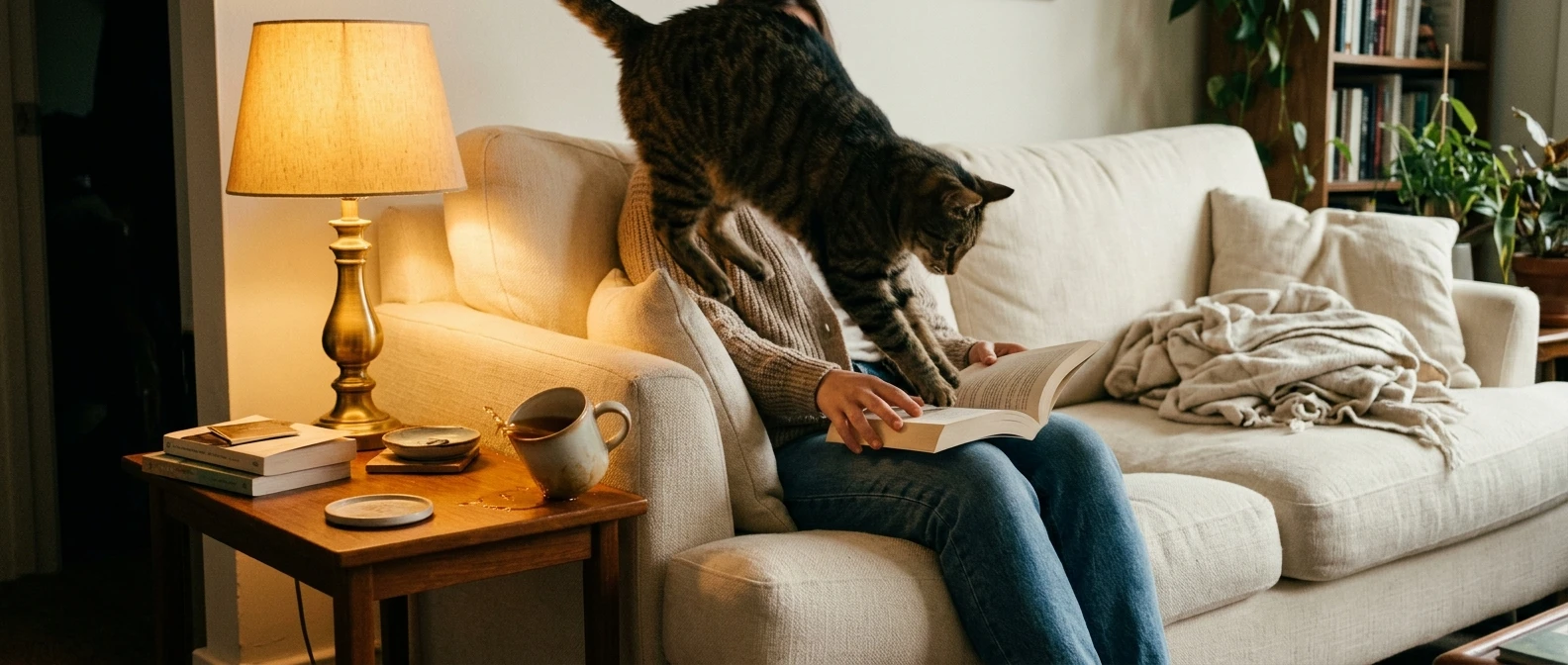
This is common, and it has some plausible causes. Reading makes you still and quiet, so you stop moving and stop talking. Your attention also goes somewhere that is not the cat. For a cat who wants a hunting game, a snack, or just some acknowledgment, that is the moment to step in.
You can’t talk a cat out of this, but you can give them a better offer. The right cat enrichment toys to keep your cat busy turn that restless energy into something they do alone, quietly, while you finish the chapter. This guide sorts toys by three things: whether they work without you, how much noise they make, and how long they hold a cat who gets bored fast.
🐾 Purr-lease Note: As an Amazon Associate I earn from qualifying purchases. This means FelineGo may earn a small commission when you purchase through some of the Amazon links on this site, at no extra cost to you. These commissions help support FelineGo and our mission to create helpful content for cat parents. Thank you for supporting our little corner of the cat world! 🐱💕
What Makes a Toy Work Solo: The Quiet, Self-Running, No-You-Required Test
#ad | Affiliate links below.
Most toys sold for cats need a human on the other end. A wand toy is great fun, but it only works when you are waving it, which defeats the purpose of reading. Before you buy anything for reading time, run it through three questions.
Does it run without you? The toy should give your cat something to do after you set it down. That usually means food that has to be worked out, a ball that rolls back, a surface that stays interesting, or something to watch.
Is it quiet? A hard plastic ball skittering across a tile floor will wreck your concentration as quickly as the cat would. Soft materials, rubber, felt, fleece and carpeted or rugged surfaces are your friends. Bells and loud crinkle sounds are fine for a play session but poor companions for a quiet chapter.
Will it survive a cat who bores easily? Some cats finish a puzzle in thirty seconds and come looking for you. A good solo toy has some variation built in: adjustable difficulty, several compartments, or a reward that does not come out every time. If a toy only does one thing, plan to rotate it (more on that below).
Keep these three tests in mind. The picks in the sections below are sorted by how they score.
Puzzle Feeders and Treat Toys That Turn Snack Time Into a Mystery to Solve
ad | Affiliate links below.
Food puzzles are the best category for solo reading time. They hold attention longer than most toys because the cat is getting paid for the effort, and they are usually quiet when the cat works at them on a rug or mat.
Treat balls and rolling dispensers
You fill them with kibble or treats, and the cat bats the ball around to make pieces fall out. They are simple and cheap, and cats who enjoy chasing often take to them right away. The catch is noise: a hard ball on a hard floor rattles. Use one on a carpet or a thick rug, or pick a softer-sided design.
Snuffle mats and lick mats
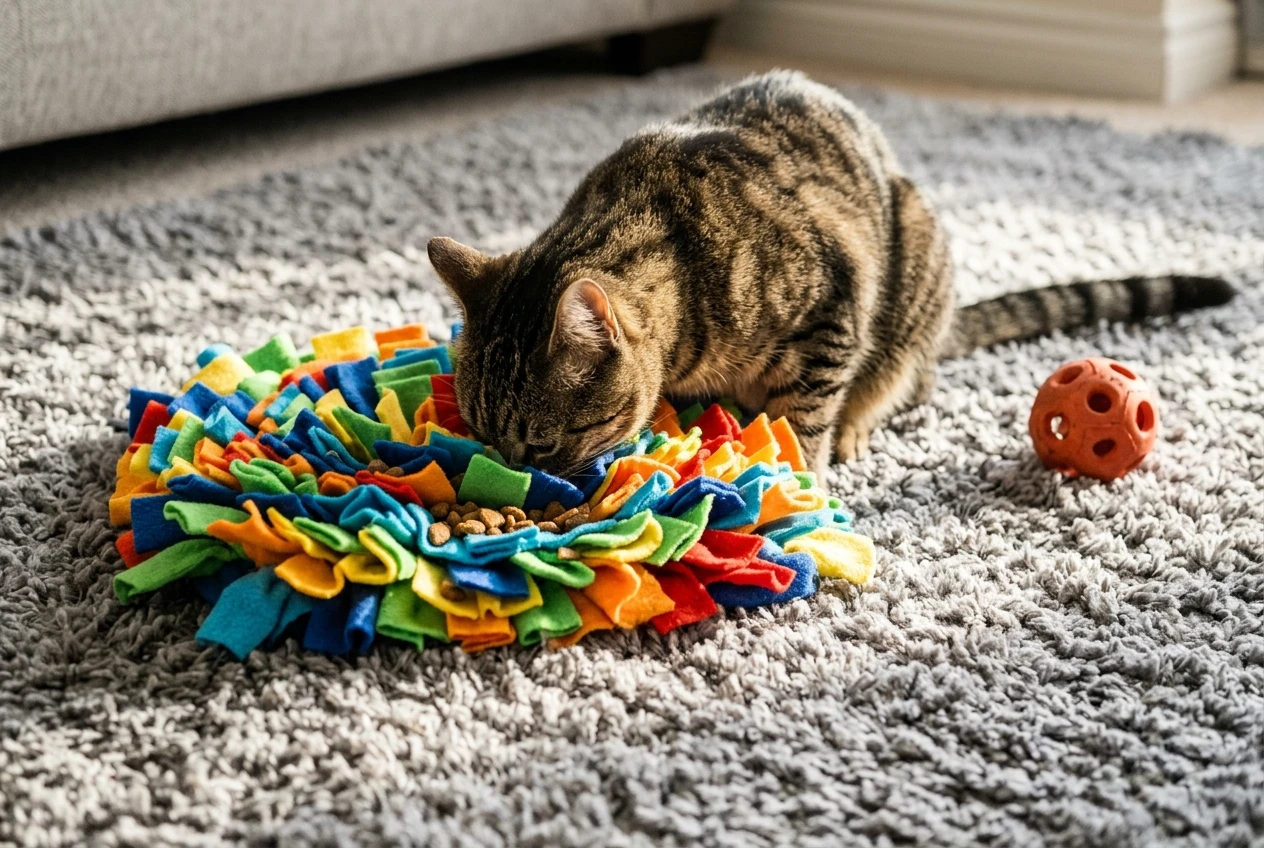
A snuffle mat hides dry food in fabric folds, and the cat noses and paws through it to find each piece. It is nearly silent, which makes it one of the best options for a reader. A lick mat works differently: you spread something soft on a textured surface, and the cat licks at it slowly. Use only cat-safe foods, and read the label on anything you spread. If your cat has dietary restrictions or a medical condition, ask your vet what is safe.
Puzzle and multi-compartment feeders
These have sliding lids, holes, or compartments the cat has to open or reach into. Because you can often change the difficulty, they hold up better with a smart cat. Start with the easiest setting so your cat gets an early win, then make it harder once they have the idea.
One practical point: food puzzles still count as meals. If you fill a feeder with treats, take that amount out of the day’s food so a reading habit does not turn into weight gain. If your cat tends to gulp meals, the picks in this guide to the best slow feeders for cats cover a related set of options.
Low-Noise Toys for Batting, Chasing and Kicking While You Stay in the Story
ad | Affiliate links below.
Not every cat is motivated by food, and some just want to move something. For these cats, look for toys that satisfy the pounce-and-chase instinct without turning your living room into a pinball machine.
- Soft kicker toys. A plush toy with some length lets a cat grab it with the front paws and kick with the back ones. Fabric makes almost no sound, and a cat can spend a good while wrestling with one.
- Felt or fleece balls. Lightweight and quiet, they can be batted across a rug without much noise. They also tend to get lost under furniture, so buy a few.
- Tracks with a captive ball. A ball sits inside a circular track, and the cat taps it around. These keep the ball in one place, so you are not fetching it from under the sofa. Check the noise level in the reviews, since some are louder than others.
- Crinkle-free tunnels and fabric hideouts. A tunnel gives a cat something to dive through and ambush from. Look for soft fabric, and place it on a rug.
- Simple things from around the house. A paper bag with the handles removed, or an open cardboard box, is quiet and often just as popular as something you bought. Remove any handles, strings, or staples first, because those can be dangerous.
Avoid anything with a motor you have not tested for noise. Battery-powered mice and flopping fish can be entertaining, but a buzzing motor is the exact sound that pulls you out of a good paragraph. Read reviews with attention to “loud” and “noisy” comments before you buy.
Toys with strings or small detachable parts are best saved for supervised play. A cat who is alone for an hour while you read should have toys that are safe to be left with.
Window and Perch Setups That Give Your Cat Their Own Show to Watch
ad | Affiliate links below.
Some of the most effective enrichment toys to keep your cat busy are not toys at all. A cat with a good view has something to do that needs nothing from you and makes no noise.
A window perch. A cushioned shelf or a suction-mounted bed that sits at window height lets your cat watch birds, squirrels, passing cars, and neighbors. Check the weight rating and make sure it is mounted according to the instructions. A cat who likes to watch will often settle in for a long stretch.
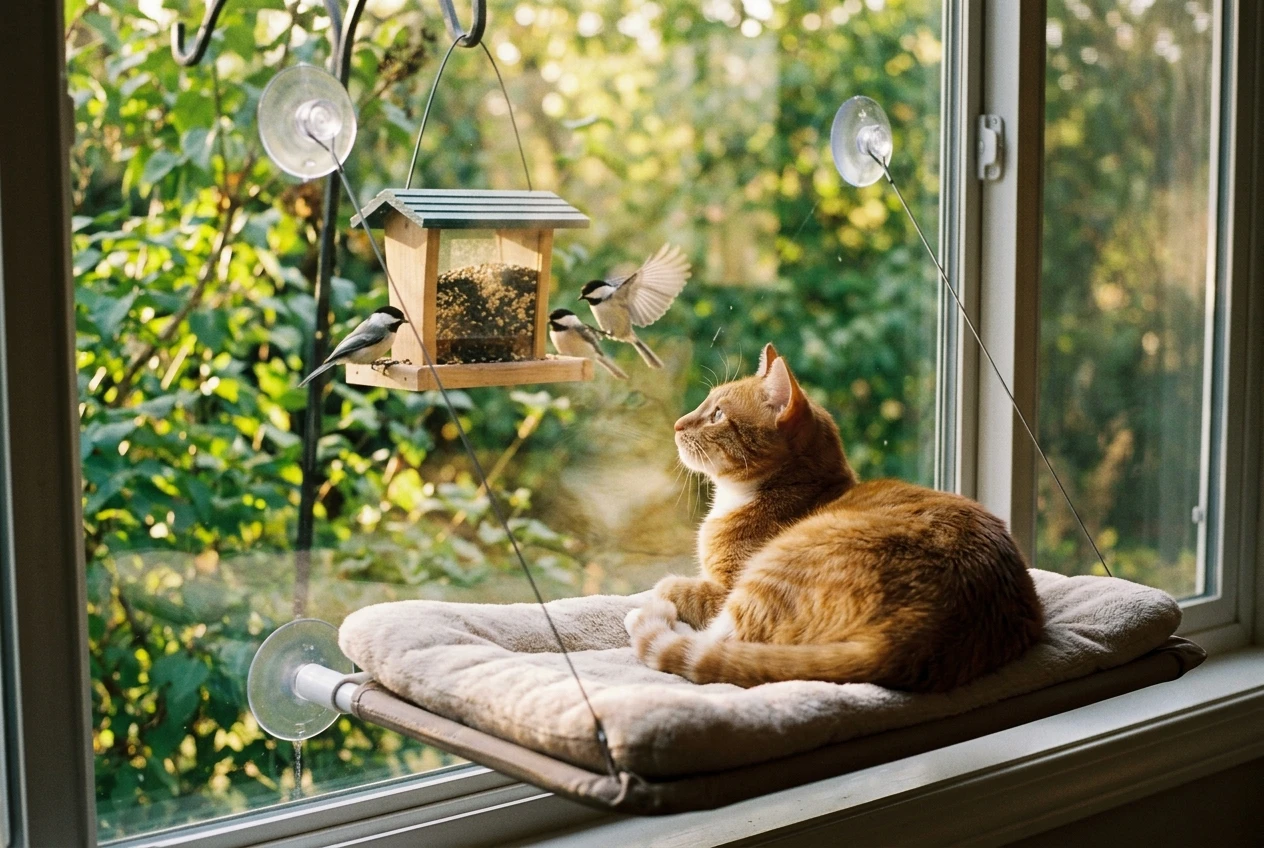
A bird feeder outside. If you can place one where your cat can see it, but where birds can stay at a safe distance, it becomes a constant source of interest. Keep it far enough from the glass that birds are not at risk, and think about whether the setup suits your home.
A cat tree beside the window. A tall tree with a high platform gives the cat a lookout and a place to climb. It gives your cat somewhere to go that is not your lap.
Videos made for cats. Some people put a tablet or screen on a low stand and play nature videos. Whether your cat cares will depend on the cat, so treat it as an experiment. Keep the volume off or low so it does not compete with your book.
If you live in a small space, you can fit a lot into one corner. This guide to creating a cat corner for small spaces and renters has ideas that work without much floor room.
Rotation Tricks That Keep the Same Toys Feeling New
Cats often lose interest in a toy that has been lying on the floor for weeks. The fix costs nothing: put most of the toys away and bring out only a few at a time.
Here is a simple way to do it:
- Gather all your cat’s toys and sort them into two or three groups.
- Put one group out and store the rest in a bag or box where the cat can’t reach them.
- After a few days to a week, swap the groups.
- Pay attention to which toys get a strong reaction, and bring those back more often.
A few other small changes can make an old toy feel different. Move a puzzle feeder to a different room. Put a tunnel in a new spot. Hide a few treats in a snuffle mat in a different pattern each time. You can also try different food rewards in a puzzle feeder, as long as they suit your cat’s diet.
It helps to match the toy to the moment. Set out the puzzle feeder right before you start reading, since that is when your cat is most likely to come looking for you. Putting it down just as you sit tells your cat that something interesting is already happening somewhere else.
Matching Toys to Your Cat: The Kitten, the Senior, and the Cat Who Ignores Everything
ad | Affiliate links below.
Every cat is different, and age plays a part. Here is how to adjust.
The kitten
Kittens have a lot of energy and not much patience, so they get through toys quickly. Offer a mix: a soft kicker, a tunnel, and an easy food puzzle. Supervise anything with small parts, strings, or fabric a kitten could chew off and swallow. Expect your reading time to be short at first and build up as the kitten grows.
The senior cat
Older cats often prefer gentler activities. A window perch with a soft bed, a lick mat, or a snuffle mat with a few easy-to-find treats can suit a cat who does not want to jump or sprint. Place everything at a height they can reach without a big jump. If an older cat suddenly loses interest in play or food, or their behavior changes, mention it to your vet, because it can be a sign of a health problem.
The cat who ignores everything
Some cats seem to turn their noses up at every toy. Try a few things before you give up:
- Use food as the hook. A cat who does not care about a ball may care a lot about a treat inside it.
- Try different textures and shapes. Some cats like crinkly, others like smooth, others like fur or feathers.
- Change the time. A cat who is sleepy at noon may be ready to play in the evening.
- Start with a very easy version of a puzzle so the cat learns that effort leads to a reward.
If nothing works, the window perch is worth a try, since it asks nothing of the cat except looking.
Setting Up a Reading Nook Where You and Your Cat Both Win
ad | Affiliate links below.
The best setup puts you and your cat in the same room, each with something to do. Cats often like being near their person even when they are not touching them. A good nook makes that easy.
Choose a spot with a comfortable chair or corner of the sofa, good light, and a place for your drink that a cat can’t reach. Then add your cat’s side of the deal within sight of your seat:
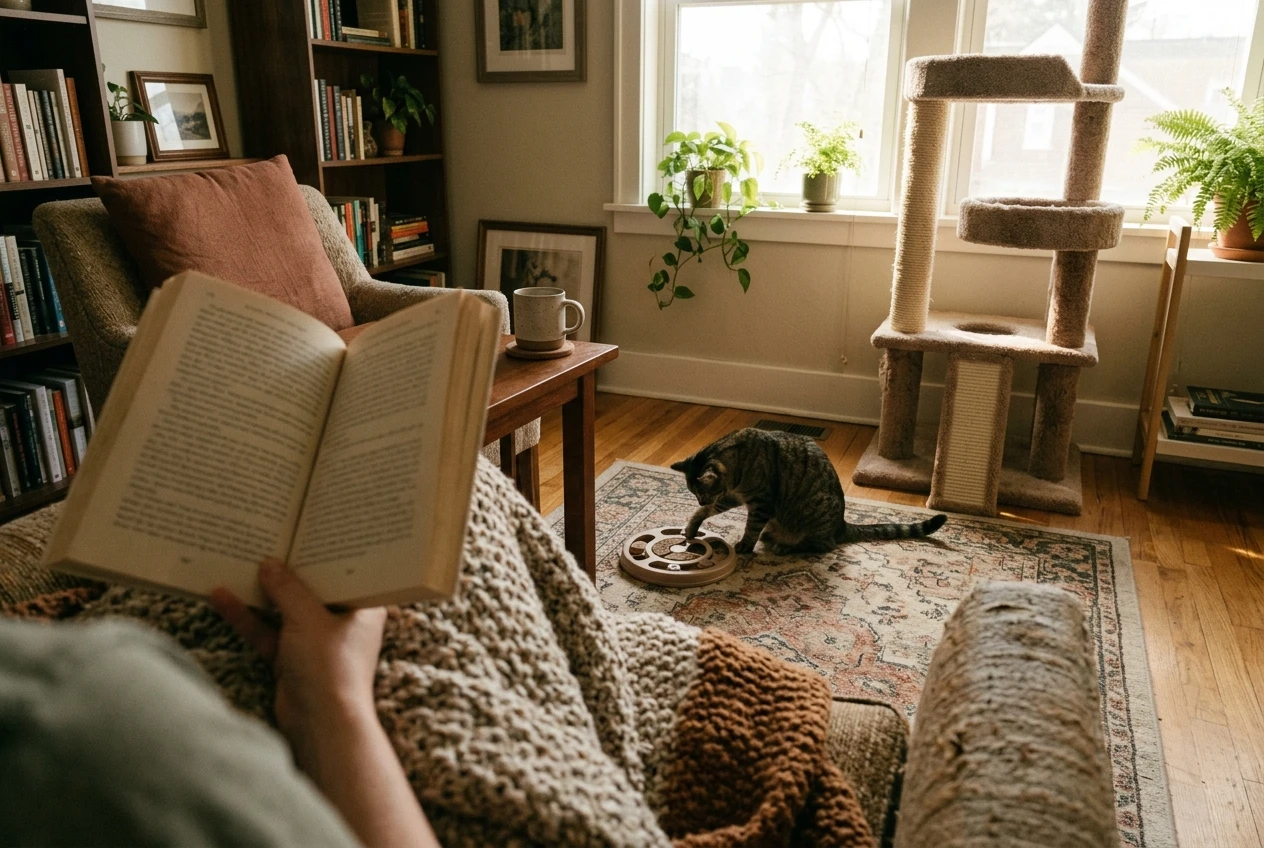
- A window perch or cat tree where they can watch outside
- A puzzle feeder or snuffle mat on a rug a few feet away
- A soft bed or blanket on or near your seat, in case they just want to be close
- A small basket nearby holding two or three quiet toys from the current rotation
Before you sit down, set up the cat’s activity first. Fill the puzzle feeder, put it down, and then open your book. The sequence matters: if the cat is already busy when you start reading, you are less likely to be interrupted.
If your cat is the kind who gets wound up in a new space, a calm room helps. This guide to creating a stress-free environment for cats has ideas for keeping the room settled. And if you need something to read while your cat is occupied, these cozy cat mystery picks are a good place to start.
Even with all of this, some interruptions will happen. A cat may finish the puzzle early, or decide your lap is better than any toy. Keep a second option nearby, and treat a short cuddle break as part of the reading session.
Pick one solo toy from the list, set it up before your next chapter, and check the Amazon links for current options and reviews.