
Cats add so much warmth, life, and comfort to a home, regardless of the size. Creating a cat corner means carving out a special area just for your feline companion, where your cat can rest, hide, scratch, climb, watch, and play. I see a cat corner as more than just a section packed with cat towers and toys. It’s about understanding what makes a cat feel at home and building a spot that fits those needs. Even in a small apartment or rental, a thoughtfully designed cat corner can make all the difference for both your cat and yourself. The right setup considers a cat’s need for privacy, enrichment, and territory, all while staying mindful not to clutter up your limited floor space. If you’re renting or living in a cozy small space, you can still design a spot that keeps your cat curious, content, and comfortable, without transforming your living room into a makeshift jungle gym. A thoughtfully designed cat corner can support a more cat-friendly home by giving your cat appropriate places to rest, scratch, climb, and retreat, while making pet supplies easier to organize. [1][2]
🐾 Purr-lease Note: As an Amazon Associate I earn from qualifying purchases. This means FelineGo may earn a small commission when you purchase through some of the Amazon links on this site, at no extra cost to you. These commissions help support FelineGo and our mission to create helpful content for cat parents. Thank you for supporting our little corner of the cat world! 🐱💕
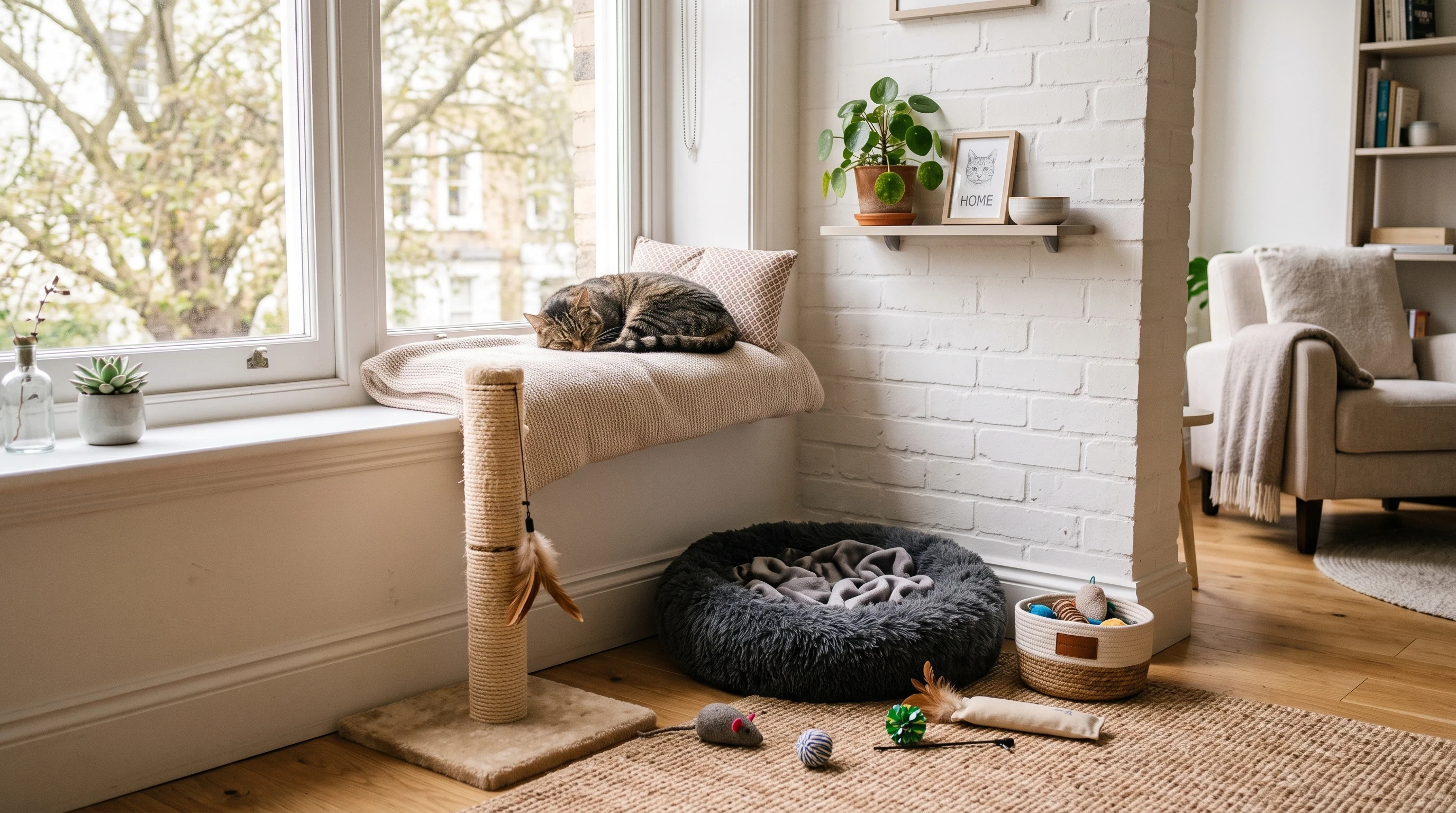
What Is a Cat Corner and Why Does Your Cat Need One?
A cat corner is a designated area in your home designed specifically for your cat’s comfort and wellbeing. For my own cats, it’s become a go-to spot for napping, scratching, and keeping a watchful eye on the home or the view outside a window. Cats benefit from an environment that considers enrichment as part of their overall care. Providing familiar places to hide, perch, rest, and engage in normal behaviors can help reduce environmental stressors. [1][2] Providing appropriate outlets for scratching, hiding, play, and other natural behaviors can help reduce unwanted behaviors associated with unmet environmental needs. [1][2]
When you pull together a good cat corner, you’re not just throwing a bed in the corner. You’re offering your cat a retreat where they can nap undisturbed. A well-thought-out space can include places for climbing and perching, which give cats opportunities to observe their surroundings and use vertical space. [1][3] Adding scratching options and toys in one area keeps the chaos contained, so you don’t find random cat toys scattered everywhere. Cat corners also make living in tight quarters feel friendlier to both cats and humans, by creating boundaries and making it easy to keep all the pet supplies in check. Even small details, like offering a hideout, can help your pet feel secure. [3] This all-in-one concept is especially important in apartments or rentals, where maximizing each square foot really matters.
Where Should You Put a Cat Corner?
The best spot depends on your space and your cat’s personality. Cats may prefer quiet areas where they can observe their surroundings while still feeling safe. [3] Window areas are a favorite, since some cats may enjoy soaking up sunbeams and keeping tabs on the outside world. If you live in a studio or have limited wall space, look for unused nooks like beside a couch, at the end of a hallway, or under a staircase.
I’ve found that spaces away from loud kitchens and busy entryways work best. More generally, try to choose a location where your cat can retreat from excessive noise and household traffic. [2][3] Some cats like being near family activity, while others prefer solitude. Watch where your cat already naps or scratches. If your rental has open shelving or wide window sills, these can become creative anchors for a cat corner as well. Just remember that food, water, litter boxes, resting areas, and other resources may benefit from some separation rather than being crowded into one spot. [2][4] Your cat will appreciate a restful environment tailored to their unique habits and comfort levels.
The Essential Elements of a Cat Corner
#ad | Affiliate links below.
Designing a functional cat corner means thinking about what your cat needs, not just what looks good on Instagram. I always start by listing what a cat does most: sleeping, scratching, hiding, perching, playing, eating, and using the litter box. Here’s how I break down each key element:
- A comfortable resting area: A soft bed, folded blanket, or cushion tucked in a low-traffic zone welcomes your cat for naps. Washable, firm beds often hold up better and stay cleaner. If your cat prefers high spots, a perch or shelf with a blanket works well, too.
- A hiding place: Cats benefit from having places where they can retreat when they feel stressed or threatened. [3] Covered beds, enclosed cubes, or simple cardboard boxes with a towel inside give shy or stressed cats a sense of security.
- A scratching surface: Cats scratch for several reasons, including stretching, maintaining their claws, and leaving scent marks. [5] Tall scratch posts, cardboard scratchers, or angled scratchers near resting areas can give your cat an appropriate place to perform this natural behavior and may help protect furniture from unwanted scratching. [5]
- A climbing or perching option: Even one wall shelf, window perch, or cat tree can give your cat height. [3] If you own your place or have landlord permission, wall mounts or climbing steps add excitement. For renters, freestanding trees or floor-to-ceiling cat trees work well and leave walls untouched.
- Play and enrichment: Toys that move, dangle, or crinkle add interest. Try rotating toys in and out of the corner to keep things fresh, and keep a basket nearby for easy clean-up. [6] Cat tunnels or interactive puzzle feeders can fit even in compact areas.
- Food and water: Ideally, food and water should be positioned separately from the litter box, while their exact location can be adapted to your space and your cat’s preferences. [2][4] No spill cat bowls and a feeding mat help prevent messy spills. For cats obsessed with running water, a small fountain fits into most corners.
- Litter box: Some homes make it easy to hide the box in the cat corner, especially with multifunctional furniture. Ventilation, odor control, and easy cleaning matter more than style. Covered boxes may work for some cats, but individual preferences vary, so don’t assume an enclosed box will be suitable for every cat. [4] If you leave the litter box elsewhere, make sure your cat has a clear, quiet route from the corner to the box. [4]
The main thing is to layer these features around what your cat truly enjoys, not just what looks cute online. Each piece should solve a specific need, not just fill the space. Sometimes, observing your cat’s daily routines will highlight small adjustments you can make to increase comfort.
Cat Corner Ideas for Small Spaces and Apartments
#ad | Affiliate links below.
Even the smallest apartment can fit a great cat corner if you use height, furniture tweaks, and a bit of creativity. Here are a few approaches that have worked for me or friends:
- Vertical cat corner: Small cat condos and window shelves work well for smaller spaces. Many cats enjoy climbing and elevated resting places, and using vertical space can save precious floor space. [3]
- Window cat corner: Suction-cup window hammocks, deep window sills with a plush mat, or tension pole cat trees let cats lounge in sunbeams and keep tabs on the neighborhood birds.
- Furniture based corner: Tuck a bed or scratcher beneath a table, or beside a sofa or media console. Cat cube ottomans offer a rest spot for cats that also looks great and fits nicely with other home decors.
- Closet or nook corner: Convert a suitable closet shelf or lower wardrobe area into a private lounge with soft bedding and a small curtain for privacy. This can be especially useful for cats that seek refuge from noise or visitors. [3]
- Understair nook: Tiny triangular areas under stairs are perfect for a cat bed, compact condo, or row of shelves. This turns unused real estate into a cozy retreat.
- Bedroom or bedside corner: Place a soft bed, scratcher, and a few favorite toys right near your own sleeping space. A bedroom or bedside corner can work well if your cat already likes resting near you.
- Studio apartment arrangement: Use tall cat trees, vertical shelving, and portable tunnels to make circulating paths without filling up every corner. If you live tiny, picking collapsible or modular items helps on moving day or if your layout changes often.
Mix and match these ideas based on your cat’s routines and the quirks of your apartment layout. The idea is to make it easy for your cat to scratch, climb, rest, and play, without needing a spare room. A thoughtfully arranged cat corner can give your cat more opportunities to choose where to rest, scratch, climb, and retreat, even if it occupies just a sliver of space. [1][2]
Best Cat Corner Furniture: What Should You Buy?
#ad | Affiliate links below.
Shopping for cat furniture in a small space can get overwhelming fast. Try to look for versatile and renter-friendly options, especially those that are easy to move, stack, or store. Here are reliable types of cat corner furniture that usually hit the mark:
- Tall cat trees: Look for sturdy, taller trees that squeeze into a corner without wobbling. Some relatively compact models, like the Vesper High Base, offer both perching and hiding.
- Cube condos or ottomans: Multi-use furniture like this doubles as both a cat house and bed which blends right in with your living room and hides your cat’s private space out of plain view for guests.
- Suction-cup window perches: Great for renters, since they install without hardware and take up zero floor space.
I always compare prices online before making a purchase, as big swings show up between brands and sales. For renters, anything that assembles without drilling or permanent fixtures is especially worth considering. Be sure to look up product reviews and weight limits, especially for heavier or senior cats. If you are short on time or want a quick solution, portable options, such as the Kitty City Pop-Up Rolling Cat Cube Toy, which can be folded for easy storage, let you rearrange the space easily to suit your cat’s changing moods.
How to Build a Cat Corner Without Drilling
#ad | Affiliate links below.
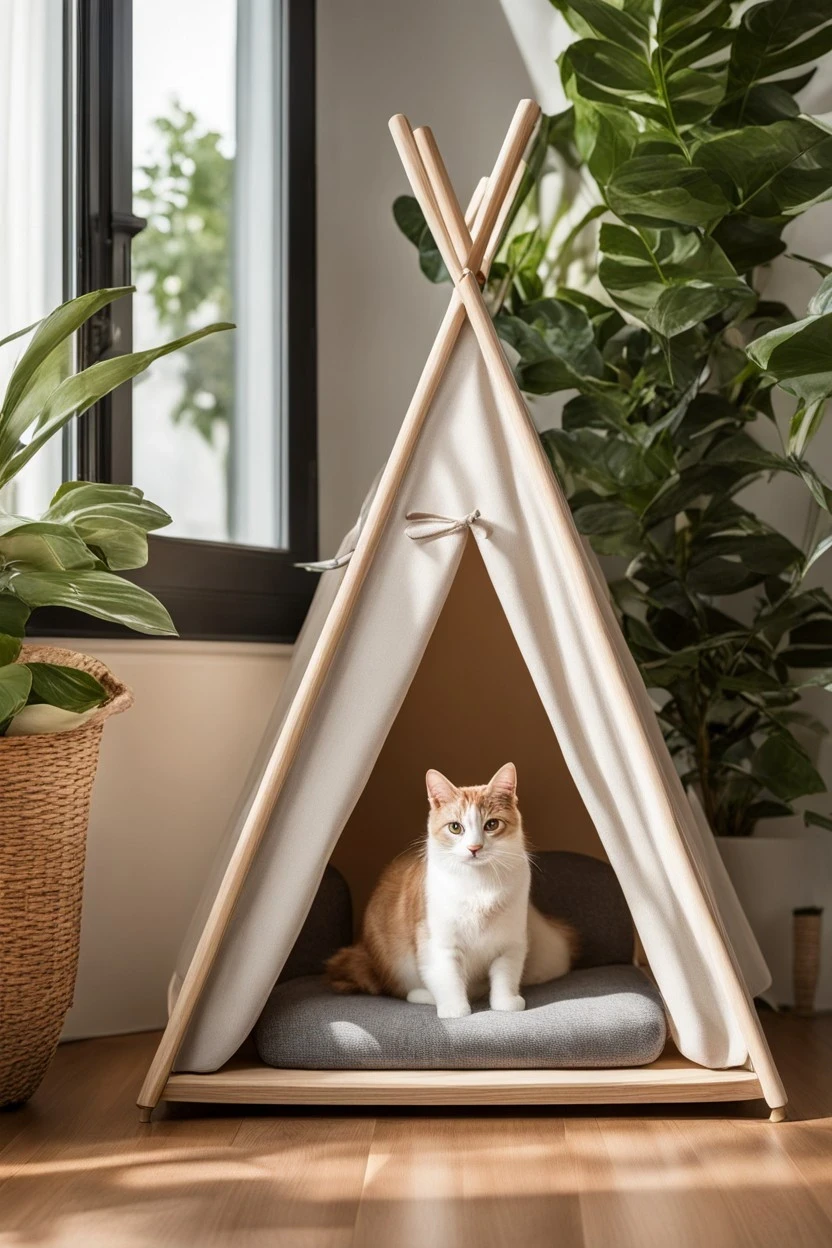
I know how frustrating it is when you can’t mess with the walls in a rental. Thankfully, lots of products and creative tweaks let you build a cat corner without picking up a power tool.
Tension poles can create vertical levels between the floor and ceiling, but only use products specifically designed for this purpose and follow the manufacturer’s installation and weight-limit instructions. Freestanding cat trees fit nearly anywhere and don’t require hardware. For the truly tight squeeze, use purpose-built modular cubes or stable cat furniture for climbing and sleeping rather than stacking ordinary boxes where they could shift or collapse. Suction-cup perches and window hammocks designed for cats can add perching space where a shelf won’t fit. For scratchers, try angled floor mats or place a scratch pad under a table. It’s about choosing furniture that works with your rental’s rules instead of against them. Thinking outside the box, even laundry baskets or ottomans serve as dual-purpose lounge spots and storage, giving you more cat corner options without the need for drilling.
Should You Put a Litter Box in a Cat Corner?
#ad | Affiliate links below.
It’s tempting to stash everything—bed, food, and litter box—all in one zone, but cats generally benefit from having important resources appropriately separated rather than crowded together. [2][4] I usually recommend placing the litter box nearby but with some separation, if possible. Even in a tiny apartment, separating the sleeping and eating area from the litter box can make resource placement easier to manage and may better accommodate your cat’s preferences. [2][4]
If you need to use dual-purpose furniture, litter box enclosures can work, but watch out for poor ventilation or access. Odor control, accessibility, ventilation, and ease of cleaning really matter. Stylish litter box cabinets can be useful, but make sure the enclosure doesn’t restrict access or create an unpleasant environment for your cat. [4] Ultimately, prioritize your cat’s comfort and habits above having an aesthetic look. Keeping the box in a well-ventilated, easy-to-clean spot makes daily scooping and maintenance less of a chore.
Make the Cat Corner Comfortable for Nervous, Senior or Multiple Cats
#ad | Affiliate links below.
If you live with a nervous or senior cat, extras like heated pads, lower beds, and quiet covered spots make a big difference. Older cats may struggle with high climbs, so ramps or padded shelves help keep them involved. Nervous cats may benefit from hiding places that provide security while still allowing them to monitor their surroundings. [3]
For households with multiple cats, provide multiple hiding, resting, scratching, and other essential resources so cats have choices and don’t have to compete for access. [2][7] Stagger shelves, lay out two beds, and create separate feeding or litter spots as needed. Each cat values options, so I aim to offer a variety of textures and heights to help everyone feel at home. Adding an extra cat tree, a second window perch, or multiple resting pads spreads out the available resources and can help reduce competition between cats. [7] This simple change goes a long way in households with more than one cat.
Add Enrichment Without Overcrowding the Corner
#ad | Affiliate links below.
Overloading a small corner with toys and towers can quickly turn it into a mess, cramping up your space. Focus on rotating a few interactive toys, like wand teasers and puzzle feeders, and storing the rest in a bin nearby. [6] Toys that attach to floor or windows offer play without clutter. Sometimes, just one new scent or a moving toy keeps things interesting without cramping the space. For my cats, the best enrichment comes from a variety of textures and the occasional rearrange, not a pile of new stuff. [6] Even rotating the orientation of a scratching post or shifting a cushioned bed keeps the environment stimulating without taking up extra room.
Cat-Proof Your Cat Corner
#ad | Affiliate links below.
Keeping your cat safe and your space tidy is a big part of a good cat corner. Cord protectors can help keep electrical wires contained and reduce opportunities for chewing. Window locks or screens help prevent curious cats from escaping through the windows. Anchor any tall or heavy furniture to the wall with furniture anchors, especially if you live with energetic cats or kittens.
I also skip plants that are toxic to cats and opt for cat-safe alternatives, since some common houseplants can be harmful if chewed. [11] Non-slip pads can help keep furniture such as tables and chairs from sliding, creating a more secure and stable setup. Regular safety checks, especially after big play sessions, help you spot loose or damaged items before they cause problems.
Cat Corner Ideas Without Buying Furniture
#ad | Affiliate links below.
If you’re on a tight budget, a soft, washable blanket on a sturdy box can be just as cozy as a fancy cat bed. A recycled cardboard box with holes cut out can serve as a simple hiding spot, while a separate piece of cardboard can provide a scratching surface. [5][6] Even a rolled-up towel on a sunny shelf can make a simple perch. Old T-shirts stuffed in a pillowcase can create a familiar, scent-rich resting spot that some cats may enjoy. Bringing a bit of your scent into the space reassures your cat, especially during stressful transitions or after moves.
How to Keep a Cat Corner Clean and Organized
#ad | Affiliate links below.
Keeping cat corners tidy is easier with a washable bed, storage boxes for supplies, and a bin for toys. A litter mat can help catch litter that gets tracked outside the box. A handheld vacuum or lint roller picks up hair and crumbs in just a few minutes a week. I find a regular clean quickly becomes a habit once the basics are in place. Regularly cleaning bedding, wiping down surfaces, and washing food and water dishes can help keep the area clean and reduce accumulated dirt and odors. Follow the care instructions for each product and clean items as needed. This organization approach keeps cat corners welcoming and healthy with minimal effort.
Why Is My Cat Avoiding Its Corner?
If your cat is steering clear of the space, check for noisy spots, unwanted smells, or location mishaps. Maybe the litter box is too close to food. Cats can be sensitive to changes in their environment, so new beds, toys, litter, or furniture may be better introduced gradually. [2][6] Switching up bedding, balancing social time versus privacy, or nudging the spot a bit can help your cat embrace their corner again. Watch their body language to see if it’s just a mood or a real discomfort with the setup. If the problem persists, try moving the corner to a higher or quieter location, away from drafty doors or busy hallways. Sometimes, just a minor tweak solves the problem and gets your cat back to lounging happily in their space.
Cat Corner Shopping Checklist + Price Comparison
#ad | Affiliate links below.
When shopping for a cat corner, look for variety in budget and features. Three popular options include:
- Budget pick: Amazon Basics Cat Condo. Amazon Basics is known for its affordable everyday essentials.
- Midrange: Yaheetech 63in Sturdy Large Cat Tree. This tall cat tree combines multiple levels with a condo, hammock, and scratching posts, making it an option for households looking for several functions in one piece of furniture.
- Splurge: Globlazer F70 Pro Heavy Duty Cat Tree Tower. The F70 Pro is a 70-inch cat tree designed for larger adult cats, with a large hammock and multiple elevated areas.
Prices can really vary with sales or if you shop used. I always check product dimensions and return policies first, especially for tricky apartment layouts. Refurbished or gently used cat furniture from local classifieds or rescue organizations can also save you money and reduce waste, all while providing just what your cat needs.
Ready to Create Your Cat’s Own Little Corner?
Start with a spot your cat already loves, then add just the pieces that suit their habits best. There’s no need to spend a lot to make your space both cat-friendly and renter-approved. By focusing on your cat’s needs and a few fun touches, you’ll create a cozy hideaway that works in any home. Whether your cat is a kitten, a senior, or a quirky middle-aged explorer, a well-planned cat corner can provide comfortable places to rest, play, scratch, and retreat while making better use of your shared space. Take it step by step, pay attention to your cat’s reactions, and you’ll stumble upon the perfect blend of function and fun in no time at all.
Creating a cat corner is a great way to give your feline companion a space of their own, but you don’t have to stop there. The rest of your home can also be thoughtfully arranged to support your cat’s comfort, confidence, and natural behaviors. For more ideas, check out How To Create A Stress-free Environment For Cats for ways to make your home feel calmer and more secure, or How To Create A Cat-friendly Home for practical tips on making your entire living space more welcoming for your feline companion. Together, these ideas can help you create a home that works beautifully for both you and your cat.
References
[1] American Association of Feline Practitioners (AAFP) & International Society of Feline Medicine (ISFM). 2013 AAFP/ISFM Environmental Needs Guidelines. Feline Veterinary Medical Association. https://catvets.com/resource/aafp-isfm-environmental-needs-guidelines/
[2] Feline Veterinary Medical Association (FelineVMA). Setting Up the Environment for Success. https://catvets.com/resource/setting-up-for-success/
[3] Ohio State University College of Veterinary Medicine, Indoor Pet Initiative. Hiding Instinct. https://indoorpet.osu.edu/cats/understanding-cats/hiding-instinct
[4] American Association of Feline Practitioners (AAFP) & International Society of Feline Medicine (ISFM). Feline House-Soiling: Useful Information for Cat Owners. Feline Veterinary Medical Association. https://catvets.com/wp-content/uploads/2024/01/HouseSoiling-B&W.pdf
[5] Ohio State University College of Veterinary Medicine, Indoor Pet Initiative. Scratching. https://indoorpet.osu.edu/node/449
[6] Ohio State University College of Veterinary Medicine, Indoor Pet Initiative. Environmental Enrichment. https://indoorpet.osu.edu/node/435
[7] Ohio State University College of Veterinary Medicine, Indoor Pet Initiative. Conflict Between Cats. https://indoorpet.osu.edu/cats/problemsolving/conflict
[8] Feline Veterinary Medical Association (FelineVMA). 2024 Indoor/Outdoor Lifestyle Position Statement. https://catvets.com/resource/2024-indoor-outdoor-lifestyle-position-statement/
[9] Ohio State University College of Veterinary Medicine, Indoor Pet Initiative. Perches. https://indoorpet.osu.edu/cats/basic-indoor-cat-needs/perches
[10] Feline Veterinary Medical Association (FelineVMA). Living Alongside Cats’ Claws. 2025. https://catvets.com/wp-content/uploads/2025/06/ClawCounseling-LivingAlongsideCatsClawsArticle-FelineVMA-2025.pdf
[11] American Society for the Prevention of Cruelty to Animals (ASPCA). Toxic and Non-Toxic Plant List — Cats. https://www.aspca.org/pet-care/animal-poison-control/cats-plant-list
[12] International Cat Care. iCatCare Kitten Booklet. 2024. https://icatcare.org/resources/icatcare-kitten-booklet-2024.pdf