
Cats often feel happiest and healthiest when their living spaces match up with their natural instincts and needs. These animals notice everything: a new couch, a change in routine, or even a different scent can all cause them to feel uneasy. A stress-free environment for cats does not have to be silent or completely unchanging. It’s more about creating places where they feel safe, making it easy for them to access food, water, and litter, giving them hideaways, scratch posts, toys, and enough room to explore and climb, and setting up a daily routine they look forward to each day. [1] When I make adjustments in my home, my cat can choose when and where they want to interact, while always having a safe space to retreat to when they need a break.
Stress in cats can develop for many reasons and may show up as changes in behavior or daily habits. Ongoing stress may cause some cats to hide more, groom themselves less or excessively, or eat more or less than usual. [2] However, these changes can also be signs of an underlying health problem. Sometimes, fixing the environment helps, and other times, the cat needs more support or even treatment.
Cats can experience stress from factors such as changes in their environment, conflict with other cats, strained relationships with people, or not having opportunities to perform natural, highly motivated behaviors. Prolonged stress can affect their behavior and wellbeing and may contribute to reduced food intake, urine marking, aggression, and excessive grooming. Providing appropriate environmental enrichment and carefully managing interactions between unfamiliar cats can help prevent or reduce stress-related behavioral problems. [2]
🐾 Purr-lease Note: FelineGo is an Amazon Associate, which means we may earn a small commission from qualifying purchases made through some of the Amazon links on this site. This comes at no extra cost to you and helps support FelineGo and our mission to create helpful content for cat parents. Thank you for supporting our little corner of the cat world! 🐱💕
#ad
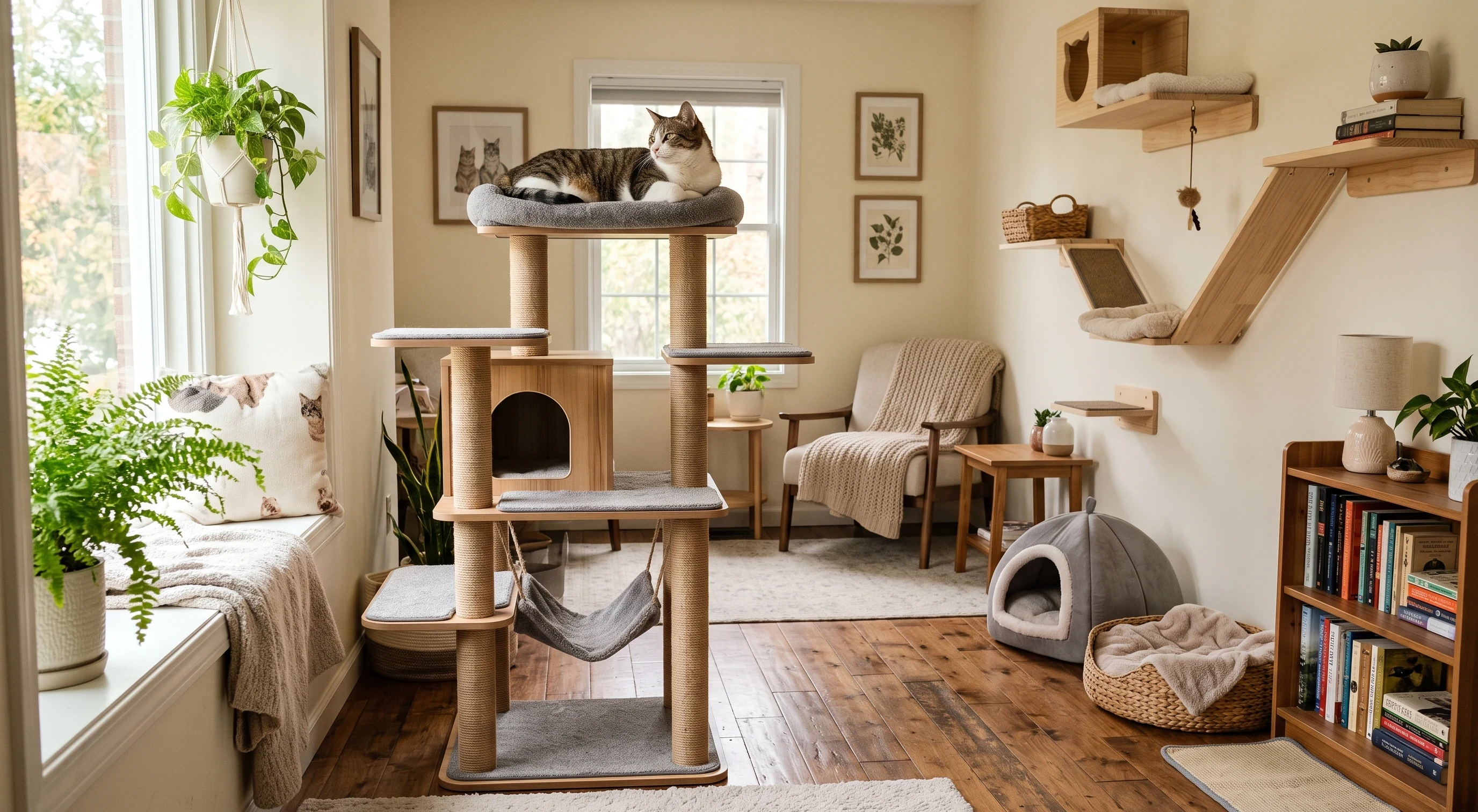
Creating a safe haven for your cat can help them feel secure, comfortable, and relaxed. Here are some of our top picks to help create a cozy space they’ll love:
What Causes Stress in Cats?
Understanding the triggers for cat stress lets cat owners prevent problems early on. Even small changes in the home can have a big effect on a cat’s sense of safety and comfort. Some things are easy to miss, while others stand out right away. Over time, being able to spot these triggers helps keep the household calm for both you and your feline companion.
Changes in the Home
- Moving to a new home is usually stressful for cats. The new smells, furniture, and layout can leave them feeling disoriented. Even after the move, it might take several weeks for a cat to feel at ease and claim favorite spots again.
- Renovations or home improvement projects bring a lot of noise, movement, and unfamiliar objects into a cat’s territory. Redecorating or changing flooring can have a similar effect and leave cats searching for somewhere familiar.
- Even something simple like moving furniture into a new arrangement or introducing new decor can make a cat more cautious and withdrawn until they become familiar with the changes.
- Changes to daily routines, such as someone starting a new job, children returning to school, changes in feeding or playtime, or a family member moving in or out, can be stressful for some cats. Changes to their surroundings, such as moving furniture, renovating the home, or welcoming a new pet, can also disrupt their sense of familiarity. During these transitions, some cats may become more clingy or vocal, hide more than usual, or show other changes in behavior while they adjust. [2]
New People or Animals
- Adding a new baby to the family can change a cat’s environment in several ways, including increased noise, changes to daily routines, and less attention from familiar people. New scents from baby products, along with unfamiliar furniture and equipment, can also make the home feel different.
- Guests or visitors can make shy cats retreat or become nervous. Some cats may hide during a particularly busy gathering.
- Bringing home a new dog or another cat can trigger territorial behaviors and anxiety, especially if introductions happen too quickly or resources are not shared properly. [1][2]
- Any significant switch-up in who’s living at home, even someone moving out, can affect how secure a cat feels.
Competition for Resources
In homes with more than one cat, sharing essentials can create ongoing tension. I learned early on that it’s helpful to give each cat their own resources to prevent arguments or resource-guarding. Fighting over resources is one of the most popular reasons for stress-driven issues among multi-cat households.
When introducing a new cat into a household with resident cats, allow them to become familiar with each other gradually. Providing multiple options for hiding, perching, eating, drinking, and using the litter box gives each cat more choice and control over their environment, which can help reduce fear and tension. Adult cats may also find it easier to accept a kitten than another adult cat. When adding multiple cats, adopting cats that already have a strong social bond, such as a bonded pair, may be preferable to combining cats from different social groups. [1]
- If all food or water bowls are in the same spot, some cats might eat less because they feel intimidated or bullied. Providing separate feeding areas can help reduce competition and allow cats to eat in a more comfortable, low-stress environment. [1]
- Shared litter boxes often lead to accidents or avoidance, and some cats even block others from using them. [1][3]
- Sleeping spots, scratch posts, and hiding places should not be crowded or positioned all together, so cats have choices and can avoid each other if they need space. Separation brings peace and helps everyone rest easier. [1]
Lack of Environmental Enrichment
- Cats need places to climb, like cat trees or shelves. [1]
- Having too few toys or not rotating play activities can make cats bored and frustrated. Offering new and interesting toys periodically brings excitement back to everyday life.
- Without safe hiding areas, cats may hide under furniture, try to escape rooms, or become more anxious during loud events.
- Scratching, hunting, and climbing are natural behaviors for cats. Without appropriate outlets for these activities, a cat may turn to furniture or other household items instead, while frustration or stress can sometimes contribute to other unwanted behaviors. [1][2]
Looking for enrichment ideas? 20 Indoor Activities To Keep Your Cat Entertained: DIY Cat Playtime Activities
Excessive Noise and Unpredictable Activity
- Loud appliances, construction sounds, or fireworks are all things that put many cats on edge. They will usually find a quiet place to hide until it’s over.
- Lots of unpredictable movement, including children running or rough play, disrupts a cat’s sense of safety. [2]
- Frequent visitors or disruptions can make it harder for cats to settle down and relax. [2]
10 Ways to Create a Stress-Free Environment for Your Cat
Building a cat-friendly home goes beyond just meeting their basic needs. I try to include a mix of security, comfort, opportunities for natural behaviors, and control in my cat’s daily life. Tailoring your living space to your cat’s preferences helps both of you coexist more harmoniously.
#ad
Giving your cat a dedicated retreat can provide a comforting place where they can rest, hide, and unwind. Here are a few products we recommend for creating a cozy and cat-friendly sanctuary:
1. Give Your Cat a Safe Place to Retreat
Having a safe space for cats is one of the best ways to help them feel at home. [1] This could be a cozy bed tucked away in a quiet corner, a space behind the sofa, or a box with blankets inside a closet. My cat uses her safe space during thunderstorms, when we have guests, or any time she wants some downtime. I make sure nobody disturbs her when she’s there, and she always has a way out so she doesn’t feel trapped.
Making these spaces more inviting by adding familiar blankets or old t-shirts with your scent gives a touch of comfort. Cardboard boxes, tents, or covered beds give extra protection. Place these in areas away from major household traffic so your cat can really relax.
2. Add Vertical Space
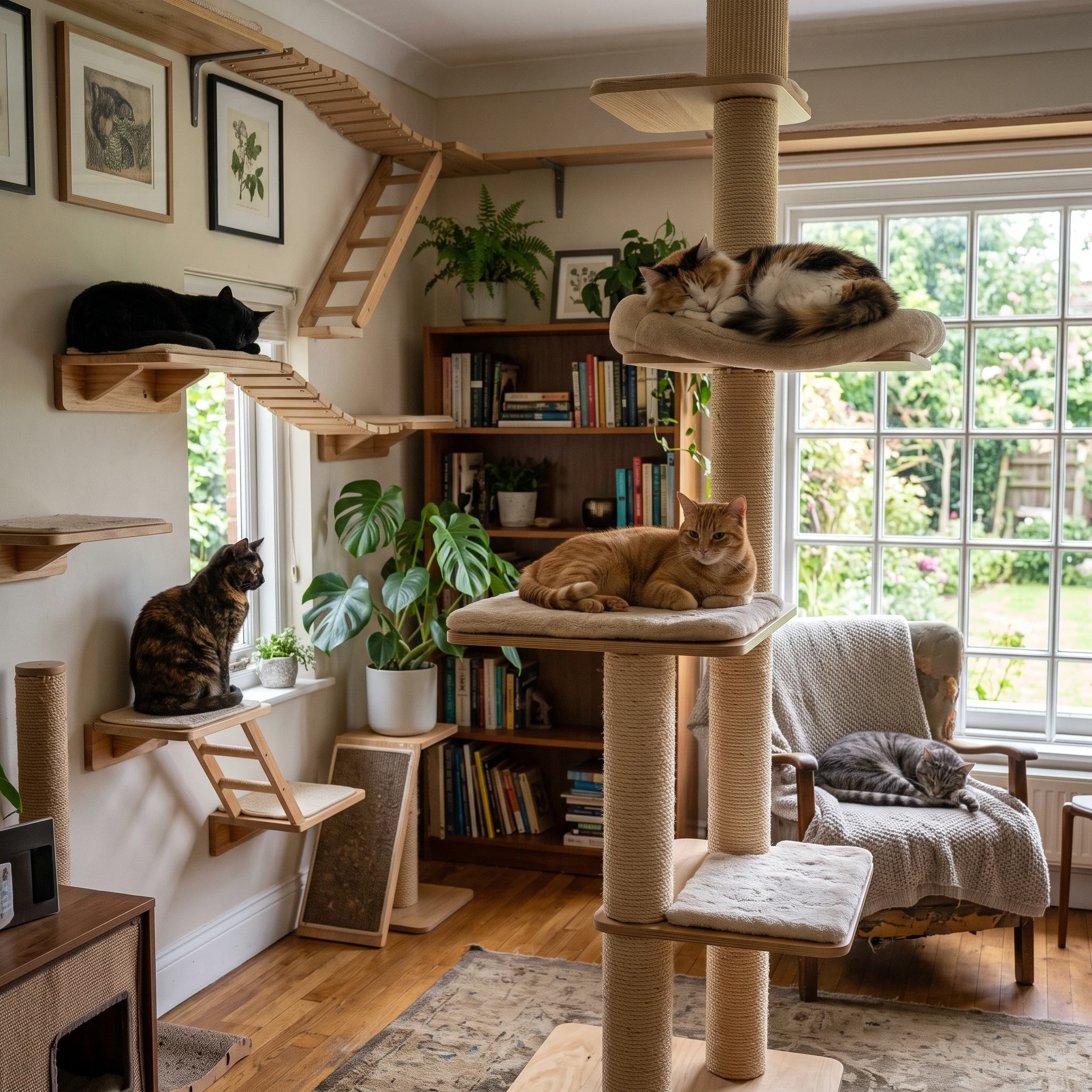
Cats naturally like to climb and perch above the action. Installing cat shelves along one wall and having a tall cat tree in the living room are good examples. This gives a cat a good view of her surroundings and lets her get away from busy areas or other animals. Vertical spaces don’t have to be fancy, sometimes just moving a chair by a window or placing a shelf in a quiet spot adds variety. [1]
Multiple perches set at different heights allow cats to choose their favorite spot depending on their mood. Some cats prefer basking in the sun, while others want high, shaded corners. Rearranging household furniture to create easy jumping routes can also help especially if your cat is getting older.
3. Provide Enough Resources for Every Cat
In a multi-cat household, I find that the best way to reduce tension is to spread out food, water, litter boxes, scratchers, and beds. I avoid placing all the bowls in one room or making cats share a tiny sleeping spot. Good resource distribution cuts down on fights and lets each cat eat, drink, and nap undisturbed. [1]
This goes for treats too: offering treats individually rather than tossing a pile keeps each cat from feeling bullied. Monitoring which cat is using which resource occasionally can shed light on hidden conflicts and make adjustments as needed.
4. Create a Calm and Comfortable Feeding Area
When my cats eat, they prefer spaces that are quiet. I don’t put their bowls next to the litter box or in a busy hallway. Instead, the food and water are in a spot where they can see what’s coming and won’t get startled by passing feet or other animals. Keeping the feeding area predictable helps my cats look forward to mealtimes. [1]
Avoiding strong odors, sudden movement, and high foot traffic during feeding times assist in making eating a stress-free activity. Some cats like soft background music, while others do better with silence. Observing preferences and adjusting the environment can make a big difference.
5. Make the Litter Box Area Comfortable
Following good cat litter box practices really helps reduce stress in cats. I use large, uncovered boxes and keep them clean by scooping at least twice daily. Each box is in a low-traffic area, but not hidden so far away that my cats can’t find it quickly. Some people prefer covered boxes, but uncovered ones help many cats feel safer because they don’t feel trapped. [1]
It’s also important to provide a box for every cat plus one extra, and to experiment with different types of litter to find what your cat prefers. Regular cleaning and avoiding harsh deodorizers prevent unpleasant associations and keep the area appealing. [1][3]
A stressful environment can contribute to urine marking and may worsen signs associated with feline idiopathic cystitis (FIC). Reducing fear and anxiety can help decrease urine marking, tension between cats, and other behavioral effects associated with chronic stress. [3]
6. Provide Opportunities for Play and Natural Behaviors
Toys that move, dangle, or make noise can keep a cat’s mind and body happy. Try to rotate toys each week so your cat stays interested, and set up regular play times with wand toys or small balls. Scratching posts or boards are great for stretching and marking, saving your furniture in the process. If your cat seems bored, make simple changes like scattering treats for her to hunt or using puzzle feeders to challenge her. [1]
Enrichment goes beyond play—window perches, bird feeders outside, and rotating variety in toys brings new stimuli inside, keeping things lively for indoor cats. Hunting for food in snuffle mats or treat balls satisfies their hunting instincts too. [1]
More enrichment ideas here: Puzzles And Challenges For Indoor Cats
7. Establish a Predictable Routine
Cats appreciate knowing when to expect food, play, and naps. While my days aren’t always identical, I keep things mostly consistent, feeding at similar times, keeping play sessions around the same hour, and sticking to regular cleaning routines. Predictability makes my cat feel more secure, but I don’t stress over being rigid. What counts is the overall sense of consistency. [1]
Even when my own schedule gets busy, I ask family to check in so my cats never feel abandoned. Routine is especially important during holidays, moving, or other big events.
8. Let Your Cat Choose When to Interact
I give my cats the freedom to approach me or other family members on their own terms. If they come over for a scratch, great; if they walk away, I let them go without making them feel uncomfortable. I also let them hide or nap in spots that feel safe. Giving cats control over their interactions really boosts their sense of security and comfort at home. [1]
This extends to play. Some cats love rough-housing, while others enjoy gentle petting or chatting from across the room. Respecting their level of interest keeps our bond strong and minimizes stress-related behaviors.
9. Reduce Unnecessary Noise and Sudden Disturbances
I keep my home as quiet as possible, turning down the TV, softening door closes, and avoiding loud equipment near where my cat relaxes. When noisy events, like parties or repairs, are unavoidable, I make sure my cat has access to her safe space with treats, comfort, and familiar items. Even small efforts to soften everyday sounds help my cat decompress. [2]
White noise machines, fans, or soft background music provide a buffer during particularly loud moments. Drawing curtains can help block out noisy neighbors or street commotion, especially for anxious cats.
10. Introduce Changes Gradually
Every time I move furniture, bring home new pets, or swap out old items, I do it step by step. Cats adjust better when things change slowly. I introduce new pets by scent first, let my cat explore new furniture when it’s quiet and no one’s watching, and make only one or two changes at once rather than a total overhaul. [2]
Letting your cat explore changes with you present gives her confidence. When possible, keep corners or certain rooms unchanged so she always has familiar territory to return to. Using pheromone sprays during transitions can add further reassurance.
How to Tell If Your Cat May Be Stressed
Sometimes it’s easy to overlook subtle signs of stress in cats, especially because they often hide how they feel. Understanding normal behavior for my cat helps me notice when something’s off. I watch for both obvious and small behavioral shifts, keeping a simple journal when needed to track patterns.
Behavioral Changes
- Hiding much more than usual, including spending hours under the bed or in a closet, can be one of the first signs. Refusing to come out for meals or treats may signal deeper distress. [2]
- A cat that suddenly avoids people, when she used to love attention, might feel anxious or threatened. [2]
- Some cats become more vocal, meowing loudly or crying at odd times. Other cats go suddenly quiet if stressed. [2]
- Others may lash out or become grumpy when they usually enjoy gentle petting. [2]
- Restlessness, such as frequent pacing or being unable to settle, is another sign to watch for in a typically calm cat. [2]
Changes in Normal Habits
- If you notice appetite changes, eating less, more, or refusing food entirely, it often signals something’s not right. [2]
- Overgrooming, bald patches, or less grooming can also signal stress or health problems. [2]
- Accidents outside the litter box or a sudden preference for odd locations to pee or poop are warning signs, especially if the cat was litter-trained. [2][3]
- Reduced play or losing interest in toys and activities a cat normally enjoys may also be a sign of stress, especially when it represents a noticeable change from their usual behavior.
Stress may cause these shifts in behavior, but sometimes they point to medical issues like pain, infections, or illness. Keep an eye out for patterns, and if changes last more than a few days or seem serious, reach out to your veterinarian for advice.
Creating a Stress-Free Environment in a Multi-Cat Home
Living with more than one cat comes with unique challenges. I put in extra effort to make sure each cat gets what they need and has enough space to retreat. Watching how cats interact can clue you in to subtle social stress many owners miss at first.
- I set up several food and water bowls in different locations, so no cat needs to cross through another’s space to get a drink or a meal. [1]
- There are litter boxes in at least two rooms, with the general rule being one box for every cat plus one extra. It really cuts down on fights or accidents. [1][3]
- Separate beds, cat trees, and window perches help limit disagreements and give each cat a resting spot where they feel ownership. Even window ledges or shelves set apart keep everyone happy. [1]
- Keep multiple scratching posts and boards in different areas. Cats can mark territory and relieve stress without bumping into each other. [1]
- Shelves and tall furniture help cats escape vertically. My cats love sitting above the action for a break. [1]
- Hiding spaces like boxes, open cupboards, or covered beds are always available. If my cats need alone time, nobody disturbs them. [1]
- I watch interactions for signs of bullying, subtle staring, blocking access, or chasing, and provide enrichment or separation if needed. [1][2]
- No cat is forced to interact, and everyone can approach or leave at their own pace. [1]
Adding scent exchanges (like swapping bedding) and using calming pheromone products can also ease group tension and encourage a more relaxed dynamic among resident felines.
Related article: How To Create A Cat-friendly Home
What Not to Do When Trying to Reduce Cat Stress
Sometimes, well-meaning efforts to help cats feel better actually cause more anxiety. I avoid these mistakes to keep my home cat-friendly:
- Punishing fearful or anxious behavior doesn’t help. I try to comfort my cat and give her space instead. [2]
- Forcing my cat to cuddle or socialize usually backfires, so I respect her choices and boundaries.
- Removing all hiding places just makes my cat more desperate to escape, so I leave cardboard boxes or covered beds out for her. [1]
- Making cats share one tiny litter box or feeding area only increases tension. I make sure essentials are easily accessible for everyone. [1][3]
- Big or sudden changes, like quickly remodeling an entire room or bringing home a new pet in one day, can leave a cat feeling unsafe. Gradual change works best since it gives cats time to adjust. [2]
- I avoid strong fragrances, such as scented candles or air fresheners, that can overwhelm my cat’s sensitive nose or even be harmful to them.
- If a cat’s behavior changes suddenly, don’t just ignore it. Sometimes, the problem is more serious than we realize.
When to Talk to a Veterinarian
I know that making my home more comfortable is only one part of supporting my cat’s health and happiness. If you spot persistent behavior changes, sudden withdrawal, aggression, or any concerning habits that don’t improve with environmental adjustments, quickly check in with a veterinarian. Stress can sometimes disguise underlying medical or behavioral issues. Your vet can help rule out physical illness and give advice on targeted behavior support or therapeutic options if needed.
Frequently Asked Questions
How can I make my home less stressful for my cat?
I focus on providing safe spaces, sticking to a routine, offering enrichment such as toys and climbing spots, and letting my cat have control over her environment whenever possible. [1]
What is the best environment for a cat?
The best cat-friendly home gives cats options: places to hide, climb, scratch, and play, enough resources for everyone, and a consistent, predictable routine. [1]
How do I make my cat feel safe at home?
I offer private hiding spots, avoid forcing interactions, and always let my cat approach on her own terms. Having a set routine and low-stress daily life adds to her sense of safety. [1]
What helps cats relax when they are stressed?
Familiar items like favorite beds, gentle play, quiet spaces, and having things smell like home often comfort stressed cats. Sometimes pheromone diffusers (like Feliway) help too.
Can environmental enrichment reduce stress in cats?
Yes. Enriching the environment through toys, new climbing areas, hiding spots, and play keeps cats engaged and helps lower their stress levels. [1][2]
How can I reduce stress in a multi-cat household?
I make sure each cat gets their own resources, monitor for conflict, and watch for signs of stress so I can adjust the environment as needed. [1][2]
Should I give my stressed cat a hiding place?
Definitely. Most cats cope better with stress when they have at least one safe, private spot to retreat to whenever they need. [1]
Final Thoughts
Creating a stress-free environment for cats is a day-by-day process. My cat’s needs sometimes change with age or life events, and I stay flexible in how I adjust the living space. With enough safe spots, enrichment, consistent routines, and gentle support, any home can be a much calmer place for cats; mine included. Staying attentive to small changes helps me keep my cats happy, healthy, and feeling safe at home. [1][2]
References
1. Ellis SL, Rodan I, Carney HC, et al. AAFP and ISFM feline environmental needs guidelines. Journal of Feline Medicine and Surgery. 2013;15(3):219–230. doi:10.1177/1098612X13477537. View source
2. Amat M, Camps T, Manteca X. Stress in owned cats: behavioural changes and welfare implications. Journal of Feline Medicine and Surgery. 2016;18(8):577–586. doi:10.1177/1098612X15590867. View source
3. Carney HC, Sadek TP, Curtis TM, et al. AAFP and ISFM Guidelines for diagnosing and solving house-soiling behavior in cats. Journal of Feline Medicine and Surgery. 2014;16(7):579–598. doi:10.1177/1098612X14539092. View source