
Indoor cats are protected from many outdoor risks, but that safety can come with a tradeoff. Boredom can creep in for indoor cats, making them less engaged and sometimes even restless. As someone who has spent years living with indoor cats, I’ve found that giving them chances to play, explore, hunt, scratch, and use their brains makes a big difference in their happiness and overall well-being. The good news is you don’t need fancy cat trees or the latest gadget to create a great environment for your indoor cat. Many of the best cat enrichment activities for indoor cats are simple to make, cost very little, and use things you already have at home—meaning you can try them today without a lot of prep work. Here are 20 fun indoor activities that include plenty of DIY cat playtime ideas you can check out right now and some bonus tips for making life inside much more enjoyable for your feline friend.
🐾 Purr-lease Note: FelineGo is an Amazon Associate, which means we may earn a small commission from qualifying purchases made through some of the Amazon links on this site. This comes at no extra cost to you and helps support FelineGo and our mission to create helpful content for cat parents. Thank you for supporting our little corner of the cat world! 🐱💕
#ad
Recommended Products To Recreate This Look:
🐾 Corrugated cardboard cat scratcher
20 Indoor Activities to Keep Your Cat Entertained
Entertaining an indoor cat doesn’t have to be a huge challenge. Here are 20 ideas that can keep your cat active, curious, and happy inside. These activities are great for cats of all ages and can be easily changed up based on what your cat seems to enjoy most. Remember to supervise your cat with any new activity, especially if you’re using homemade toys or household items. Safety always comes first.
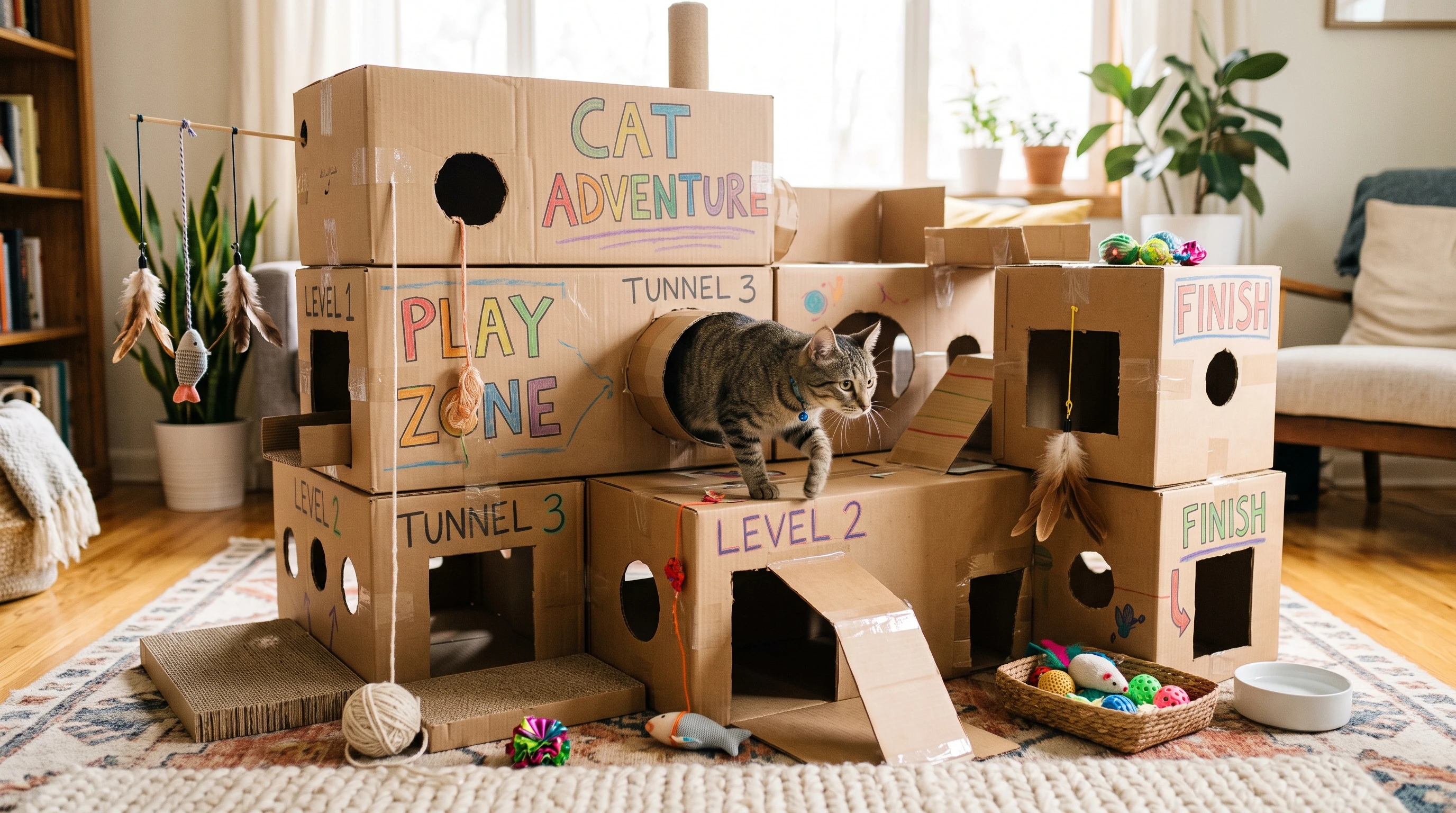
1. Create a Cardboard Box Hideout
A plain cardboard box can become so many things for your cat. You can cut holes in a large box to transform it into a hideaway, a play tunnel, a fort, or even a cool exploration area. Some cats love hiding, so placing a cozy towel inside can turn it into a nap spot as well. Stacking a few boxes or connecting them can create a mini fortress your cat will enjoy checking out over and over.
2. Make a DIY Cat Toy From Paper
Cats don’t need complicated toys to have fun. I often crumple up a piece of plain paper into a ball and toss it across the floor. Strips of paper or even safe paper bags (without handles) can become playthings, keeping your cat busy and entertained. Always supervise your cat and avoid small or sharp objects they might try to chew or swallow.
3. Set Up a Cat Treasure Hunt
Hiding treats around a room or behind furniture is a fun way to challenge your cat’s hunting skills. You may want to try placing a treat or two in different spots and let your cat sniff them out. This makes treat time more exciting and gets your cat up and moving, tapping into natural foraging instincts cats have even indoors.
4. Play With a Wand Toy
A wand toy is one of the best things for active play. Run the wand across the floor, wiggle it behind furniture, or bounce it up and down to mimic prey. It encourages your cat to chase, jump, and pounce. Just remember to put the wand away when you’re done, since some cats will chew on the string if left out.
5. Turn a Paper Bag Into a Play Area
A paper grocery bag can be a playground all on its own. My cat loves crawling in, hiding, jumping out, and listening to the rustling sounds. Always cut off the handles before offering it, since they can be a hazard if your cat gets tangled. Also make sure there are no staple wires left on the bag.
6. Make a DIY Puzzle Feeder
You can turn cardboard tubes, small boxes, or even paper cups into a food puzzle. By cutting holes in a box just big enough for paws and putting dry kibble or treats inside, you can create a basic DIY puzzle feeder. Pushing the food out keeps any cat busy and combines mental stimulation with snack time. This is especially useful for cats who eat too quickly—slowing things down can be healthier and more satisfying.
7. Create a Cat Tunnel Course
Whether you buy a collapsible tunnel or make your own out of boxes and paper bags, tunnels invite running, hiding, and springing. Arranging them throughout the living room keeps things interesting and encourages lots of movement from one corner to another.
8. Teach Your Cat a New Trick
Training is not just for dogs. Cat owners can use treats and a clicker or a special word to reinforce behaviors like “sit,” “high five,” or “spin.” Short, positive sessions can be fun and make your cat use their brain. Don’t forget to reward progress with plenty of treats and praise.
9. Set Up a Window Watching Station
You can put a perch or soft bed near a safe window where your cat can watch birds, squirrels, or whatever’s happening outside. A window seat can give your cat hours of entertainment, and even a screened window for fresh air (supervised) is a bonus. You can also add a bird feeder outdoors to bring even more action right to the window.
10. Rotate Your Cat’s Toys
I notice that my cat gets bored if all the toys are out at once. Keeping some toys hidden and swapping them every few days makes old toys seem new again and keeps interest high. You’ll be surprised how quickly your cat gets excited about a “new” toy they haven’t seen in a while.
“You don’t need to spend a lot to keep your cat happy. I’ve found that many DIY cat playtime activities use everyday household materials like boxes, paper towel rolls, and other safe materials. These activities not only save money but can be customized based on your cat’s preferences and play style. Here are 10 more ideas you can try, and most of them are so easy you can put them together in just a couple minutes.”
11. Make a DIY Toilet Paper Roll Puzzle Toy
Used toilet paper rolls can be filled with treats or kibble and then folded at the ends. Your cat will bat them around and try to get the treats out, giving them a mental workout and using recyclables you already have at home.
12. Create a DIY Snuffle Box
Fill a shallow box with safe items like crumpled paper, fabric strips, or tissue. Scatter dry cat food or treats in the mix and let your cat sniff out the hidden prizes. This taps into natural foraging behaviors and slows down eating, too, which helps with digestion.
13. Make a DIY Cat Fishing Game
With a stick, a piece of string, and a lightweight toy or feather, you can make a simple “fishing pole.” Dangle it for your cat and see if they can catch the “fish.” Just be sure to put this one away after playtime to keep it safe.
14. Build a DIY Cardboard Cat Maze
Arrange cardboard boxes with entry and exit holes, then connect them to create a mini maze. Toss a treat or favorite toy inside to encourage exploration. You can change the maze layout every now and then to keep it new and interesting.
15. Make a DIY Cat Scratch Pad
Stack and glue layers of corrugated cardboard together to make a scratching pad. Most cats will love these homemade versions—it saves the furniture, and you can make the scratcher as big or as small as you want.
16. Create a DIY Treat Hunt
Hide healthy treats under cups, boxes, or small piles of paper around a room. Your cat will tap, lift, and bat away the coverings to get the treats, keeping their nose and paws busy—a great mental exercise.
17. Make a DIY Batting Box
Cut holes in a shallow box and drop in some pingpong balls or crumpled paper balls. Cats love to reach in and swat at the moving targets, and this can keep them entertained on their own for quite a while.
18. Create a DIY Paper Ball Game
Crumple up several small balls of paper and toss them into an empty room or hallway. The balls bounce in unpredictable ways, and your cat gets to chase and bat them without losing them under furniture as easily.
19. Build a DIY Cat Fort
Use pillows, blankets, and boxes to build a mini fort. My cat loves crawling through tunnels made of chairs and blankets or hiding in cozy blanket forts. Change the design up now and then for a new adventure.
20. Make an Indoor Cat Obstacle Course
Put together a course using tunnels, boxes, pillows, and treats as rewards. Guide your cat through jumps, climbs, and crawls for a fun session that is different every time. Mixing in some of the previous DIY ideas keeps the course fresh and exciting.
How to Choose the Right Indoor Activity for Your Cat
Every cat is unique, so what works for one might not work for another. Over the years, I’ve learned that paying attention to your cat’s personality and habits makes it easier to choose activities they’ll actually enjoy.
For Cats Who Love to Chase
Activities like wand toys, paper balls, batting games, and simple obstacle courses get chasing cats running, pouncing, and burning off energy in a positive way.
For Food-Motivated Cats
Puzzle feeders, treat hunts, treasure hunts, and snuffle boxes keep food-focused cats busy and encourage problem solving while they eat.
For Curious Cats
Cardboard mazes, boxes, tunnels, and window watching stations are great for cats who love checking out new sights and spaces. Bringing in a new box or rearranging the environment can work wonders for these cats, as they love exploring novelties.
For High-Energy Cats
Interactive play, obstacle courses, and multiple short play sessions will help keep high-energy cats active and satisfied. Quick sprints, fast runs, and lots of different play options keep these cats at their happiest.
For Senior or Less Active Cats
Gentler options like sniffing games, food puzzles, and quiet window watching give older cats enrichment without making them strain or overexert themselves. Offering cozy places and shorter sessions can help them feel included and entertained without tiring them out.
How Much Playtime Does an Indoor Cat Need?
The amount of playtime your cat needs depends on their personality, age, health, and energy level. Some younger or very playful cats need several short sessions, while older cats might prefer just a few minutes at a time. A good starting point would be about two or three five-to-fifteen-minute play sessions each day which works well for most cats. What’s really important is to keep the activities engaging and mix them up instead of focusing only on how long you play or how frequently.
How to Keep Your Indoor Cat From Getting Bored
- Rotate toys: Put some toys away and switch them out every few days to keep things interesting for your cat and help maintain excitement.
- Change activities: Mix physical play with foraging or mental games for well-rounded stimulation that keeps different instincts satisfied.
- Use the environment: Boxes, window spots, shelves, and scratching areas all add variety and allow exploration without going outside.
- Introduce novelty gradually: Even something simple like a new box or paper bag can excite your cat and ward off boredom.
- Follow your cat’s preferences: Pay attention to the activities your cat enjoys most, and offer more of what they like for the happiest, most engaged feline.
Indoor Cat Activity Safety Tips
Keeping things safe is super important with playful cats. Always supervise play sessions with string, ribbon, yarn, or wand toys. Please put wand toys away when not in use and check all homemade toys for sharp edges or any part that could come loose. Only use safe household materials, and avoid small items that can be swallowed. Make sure any climbing or jumping spaces are stable and not likely to tip. Never force your cat to participate—let them decide how much they want to interact. Adjust activities based on your cat’s age and mobility, and watch for signs your cat is feeling tired or needs a break.
Frequently Asked Questions
How do I entertain my indoor cat?
Mix up toys, games, activities, and safe exploration, such as rotating DIY toys, setting up cardboard boxes, and playing interactive games with a wand or fishing pole.
How can I keep my indoor cat entertained while I’m away?
Leaving out safe toys, puzzle feeders, and window watching zones can help. If you’ll be gone longer, you can hide treats or set up activities ahead of time for your cat to stumble upon and enjoy throughout the day.
What can I do with my cat indoors?
You can play games, teach tricks, build obstacle courses, offer new boxes or tunnels, and create puzzle toys for the cat to solve. Changing it up helps keep things interesting and fun for them.
What are some easy DIY cat activities?
Crumpled paper balls, cardboard box forts, snuffle boxes, and treat treasure hunts are simple, effective, and almost free. I like to try new versions based on what my cat seems to like most.
How do I keep my cat from getting bored?
Rotating toys, offering fresh play options, and using window perches, boxes, and household items all help keep indoor cats curious and mentally stimulated.
What are the best DIY cat playtime activities?
I’ve found that cardboard tunnels, homemade puzzle feeders, snuffle boxes, and chase games with paper balls or wand toys make indoor playtime lots of fun.
Wrapping Up
Keeping an indoor cat happy doesn’t require buying a bunch of new stuff every week or spending a lot of money. From cardboard mazes and treat hunts to interactive games and simple DIY cat playtime activities, there are plenty of easy ways to bring more fun into your cat’s day. Pick a few activities your cat enjoys and rotate them throughout the week to keep playtime feeling fresh. Your cat will thank you with more playful energy and maybe even a few extra purrs, making life indoors brighter for both of you.