
Your cat spends a lot of the day managing stress, and you’ve probably watched it happen without noticing. The slow blink, the kneading session on your favorite sweater, the sudden retreat into a cardboard box: these are all part of how cats relieve stress. Cats are small predators who are also small prey, so their calming routines are built into their daily habits.
Once you know what each habit means, you can support it with the right gear. This post covers five common calming habits, what each one tells you, and one easy way to back it up, whether that’s a cozy bed, a window perch or a feather wand.
🐾 Purr-lease Note: As an Amazon Associate I earn from qualifying purchases. This means FelineGo may earn a small commission when you purchase through some of the Amazon links on this site, at no extra cost to you. These commissions help support FelineGo and our mission to create helpful content for cat parents. Thank you for supporting our little corner of the cat world! 🐱💕
Your cat is quietly managing stress all day (here’s how to spot it)
#ad | Affiliate links below.
Cats rarely announce that they’re stressed. They tend to hide it, which is why the small stuff matters. A cat who is coping well usually has a loose body, soft eyes, relaxed whiskers and a tail that rests easily. A cat who is struggling may flatten their ears, or suddenly stop doing things they normally enjoy.
The five habits below are the healthy end of that spectrum. They’re the tools your cat reaches for on their own. Your job is to notice them, leave them alone, and make them a little nicer.
Habit 1: Kneading, the soft-blanket reset (and the cozy bed that earns its keep)
Kneading is that rhythmic push-push-push with the front paws, usually on a blanket, a pillow or your stomach at 6 a.m. Kittens knead while nursing to get milk flowing, and many adult cats keep the habit because it still goes with feeling safe and content. A kneading cat is usually settling in, not asking for anything.
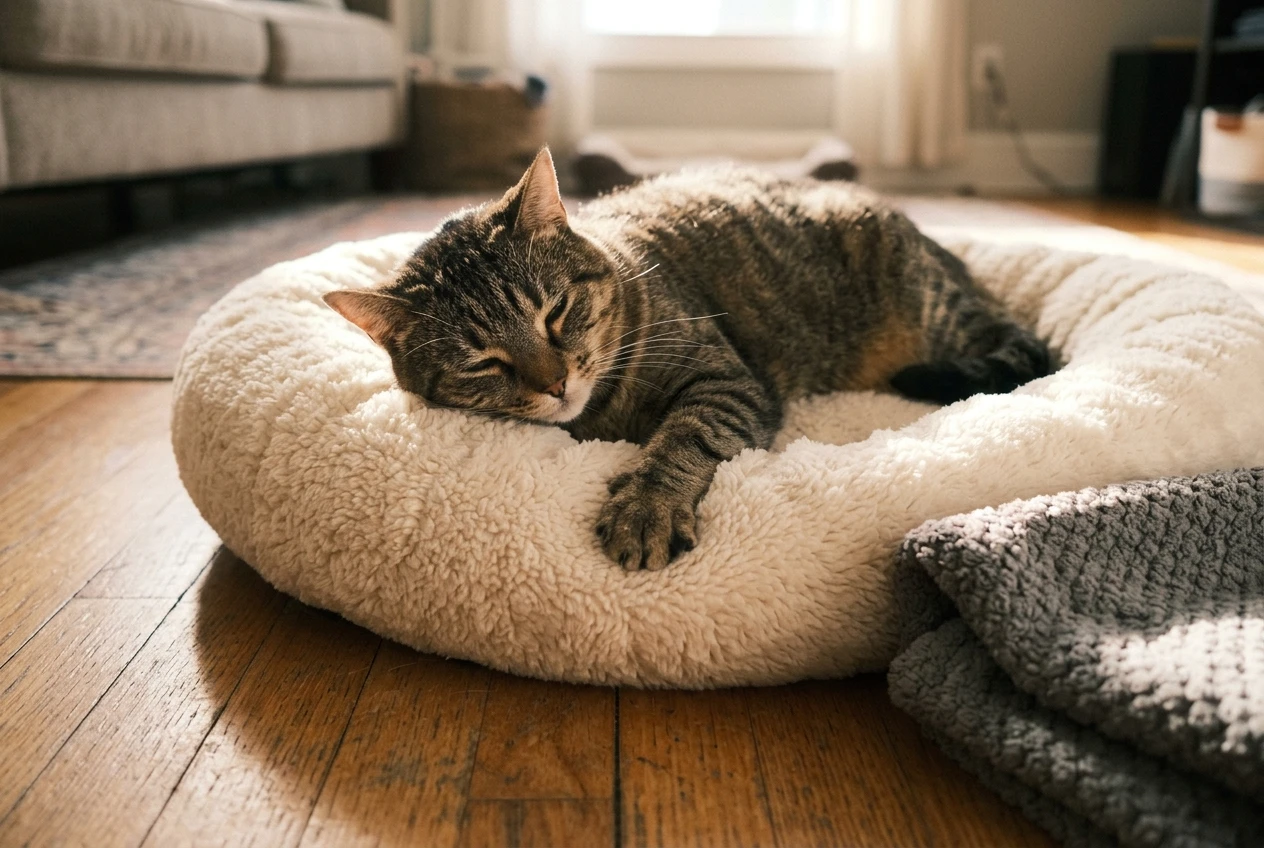
What it tells you: your cat is winding down. Kneading often comes right before a nap, and some cats purr or drool through the whole thing.
How to support it: give the paws something worth working on. A plush, deep-sided bed with a soft, thick surface lets your cat knead without snagging claws in a loop of your good sweater. Look for one with a washable cover, since kneaders tend to leave fur, and a bolster edge so your cat can lean against something while they settle.
Never scold a kneading cat. If the claws hurt, put a folded blanket on your lap and trim the nails on a regular schedule.
Habit 2: Grooming, the built-in chill-out routine
Cats groom for cleanliness, but they also groom to calm down. You may have seen a cat jump off the couch after a startle, sit down and lick a paw as if nothing happened. That’s a cat resetting.
What it tells you: a few minutes of grooming after something unsettling is normal. Long, relaxed sessions after meals and before naps are normal too.
How to support it: a soft brush gives your cat’s routine some help, especially if you have a long-haired cat who can’t reach every mat. Brush gently and stop the moment your cat loses interest. Short, pleasant sessions tend to go over better than a full overhaul, and many cats start to associate the brush with a good mood.
The flip side matters, too. Grooming that becomes intense or constant is covered in the red flags section below.
Habit 3: Squeezing into boxes and nooks, because hiding is a coping skill
Cats love a box that is barely big enough for them. It looks silly, and it’s also practical. A snug space with walls on most sides means nothing can sneak up from behind, and that lets a cat relax. Hiding is one of the most reliable ways cats cope with a change in the home, and shelter research has found that cats given a hiding spot tend to adjust more easily than cats without one.
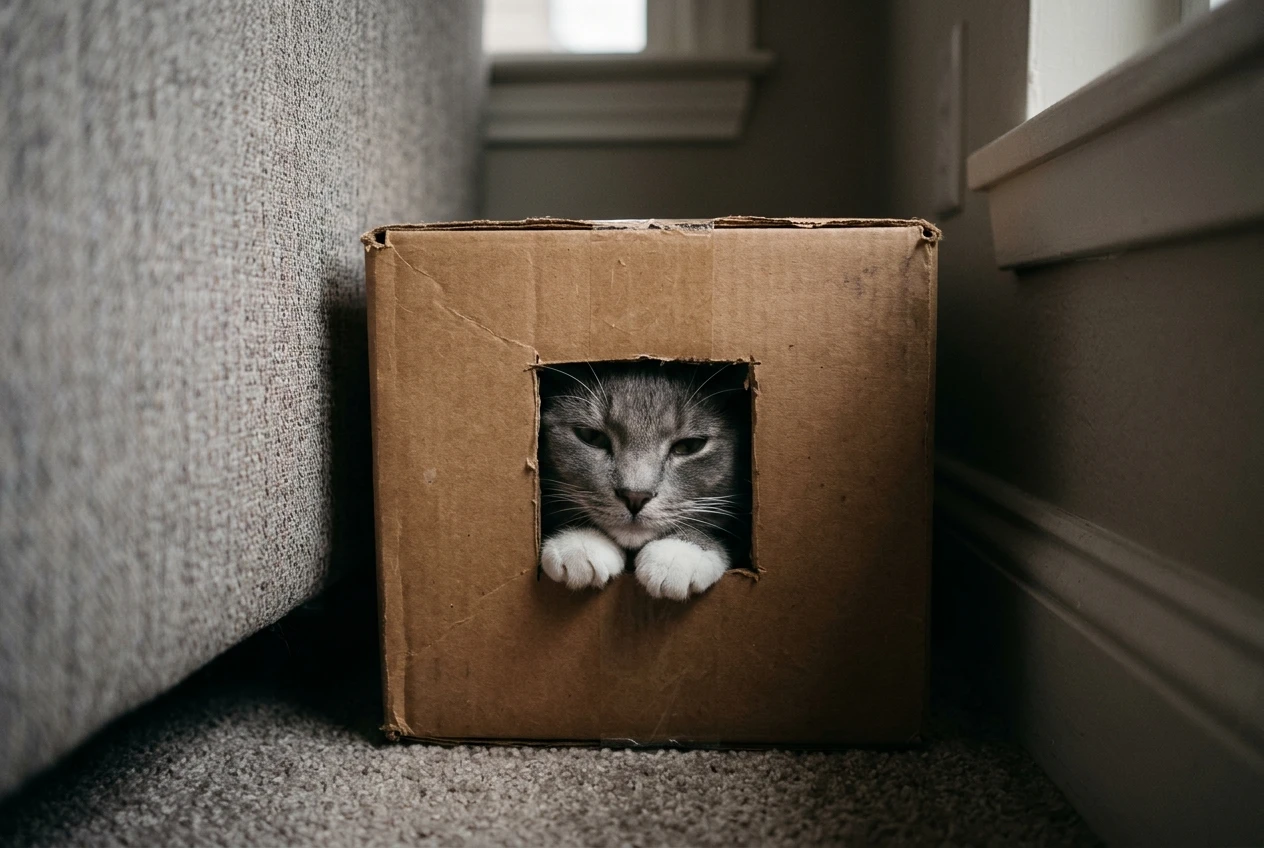
What it tells you: your cat wants a secure place to retreat. This is a sensible reaction to visitors, loud noises, a new pet or rearranged furniture.
How to support it: keep a few options around the house. A sturdy cardboard box with a cut-out doorway works well, and so does a covered cave-style bed or a low shelf with a blanket draped over the front. Place hiding spots in quiet corners, away from the busiest walkways.
Let your cat come out on their own schedule. If you pull a hiding cat out to cuddle, the hiding spot stops feeling safe.
Habit 4: Window-perch patrol, the high-up calm
Watching from a high spot is a classic feline stress reliever. Height gives a cat a view of the whole room, and the view outside offers birds, leaves, neighbors and the occasional squirrel, all without any danger. For an indoor cat, a window is a nature channel.
What it tells you: a cat on a perch is relaxed enough to be curious. Chattering at birds is excitement. A slow blink in the sun is contentment.
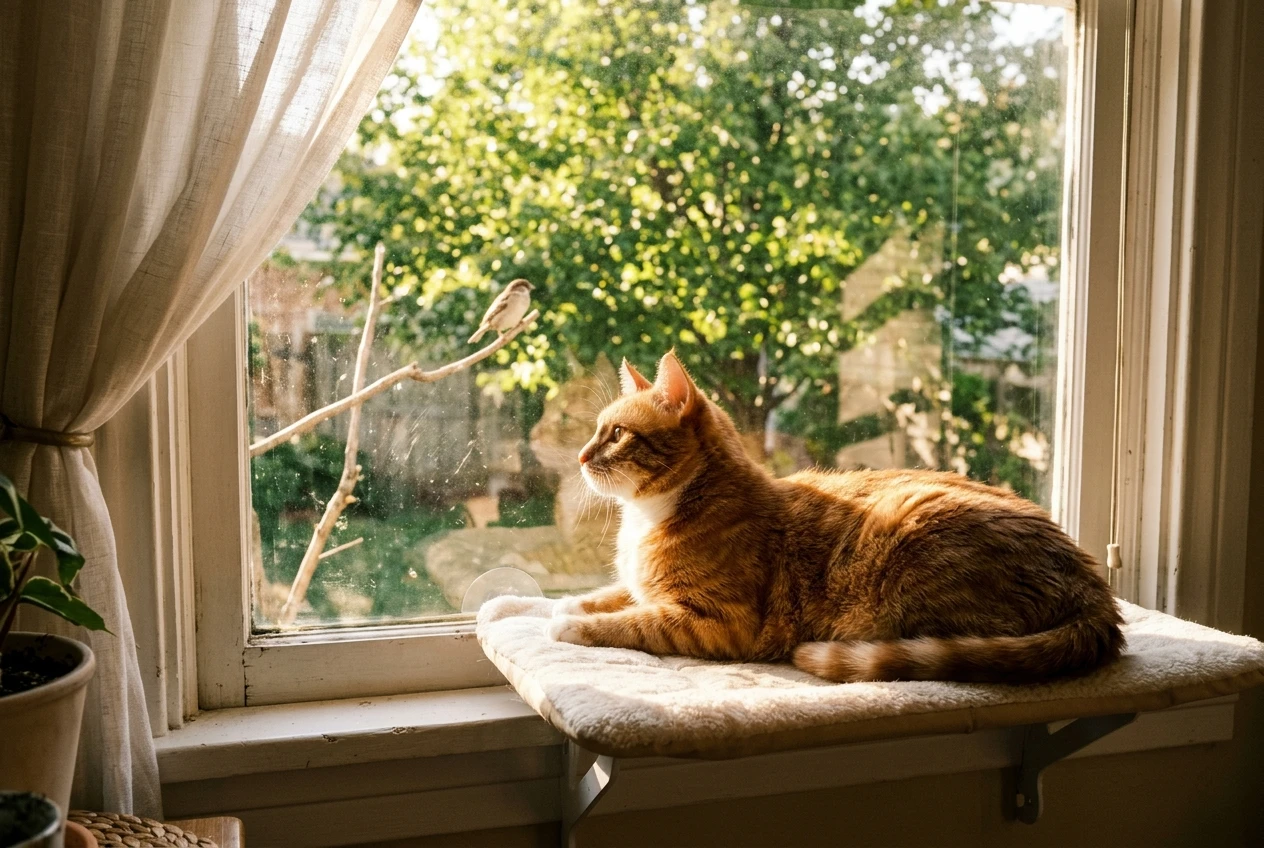
How to support it: a window perch is one of the easiest upgrades you can buy. Pick one that mounts securely to the sill or the frame and is rated for your cat’s weight, and add a soft pad so the surface is comfortable for long stretches. Put it by the window with the most activity outside. If space is tight, our guide to a cat corner for small spaces and apartments has layout ideas that work for renters.
Habit 5: Stalk, pounce, snooze (why a feather wand is more than a toy)
Cats are wired for a hunting sequence: watch, stalk, chase, pounce, catch, then eat, groom and sleep. When a cat gets to run through that whole sequence, the play burns off nervous energy and ends in a nap. Many stressed or bored cats may get stuck partway through, which is why they may race around the house at 3 a.m.
What it tells you: a cat who stalks and pounces enthusiastically is a cat with energy to spend. A cat who ignores play entirely, especially a cat who used to enjoy it, deserves a closer look.
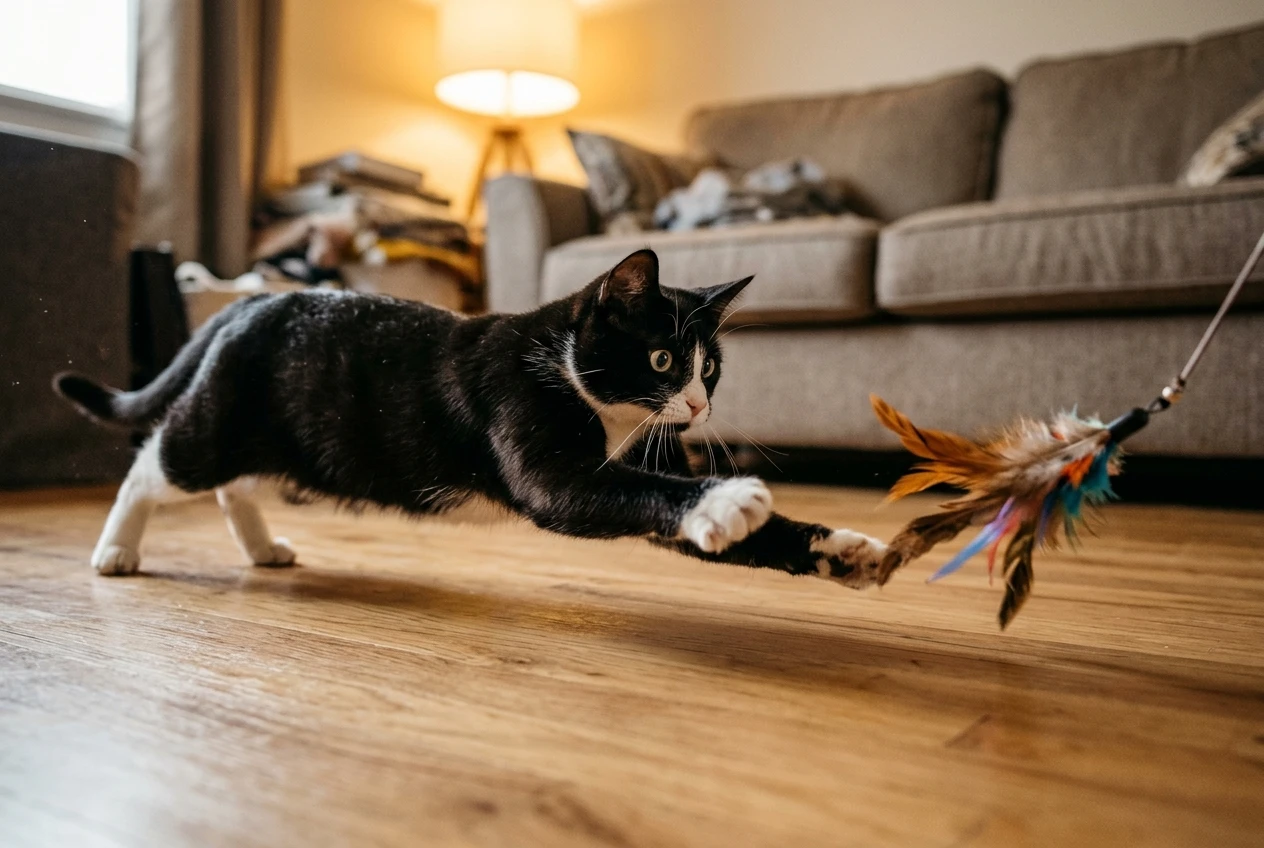
How to support it: a feather wand is the simplest tool for the job, because you control the movement. Make the feather act like prey: dart away, hide behind furniture, then freeze. Let your cat catch it at the end of each session, then offer a small meal or treat so the sequence feels complete. Put the wand away between sessions, since a feather left on the floor stops being exciting.
For more ideas on keeping a cat busy, see our roundup of cat enrichment toys that keep your cat busy.
When a calming habit turns into a red flag, and when to call the vet
Every habit above can become a sign of trouble when it changes in amount or intensity. Watch for these:
- Over-grooming: licking so much that fur thins, bald patches appear or the skin looks red or sore.
- Hiding all the time: a cat who used to be social and now stays out of sight for days.
- Frantic kneading or suckling on fabric: repeated, anxious behavior that your cat can’t seem to stop.
- Loss of interest in play or the window: a cat who stops doing the things they usually love.
- Changes in eating or litter box use: a cat who stops eating, or who starts going outside the box, needs attention soon.
Pain, illness and stress often look alike in cats, so a behavior change is a good reason to call your vet before you assume it’s emotional. A vet can rule out medical causes, and if the cause is stress, they can help you work out what to change.
Small ways to build a calmer space
You don’t need to redo the whole house. Pick what your cat already does and make it easier: a soft place to knead, a hiding spot in a quiet corner, a perch at the best window, a regular play session with a wand.
For a bigger picture, our guide on creating a stress-free environment for cats walks through the whole home, from litter box placement to quiet zones. Keep routines predictable, too. Meals, play and bedtime at roughly the same times help cats feel secure, because cats cope better when they can guess what comes next.
Your turn: pick one habit and spoil it
#ad | Affiliate links below.
Think about which calming habit your cat does most. If it’s kneading, look at the bed. If it’s staring out the window, look at the perch. If it’s pouncing on anything that moves, look at the wand.
Pick the one calming habit your cat does most and treat it to the cozy gear that supports it, starting with the bed, perch or wand links in this post. Then sit back and watch how fast they put it to use.