
Cat breath is rarely pleasant, and most of us shrug it off as part of the deal. Sometimes that shrug is fine. Sometimes the smell is coming from inflamed gums, an infected tooth root, or a tooth that is slowly being dissolved from the inside, and your cat is quietly living with the pain.
So does dental disease shorten a cat’s life? Veterinary research gives a more interesting answer than a simple yes or no. This article goes through what peer-reviewed studies have found, what they have not found, and what you can do at home. Numbered references point to the list at the end, so you can look up the sources yourself.
This article is general information, not veterinary advice. Your own vet is the person to examine your cat’s mouth.
🐾 Purr-lease Note: As an Amazon Associate I earn from qualifying purchases. This means FelineGo may earn a small commission when you purchase through some of the Amazon links on this site, at no extra cost to you. These commissions help support FelineGo and our mission to create helpful content for cat parents. Thank you for supporting our little corner of the cat world! 🐱💕
Why your cat’s bad breath is worth a second sniff
Healthy cat breath is mild. It can smell a bit like whatever they ate, but it should not make you lean away. A sharp, rotten or sour smell that sticks around is a signal that bacteria are building up somewhere in the mouth.
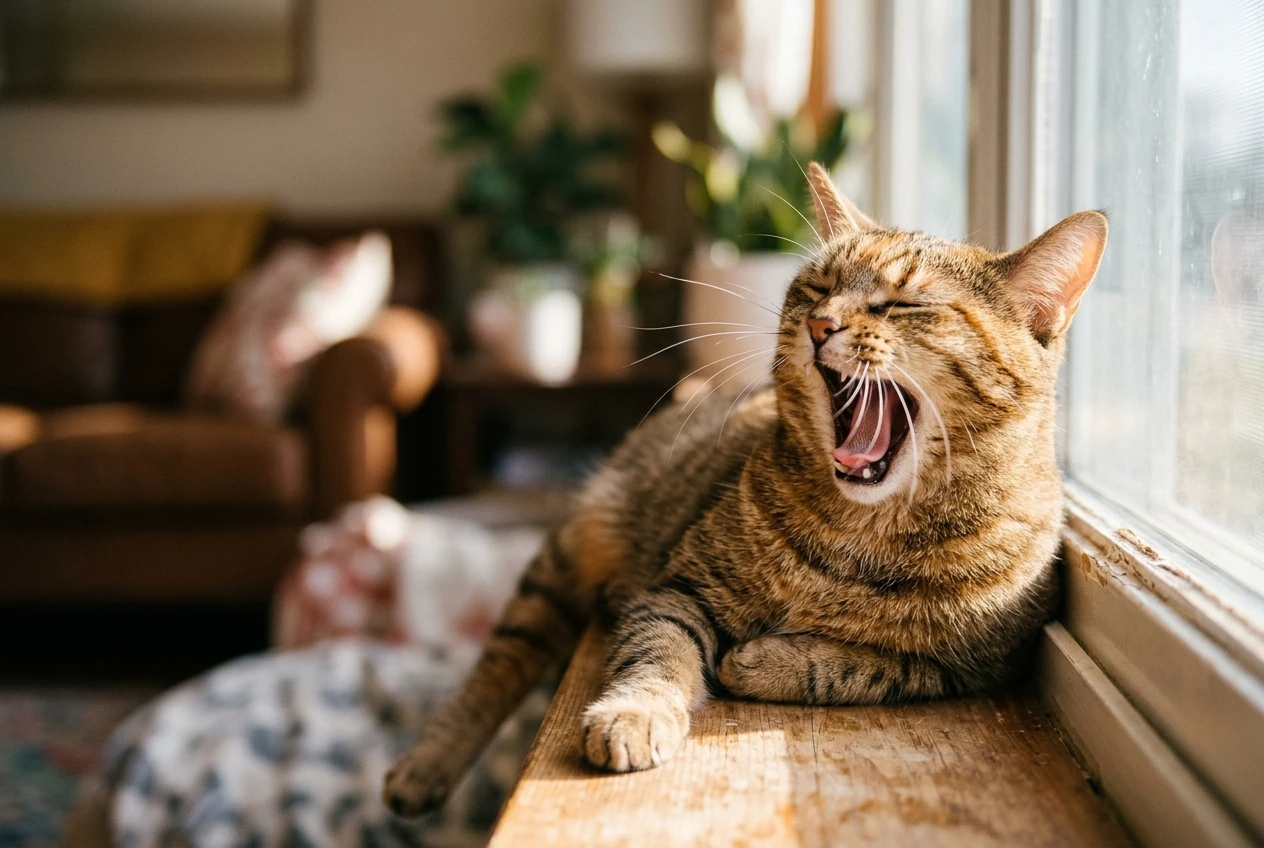
The usual cause is plaque, a film of bacteria that coats the teeth after meals. If it is not removed, it hardens into tartar and the gums around it become inflamed. Over time the inflammation can reach the structures that hold the tooth in place, and that stage is called periodontal disease [2].
Cats are also very good at hiding discomfort. A cat with a sore mouth will often keep eating, keep purring and keep acting like herself, which is why the problem tends to be found late. A second sniff is a cheap and easy way to catch it earlier.
The common dental problems vets find in cats (and how common they are)
Vets see a handful of mouth problems again and again in cats:
- Gingivitis and periodontal disease: inflammation of the gums, which can progress to loss of the tissue and bone that support the teeth [2].
- Tooth resorption: a condition in which the body breaks down the tooth structure itself, often starting below the gumline where you cannot see it. Its cause is still not well understood, and one major review called it an “unsolved enigma” [3].
- Broken teeth: fractures that can expose the sensitive inner part of the tooth.
- Chronic gingivostomatitis: severe, painful inflammation across the gums and the tissues at the back of the mouth, which needs veterinary management.
How common are these? A large survey of cats and dogs examined at private veterinary practices in the United States found that dental disease was among the most frequently diagnosed conditions in cats [1]. A review of feline periodontal disease describes it as one of the most common diseases seen in cats [2]. A study of a colony of 109 cats looked specifically at tooth resorption, and it too found the lesions were common [4].
Exact percentages differ between studies. They depend on which cats were examined (pets at a clinic, a research colony, older cats only) and on how closely the mouth was checked. A cat whose teeth were only looked at while awake will have more problems missed than one who had a full exam under anesthesia with dental X-rays. So treat any single number you see online with some caution, and check which group of cats it came from.
What the studies actually show about dental disease and lifespan
This is the part most people come for, and it deserves a straight answer: nothing in the research cited here gives a reliable figure for how many years dental disease takes off a cat’s life.
You may see claims online that bad teeth cost a cat a specific number of years. Those figures are often repeated without a source that can be traced to a study of cats. That does not mean dental disease is harmless. It means the clean, quotable number has not been established.
There is a reason the number is hard to produce. To measure how much dental disease shortens life, researchers would need to follow large groups of cats with and without dental disease for many years. They would also have to account for everything else that differs between those cats: age, breed, indoor or outdoor life, diet, other illnesses, and how often the owners visit the vet. Cats with neglected mouths may also be cats that get less care overall.
For context, a study of cats attending primary care practices in England reported a median lifespan of about 14 years [8]. That study looked at longevity generally and does not tell us what share of cats lost time to dental disease. It is a useful reminder that many cats live long lives, and that our goal for those years is comfort as much as length.
What the research does support is narrower and still important:
- Dental disease is common in cats [1][2].
- It is a source of pain and chronic inflammation [2][9].
- It has been linked in some studies to other health problems, covered next.
The mouth-body connection: kidneys, heart and what is still uncertain
The idea behind the worry is that a mouth full of bacteria and inflammation might not stay a mouth problem. Bacteria from inflamed gums can enter the bloodstream, and long-term inflammation may put strain on organs elsewhere. What studies have found so far is a mix of real signals and open questions.
Kidneys
Two studies are worth knowing. One followed cats to look for risk factors for chronic kidney disease and reported that dental disease was among the factors associated with developing it [5]. A second analysed records from cats at primary care veterinary hospitals and found that periodontal disease was associated with a higher risk of developing chronic kidney disease [6].
Both are observational studies, and observational studies find associations. They cannot prove that bad teeth caused the kidney problems. Older cats are more likely to have both conditions, and the researchers adjusted for some factors but cannot rule out everything. If kidney health is on your mind, the chronic kidney disease in cats evidence review on this site covers that condition in more depth.
Heart
The best-known research on mouth and heart is in dogs. A large study of dogs found that the more severe the periodontal disease, the higher the odds of endocarditis (infection of the heart’s inner lining) and some other cardiovascular events [7]. That is a dog study, and I would not stretch it to cats. The studies cited here do not establish the same link in cats, so it remains an open question for them.
What is still unproven
- Whether treating dental disease measurably extends a cat’s life.
- Whether dental disease directly causes kidney disease or only travels with it.
- Whether the dog heart findings apply to cats.
Pain and inflammation, on the other hand, are not in doubt. A cat with a diseased mouth is likely uncomfortable, and relieving that is a good reason to act whatever the lifespan numbers eventually show [9].
Signs at home that your cat’s mouth is hurting
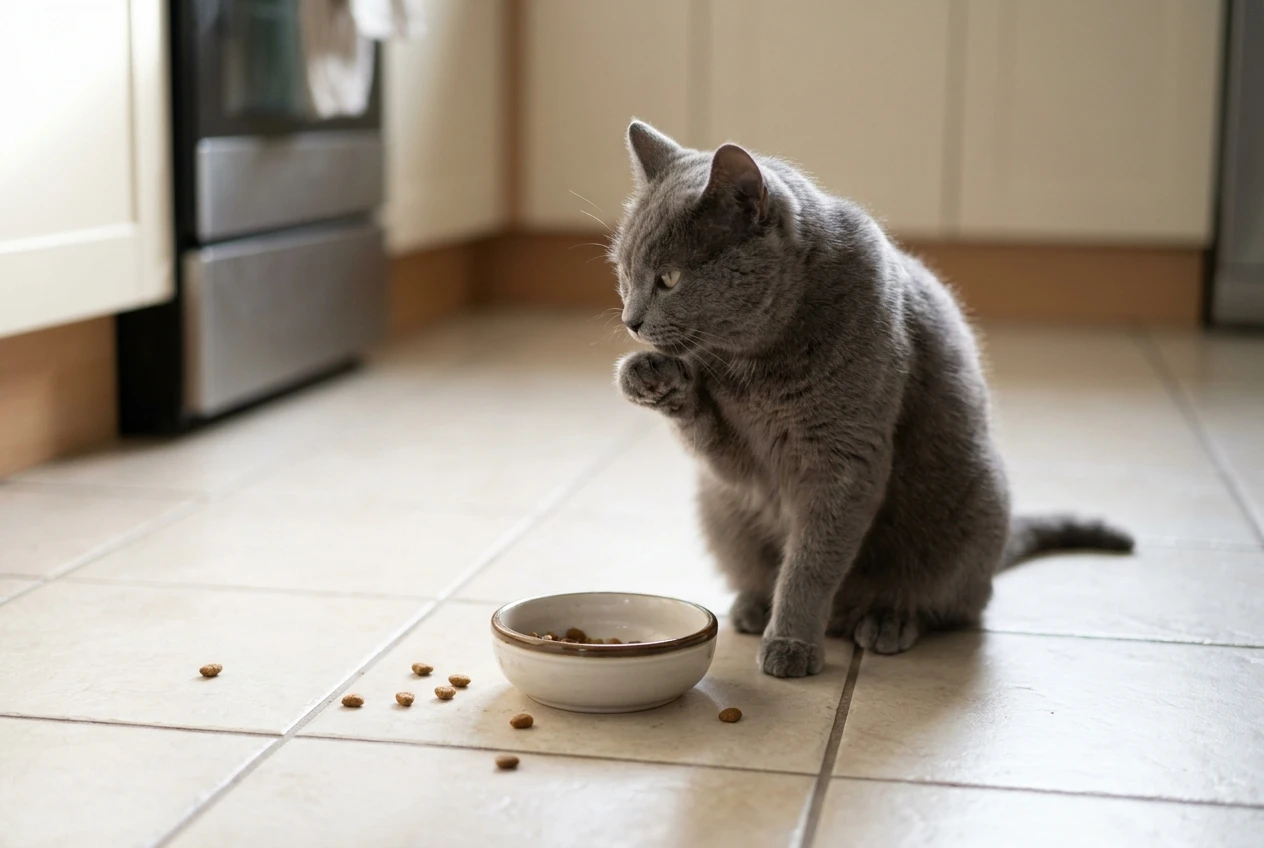
Cats rarely whimper about a sore tooth. The signs are usually changes in routine, so it helps to know what normal looks like for your cat. Watch for:
- Persistent bad breath
- Drooling, or wet fur around the chin
- Dropping food, chewing on one side, or leaving hard kibble behind
- Pawing at the mouth or rubbing the face on furniture
- Red, swollen or bleeding gums, or visible brown tartar on the teeth
- Weight loss or a lower appetite
- A scruffier coat, because grooming can hurt
- Irritability, hiding, or reluctance to be touched around the head
Any of these deserves a vet visit, since they can also point to problems other than teeth. Lift your cat’s lip gently once in a while when she is relaxed and look at the gum line. Pink and even is what you want to see.
What to do about it: vet cleanings, brushing and gear that helps
The two big veterinary guideline documents on this, from the World Small Animal Veterinary Association (WSAVA) and the American Animal Hospital Association (AAHA), agree on the main points [9][10].
Professional care
A proper dental cleaning is done under general anesthesia, with a thorough exam and dental X-rays. The X-rays matter because problems like tooth resorption and infected roots sit below the gum and cannot be judged by eye [3][9]. Both guidelines advise against “anesthesia-free” scaling, because it can only clean the visible surface and cannot assess or treat what is under the gums [9][10].
Ask your vet how often your cat’s mouth should be checked. Cats with existing disease may need more frequent attention than a young cat with clean teeth.
Brushing
#ad | Affiliate links below.
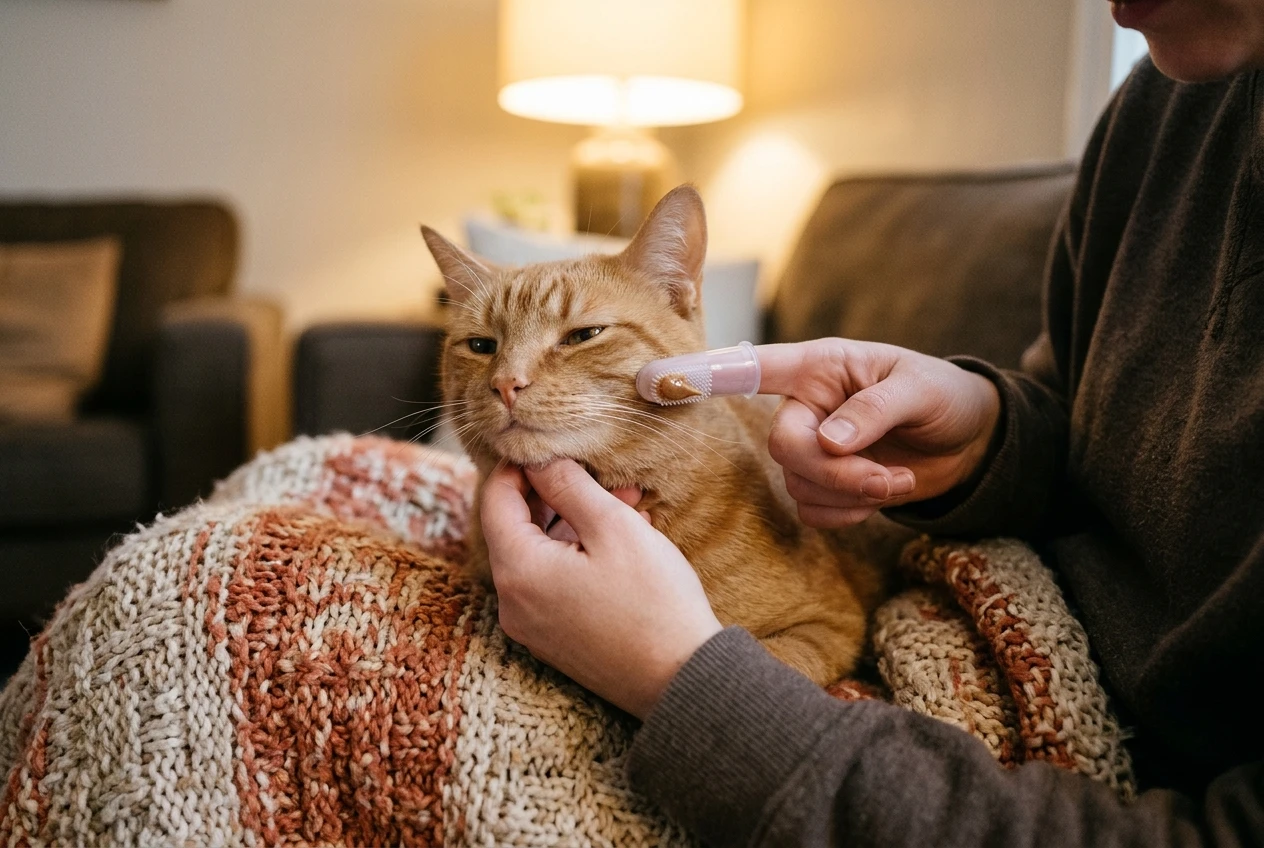
Daily brushing is considered the most effective home care, and the guidelines say so [9][10]. A few tips:
- Use a toothpaste made for pets. Human toothpaste is not made to be swallowed, and cats will swallow it.
- Start slowly. Let your cat lick the toothpaste first, then touch a finger to the gums, then move on to a soft brush or finger brush. This dental kit has everything you need, such as finger brush, toothbrush, and toothpaste!
- Short sessions on one side of the mouth are better than a wrestling match. Build up over days or weeks.
- Do not brush a mouth that looks painful. Get it examined first.
Treats, additives and other gear
#ad | Affiliate links below.
Not every dental product has evidence behind it. The Veterinary Oral Health Council (VOHC) reviews manufacturer data and awards a seal to products that meet its standards for slowing plaque or tartar [11]. Checking its list is a quick way to separate products with supporting trials from products with only good packaging.
Dental treats, special dental diets and water additives are add-ons, and they work best alongside brushing and vet care rather than replacing them. Diet questions in general are covered in this site’s cat nutrition tips post, so I will leave food aside here.
If you would like to browse cat toothbrushes, vet-recommended dental treats and water additives, the Amazon picks linked at the end of this article are a place to start. Check with your vet first so you choose what suits your cat.
How to read a veterinary study without a science degree
You do not need training in statistics to judge a study’s headline. A few questions go a long way.

What type of study is it? Observational studies watch what happens to cats and look for patterns. Experimental trials assign treatments on purpose. Observational studies can show that two things go together, but only trials get close to showing cause.
Was it cats? Studies in dogs, people or lab animals do not automatically apply to cats. The heart research above is a good example [7].
How many cats, and what kind? A study of 109 colony cats [4] tells you something different from records of thousands of pet cats at clinics [6]. Neither is wrong, but they answer different questions.
What else could explain the result? Age is the usual suspect. Older cats have more dental disease and more kidney disease, so researchers must adjust for it. Look for whether they did.
Association or cause? Words like “associated with,” “linked to,” and “risk factor” describe a pattern. “Causes” needs much stronger evidence.
Where was it published? Peer-reviewed journals have experts check the work before publication. You can search for a study’s title on PubMed to read the abstract for free.
Using these questions, the picture for cats is fairly clear: dental disease is common and painful, it is associated with some other health problems, and the exact cost in years is unmeasured. That is a reason to look after your cat’s mouth, and the evidence does not call for panic.
Your next step
#ad | Affiliate links below.
Take a look at your cat’s gums this week, ask your vet whether a dental check is due, and start slowly with brushing if your cat will let you. Browse the cat dental care picks on Amazon (toothbrushes, vet-recommended dental treats and water additives), and check with your vet first to see what suits your cat.
References
- Lund EM, Armstrong PJ, Kirk CA, Kolar LM, Klausner JS. Health status and population characteristics of dogs and cats examined at private veterinary practices in the United States. Journal of the American Veterinary Medical Association. 1999;214(9):1336-1341. View source
- Perry R, Tutt C. Periodontal disease in cats: back to basics, with an eye on the future. Journal of Feline Medicine and Surgery. 2015;17(1):45-65. View source
- Reiter AM, Mendoza KA. Feline odontoclastic resorptive lesions: an unsolved enigma in veterinary dentistry. Veterinary Clinics of North America: Small Animal Practice. 2002;32(4):791-837. View source
- Girard N, Servet E, Biourge V, Hennet P. Feline tooth resorption in a colony of 109 cats. Journal of Veterinary Dentistry. 2008;25(3):166-174. View source
- Finch NC, Syme HM, Elliott J. Risk factors for development of chronic kidney disease in cats. Journal of Veterinary Internal Medicine. 2016;30(2):602-610. View source
- Trevejo RT, Lefebvre SL, Yang M, Rishniw M, et al. Survival analysis to evaluate associations between periodontal disease and the risk of development of chronic azotemic kidney disease in cats evaluated at primary care veterinary hospitals. Journal of the American Veterinary Medical Association. 2018;252(6):710-720. View source
- Glickman LT, Glickman NW, Moore GE, Goldstein GS, Lewis HB. Evaluation of the risk of endocarditis and other cardiovascular events on the basis of the severity of periodontal disease in dogs. Journal of the American Veterinary Medical Association. 2009;234(4):486-494. View source
- O’Neill DG, Church DB, McGreevy PD, Thomson PC, Brodbelt DC. Longevity and mortality of cats attending primary care veterinary practices in England. Journal of Feline Medicine and Surgery. 2015;17(2):125-133. View source
- Niemiec B, Gawor J, Nemec A, et al. World Small Animal Veterinary Association Global Dental Guidelines. Journal of Small Animal Practice. 2020;61(12):395-403. View source
- Bellows J, Berg ML, Dennis S, et al. 2019 AAHA Dental Care Guidelines for Dogs and Cats. Journal of the American Animal Hospital Association. 2019;55(2):49-69. View source
- Veterinary Oral Health Council. Products with the VOHC Seal of Acceptance. vohc.org. View source