
Good nutrition makes a big difference in a cat’s lifelong health. With all the brands, flavors, and feeding trends out there, figuring out the right diet for your cat can feel overwhelming at first. In this article, I’m going to cover the most practical, evidence-based nutrition tips for feeding your cat at every stage of life, looking for healthy choices, and keeping your cat both happy and healthy.
🐾 Purr-lease Note: FelineGo is an Amazon Associate, which means we may earn a small commission from qualifying purchases made through some of the Amazon links on this site. This comes at no extra cost to you and helps support FelineGo and our mission to create helpful content for cat parents. Thank you for supporting our little corner of the cat world! 🐱💕
#ad
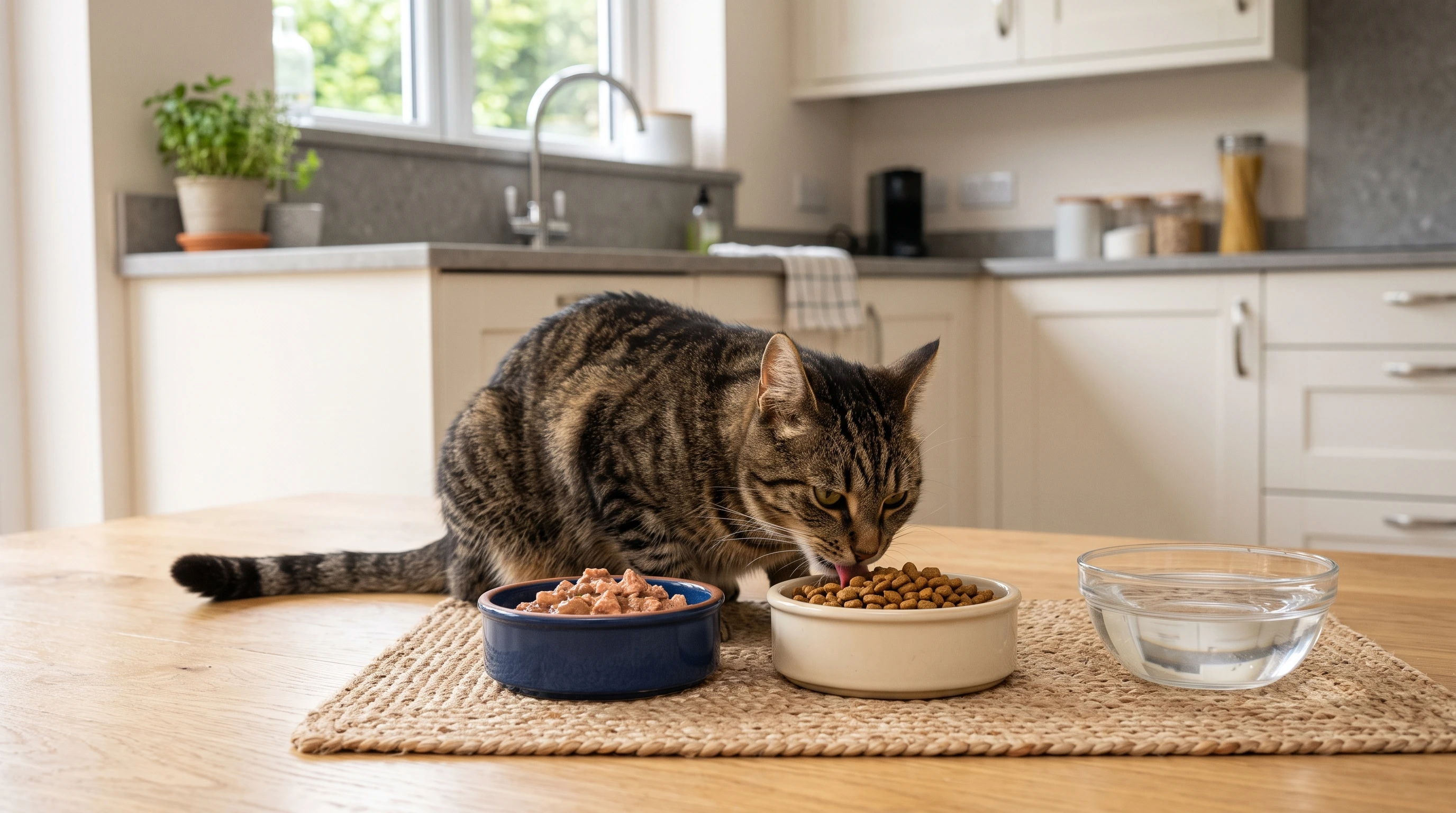
A clean and comfortable feeding setup can make mealtimes easier to manage and keep your cat’s eating area tidy. A 2-piece ceramic glass bowl set provides separate bowls for food and water, while a waterproof silicone feeding mat helps catch spills and crumbs underneath. Together, these simple additions can complement a practical feeding routine for a healthy, well-managed diet.
What Does a Healthy Cat Diet Look Like?
Cats are obligate carnivores, which means their bodies need nutrients mainly found in animal tissues. A healthy cat diet provides the right balance of protein, fat, carbohydrates, vitamins, minerals, and water. The food you serve should be labeled as “complete and balanced,” following standards set by organizations, such as AAFCO. Choosing such foods offers peace of mind, knowing your cat gets essential nutrients in every meal.
Here’s what a good cat diet covers for different situations:
- Life Stage: Kittens, adults, and seniors have different nutrition needs. Kittens need extra protein, fat, and energy. Adult cats require less energy but still need high quality protein. Senior cats may have changing nutritional needs as they age, particularly if they develop conditions such as chronic kidney disease, hyperthyroidism, digestive disease, or osteoarthritis. Their diet should be adjusted according to their individual health, body condition, and veterinary assessment. [1][2]
- Individual Needs: Cats with certain medical conditions may need special diets. Allergies, urinary issues, food intolerances, and weight concerns all play a part in picking the right food. Regular vet visits are crucial to spot and manage these changes in your cat’s health.
- Feeding Wet, Dry, or Both: Wet foods help boost water intake and are usually lower in carbohydrates. Dry foods stay fresh longer and are often a favorite for grazing eaters. Many cats do well with a combination. You might serve a wet meal in the morning and leave dry food out for nibbling throughout the day, which gives variety while offering each type’s benefits.
Providing clean, fresh water at all times is just as important as selecting the right food. Keep bowls washed daily, as some cats may be fussy about stale water. You might also want to try a drinking fountain to encourage hydration, since some cats may prefer running or moving water. [2]
How to Read a Cat Food Label
Cat food packaging can pack in a lot of information, and knowing how to read these labels makes shopping less stressful. Here are the parts I always pay close attention to:
- AAFCO Nutritional Adequacy Statement: This tells you if the food is “complete and balanced” for a specific life stage. Look for this statement because it indicates that the food is intended to provide complete and balanced nutrition according to an AAFCO nutrient profile or an AAFCO feeding protocol. [3][4]
- Life Stage: Check if the food is made for kittens, adults, seniors, or all life stages. Kittens should get growth food, adults should have maintenance formulas, and seniors might benefit from diets targeting joint or kidney health.
- Guaranteed Analysis: This lists the minimum percentages of crude protein and fat, along with maximum fiber and moisture content. Compare these values to your cat’s needs.
- Ingredients: Ingredients are listed by weight, but the ingredient list alone doesn’t tell you whether a food is nutritionally complete or superior to another food. Animal-derived ingredients can provide valuable nutrients, and properly formulated by-products can be nutritious as well. [3][5]
- Calories: Some brands list calories per cup or per can. This is especially helpful if you’re managing your cat’s weight.
- Dry Matter Comparison: Because dry and wet food have different moisture levels, you’ll want to compare the nutrition per amount of dry matter (with water removed) to get a fair idea. [4]
Pet food label regulations differ across the globe, so checking for recognizable standards like the AAFCO statement or an equivalent is important. Some brands will also have a customer service line or a website where you can ask for more details about sourcing and testing. Staying sharp about label-reading pays off in long-term cat health.
Read more: What To Look For In Cat Food
How Many Calories Does My Cat Need?
Determining daily calorie needs for a cat isn’t just a matter of reading the bag. There are a few key things I always check:
- Body Weight and Size: Body weight is one factor in estimating calorie needs, but calorie requirements also depend on factors such as body condition, activity, life stage, and neuter status. For overweight cats, calorie targets are generally individualized based on their healthy target weight and weight-loss goals. [1][2]
- Age and Life Stage: Kittens burn more calories than adults, and nursing moms need even more. Spayed or neutered cats need fewer calories than cats who aren’t fixed. Seniors can have changing calorie needs, and some older cats may actually require more energy if they lose weight or muscle. Their intake should therefore be adjusted according to body condition and individual health rather than age alone. [1][2]
- Activity: Indoor cats often burn fewer calories than highly active cats or those that go outside. Interactive playtime can help boost activity—and calorie burn—for indoor cats.
- Body Condition: I like to use a body condition scoring system. Ribcage bones should be easy to feel but not stand out, and there should be a visible waistline from above. This scoring is more reliable for health than weight alone.
- Health Status: Illnesses and special needs can change calorie demands. If your cat is recovering from surgery or has a thyroid problem, they may need more or fewer calories. Always check with your vet about exact calorie needs if your cat has medical issues.
The World Small Animal Veterinary Association (WSAVA) has calorie guidelines for healthy adult cats as a starting point (see WSAVA’s nutrition resources). The American Association of Feline Practitioners (AAFP) and American Animal Hospital Association (AAHA) suggest adjusting up or down after monitoring your cat’s body condition for a few weeks. Maintaining a body shape with a visible waist from above and ribs that can be felt easily under a thin layer of fat is usually the best sign of healthy weight. [1][2]
Most commercial kibble and canned foods have feeding charts based on weight, which work as a general guide. I always watch my cat’s condition, check for weight gain or loss, and adjust portions as needed rather than sticking exactly to label suggestions. Your vet can help set a healthy target and guide you in fine-tuning your cat’s portions over time.
Why Taurine Is So Important for Cats
Taurine is an essential dietary nutrient that cats absolutely need in their diets. Cats have a limited ability to synthesize enough taurine on their own, so they must obtain adequate taurine from their diet. [6]
Taurine plays several important roles:
- Vision: It helps with normal eye development and function, helping to prevent vision loss. [6]
- Heart Function: It supports a healthy heartbeat and can help keep certain heart problems at bay.
- Reproductive and Developmental Health: Taurine deficiency can affect reproduction and development, in addition to its well-established effects on retinal and cardiac function. [6]
Feeding a “complete and balanced” commercial food for cats provides the taurine they need. Homemade diets and dog foods should not be used as substitutes for a complete and balanced cat diet unless they have been specifically formulated to meet the nutritional needs of cats. [3][6] Taurine can be lost during some food-processing and preparation methods, which is one reason commercial cat foods are formulated to provide adequate taurine. [6] Any deviation can lead to serious health issues, including heart disease (dilated cardiomyopathy) and vision problems. [6]
Wet Food vs. Dry Food: Pros and Cons
Cats can thrive on wet, dry, or a combination of both, as long as whichever option you pick meets their nutrition needs and they’re eating enough calories every day. Your cat’s preferences and your lifestyle may play a role in the best fit for both of you.
- Wet Food: Contains around 70 to 80 percent water. This high moisture can help increase total water intake, which may be particularly useful for cats that don’t drink much on their own and for cats at risk of some urinary problems. [7] Wet food is often more enticing for picky eaters and can help with managing calorie intake for cats who tend to overeat.
- Dry Food: Typically has about 10 percent water. Some cats like to graze and dry food stays fresh in the bowl for longer. It’s often convenient, but not all cats drink enough water, so watch for signs of dehydration. Dry kibble also tends to be more calorie dense, so portion control is important.
- Combination Feeding: Mixing both can keep things interesting and offers each food’s benefits. I usually rotate between giving my cats scheduled wet food meals and providing a small bowl of dry kibble for in-between snacks. This approach can be handy for households with multiple cats (who may have different food preferences or health needs).
Keep in mind, once wet food is opened, any excess should be stored in an airtight container and refrigerated, and any uneaten portions in pet bowls should be tossed after a few hours to prevent spoilage. If you decide to combination-feed, try to feed the main meals at set times, with measured portions to support healthy habits and avoid overeating.
How to Introduce Wet Food to a Picky Adult Cat
Getting an adult cat who is used to eating mainly dry food to accept wet food isn’t always fast and easy. Cats form strong taste and texture preferences by the time they’re six months old, so patience is key. I’ve found a few tricks that help encourage a switch:
- Offer a spoonful of wet food alongside their current dry, without removing the usual food right away. This non-confrontational approach keeps your cat comfortable and curious.
- Experiment with different types—some cats love smooth pate, while others prefer flakes, shreds, or gravy-style textures. Texture can matter as much as flavor.
- Warm the wet food gently before serving. The aroma gets stronger and may tempt a reluctant cat, as cats rely on scent to judge food safety and appeal.
- Serve small, fresh portions. Cats are sensitive to food that’s been sitting out too long and may refuse it if it smells “off.” Use clean dishes and rotate flavors to keep interest high.
- Never intentionally withhold food to force a cat to accept a new diet. A cat that stops eating can develop serious health problems, including hepatic lipidosis, with overweight cats particularly vulnerable. If your cat refuses food or has a significant drop in appetite, contact your veterinarian promptly rather than waiting for a fixed time limit. [8]
If your cat continues to refuse new food, try mixing a small bit into the old food, slowly changing the ratio over a week or two. Don’t rush the process; some cats take longer than others to accept a new flavor or texture.
How to Transition Cat Food Without Digestive Upset
Sudden food changes can lead to stomach upsets in cats: vomiting, diarrhea, or refusing to eat. When I need to switch foods, I go slowly:
- Start by mixing 25 percent new food with 75 percent old food for a couple of days. Watch for changes in your cat’s appetite or litter box habits.
- Gradually move to a 50/50 mix over the next few days. Stick with this until stools and appetite are stable.
- Finally, serve 75 percent new food and 25 percent old for the last few days before switching to 100 percent new food. Complete the transition once your cat is eating comfortably. [1]
I watch my cat’s litter box for changes in stool, especially diarrhea or constipation. Appetite is important too. If my cat’s stomach gets upset during the process or they stop eating, I slow down or even go back to the old food for a bit before trying again. Every cat adjusts at their own pace; some will switch foods easily, and others need a week or two for their tummies to adapt. Giving your cat time helps prevent stress—and health problems—related to rapid food changes.
When and How to Transition From Kitten to Adult Food
Kittens need diets formulated for growth and development until they reach maturity, which is often around 12 months of age, although the timing can vary by the individual cat and breed. [1][3] Growth formulas are higher in calories, protein, and fat, just what kittens need for their fast growing bodies. [3] Kitten foods also contain higher levels of certain minerals and fatty acids that help with brain and vision development.
When your kitten reaches their first birthday (or as your vet recommends), you can gradually switch to an adult “maintenance” diet. [1][3] Following the gradual mixing method described above helps avoid digestive issues and gives you a chance to watch how your cat’s body responds to the new food.
Once on adult food, I keep an eye on appetite, energy levels, and body condition, making sure my cat stays at a healthy weight and adjusts well to their lifelong diet. Catching any sudden changes early can help you address problems before they become serious.
Homemade Cat Food: Calcium, Phosphorus and Other Nutrients
Homemade cat food can be risky if it isn’t properly balanced. Cats have many minimum and maximum requirements for vitamins and minerals, and small mistakes may affect their health. Even a well-meaning DIY effort can lead to imbalances in their diet.
The calcium-to-phosphorus balance is important, but it is only one part of formulating a complete feline diet. Both minerals are needed for normal bone and body function, and an imbalance can contribute to nutritional disease. Simply adding calcium to meat does not make a homemade diet complete, because calcium, phosphorus, vitamin D, taurine, vitamins, trace minerals, and other nutrients must all be provided in appropriate amounts and proportions. [9][10]
It can be difficult to formulate homemade cat food that truly covers all of these requirements, so working with a veterinarian or board-certified veterinary nutritionist is the safest approach. [9][10] Simply following online recipes or balancing ingredients on your own puts your cat at risk for deficiencies or overdoses. It is ideal that cats not fall into these dietary mistakes for optimal health.
If homemade diets are your preference for medical or personal reasons, getting professional help to design and balance the recipe is really important for your cat’s long term health. Your vet or a veterinary nutritionist can analyze your recipe and make sure every nutrient is in the right proportion. Taking the safe route protects your cat from unintended health issues.
What About the Gut Microbiome?
#ad
Affiliate links below.
The gut microbiome refers to the collection of bacteria, yeasts, and other microbes in your cat’s digestive tract. What your cat eats has a big impact on which microbes thrive in their gut. Diet changes can alter this balance, and gut health is a current area of active research. Your cat’s microbiome is unique and changes as your cat ages, becomes ill, or alters its diet. Supporting a healthy gut microbiome may contribute to normal digestive and broader physiological health, but the clinical significance of many microbiome findings in cats is still being investigated. [11]
At this stage, the clinical application of microbiome testing in pets remains limited. Organizations such as AAHA recommend caution with companies selling at-home microbiome tests, especially when testing is linked to supplement recommendations. [11] Most healthy cats benefit from a stable, quality diet rather than special microbiome products. Gut supplements aren’t a cure-all for digestive issues and shouldn’t replace regular vet visits or appropriate diets.
Many pet food brands, such as Purina ONE, have started focusing on gut health by adding prebiotic fibers and specialized blends to their formulas. These foods aim to support good digestive health, but for most cats, feeding a variety of healthy foods, maintaining routine, and minimizing unnecessary changes is more important than focusing on specialized microbiome formulations. If your cat struggles with chronic digestive issues, consult your veterinarian for the best game plan.
Are Insect-Based Cat Foods Healthy and Sustainable?
#ad
Affiliate links below.
Insect protein is an emerging alternative protein source in pet nutrition, with potential nutritional and environmental advantages that are still being studied. [12][13]
Ingredients like black soldier fly larvae and mealworms are now found in some commercial cat foods. These insects are a rich source of amino acids, fats, and even beneficial fiber (chitin).
Some insect-production systems can use less land and water and produce fewer greenhouse-gas emissions than certain conventional livestock systems, but the environmental footprint varies with the insect species, farming methods, feed, energy sources, processing, and what protein source the insects replace. [12][13]
Studies in cats indicate that some insect-based ingredients can be digested and incorporated into nutritionally complete diets, although digestibility varies according to the insect species, processing method, and inclusion level. A complete commercial diet should still be evaluated based on its overall nutrient formulation rather than the insect ingredient alone. [13] Some cats enjoy the taste, while others are a bit hesitant at first.
Potential environmental efficiency is one reason insect protein is being investigated as an alternative protein source, although its actual environmental advantage depends on how the insects are produced. [12][13]
For households looking to reduce their ecological impact while providing proper nutrition, insect based foods are promising solutions.
There are a few brands now offering complete insect protein diets for cats, although availability varies depending on your region.
I’ve also noticed brands such as Open Farm publishing more detailed information about ingredient sourcing and product-level carbon footprints. For example, Open Farm currently provides carbon-footprint estimates for some cat foods and states that its recipes are formulated to meet AAFCO Cat Food Nutrient Profiles. [14] Always check for “complete and balanced” labels to be sure a new protein source meets your cat’s nutritional requirements. If you’re curious, start by offering a small portion alongside your cat’s usual diet and see how they react before making the switch.
How to Choose a Healthy Cat Food: My Final Checklist
- Is the food labeled for cats (not dogs)?
- Does it fit your cat’s life stage (kitten, adult, senior, or all life stages)?
- Does it have a “complete and balanced” AAFCO statement?
- Are calories and feeding guidelines provided?
- Will your cat eat it and maintain a healthy body weight?
- Does the manufacturer share nutritional and ingredient info openly?
- If choosing a homemade diet or an unusual protein source, have you checked that the diet is nutritionally complete and appropriate for your cat, and discussed it with your veterinarian if you have concerns?
Feeding your cat well is one of the best ways to strengthen your bond and support their health for years to come. Regular checkups, monitoring weight, and adjusting food as your cat ages will help keep things on track. Every cat is unique, but focusing on quality, balance, and attention to your cat’s needs makes a big difference. By combining careful label reading, observing your cat’s habits, and seeking professional advice as needed, you’ll be set up to step up your cat’s nutrition for a healthy, happy life together.
References:
[1] 2021 AAHA/AAFP Feline Life Stage Guidelines Quimby J, Gowland S, Carney HC, DePorter T, Plummer P, Westfall M. 2021 AAHA/AAFP Feline Life Stage Guidelines. Journal of Feline Medicine and Surgery. 2021. View source
[2] WSAVA Global Nutrition Guidelines World Small Animal Veterinary Association. Global Nutrition Guidelines / Nutritional Toolkit. View source
[3] AAFCO — Reading Labels Association of American Feed Control Officials. Reading Labels. View source
[4] FDA — “Complete and Balanced” Pet Food U.S. Food and Drug Administration. “Complete and Balanced” Pet Food. View source
[5] Commercial vs. Homemade Cat Diets Commercial vs Homemade Cat Diets: What You Need to Know. View source
[6] Feline Amino Acid/Taurine Nutrition Amino acid nutrition and metabolism in domestic cats and dogs. View source
[7] Feline hydration / wet-diet evidence Diet format, protein, amino acids, salt, and osmolytes, as well as water viscosity, affect water consumption in domestic cats: a scoping review of 32 publications. View source
[8] Webb CB. “Hepatic lipidosis: Clinical review drawn from collective effort.” Journal of Feline Medicine and Surgery. 2018;20(3):217–227. View source
[9] AAFCO nutritional adequacy / formulation information
AAFCO. Frequently Asked Questions / nutritional adequacy information. View source
[10] Homemade diet nutrient analysis
Influence of number of ingredients, use of supplement and vegetarian or vegan preparation on the composition of homemade diets for dogs and cats. View source
[11] AAHA — Microbiome, Prebiotics, Postbiotics
American Animal Hospital Association. Microbiome, Prebiotics, Postbiotics. View source
[12] Insect-production environmental review
Life cycle assessment of edible insects for food protein: a review. View source
[13] Feline insect-protein research
Insect meals in cat diets and their effects on digestibility, physiology, and gut microbiota. View source
[14] Open Farm product-level sustainability information. View source