
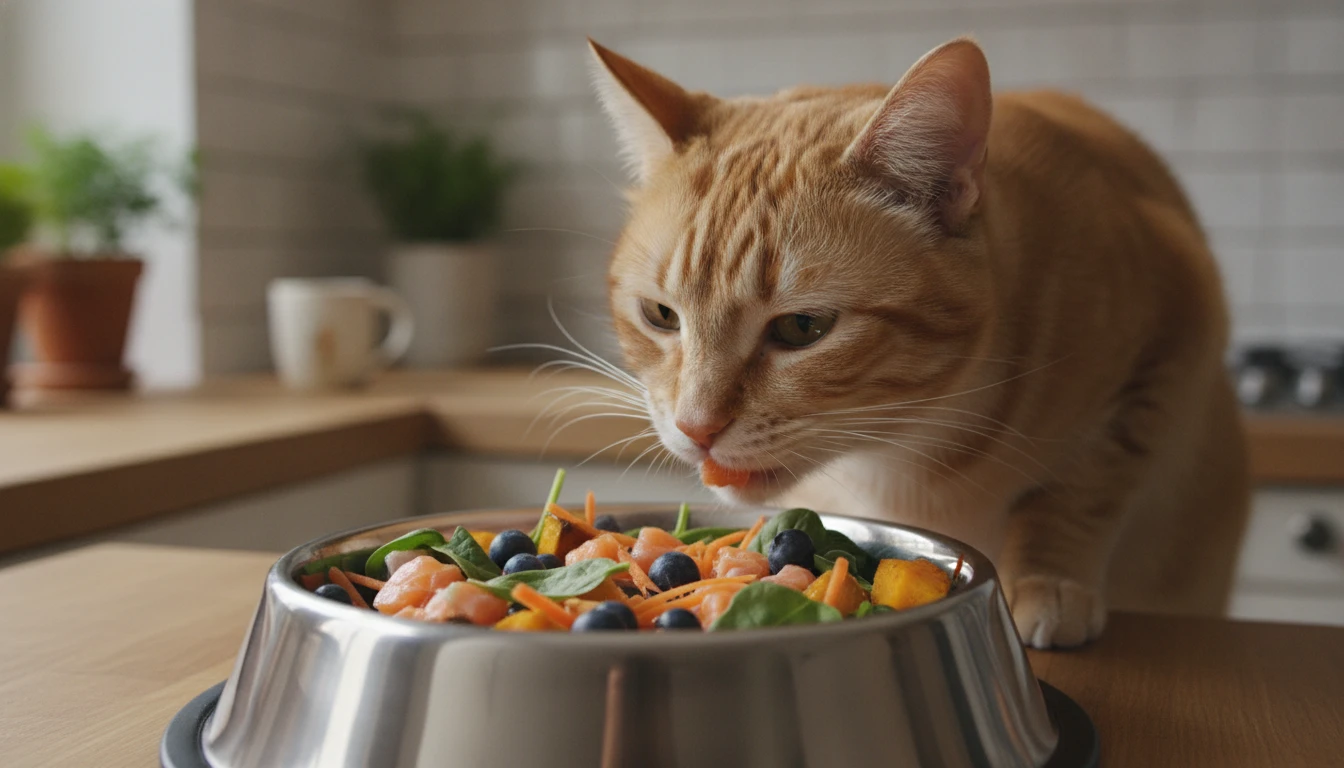
Just like people, cats need a nutritious, balanced diet to support their overall health, including a healthy immune system. The right nutrition can contribute to healthy skin and coat, normal energy levels, and overall well-being. As a cat owner myself, I’ve seen how changes in diet can sometimes make a noticeable difference in my cats’ condition and daily habits.
I’ve cared for multiple indoor cats for years and enjoy researching feline nutrition to help them stay healthy. While I’m not a veterinarian, I make an effort to rely on reputable veterinary and scientific sources when researching feline health. If your cat has a medical condition, eats a prescription diet, or has specific nutritional needs, it’s always best to check with your veterinarian before introducing new foods.
The term “superfood” is often used for foods that are especially rich in certain nutrients or beneficial compounds. However, cats don’t need specific superfoods to maintain a healthy immune system. Their nutritional needs are best met by a complete and balanced cat food, while additional foods should be viewed as occasional treats rather than replacements for their regular diet. [1][2]
With that in mind, I’ve put together 10 foods that can be offered to cats in small amounts as occasional treats. Some provide protein, omega-3 fatty acids, fiber, or other nutrients that contribute to overall health. Just remember that every cat is different, and some human foods can be unsafe for cats.
Let’s take a closer look at these foods, how they may fit into your cat’s diet, and the safest ways to serve them. Always talk to your veterinarian before adding anything new to your cat’s routine, especially because some human foods can be harmful to pets.
1. Salmon. A Source of Protein and Omega-3 Fatty Acids
Salmon provides high-quality protein and omega-3 fatty acids, including EPA and DHA, which play important roles in overall health. Omega-3 fatty acids are involved in normal inflammatory processes and may support healthy skin and coat. [1]
Every once in a while, my cats get wet food with salmon, and they certainly seem to enjoy the taste. I’ve also noticed that their coats look soft and glossy, although individual cats can respond differently to dietary changes.
If you want to offer salmon as a treat, serve it fully cooked and plain, without salt, sauces, butter, garlic, onion, or other seasonings. Remove any bones before serving, and avoid raw salmon because raw animal foods can carry harmful bacteria and other pathogens. [4]
- Key benefit: Provides protein and omega-3 fatty acids that contribute to overall health
-
How to serve: Cooked, unseasoned salmon in small amounts as a treat
2. Blueberries. A Small, Antioxidant-Rich Treat
Blueberries contain antioxidants and other plant compounds, including polyphenols. While research on the health effects of blueberries specifically in cats is limited, they can be offered as an occasional, low-calorie treat for cats that enjoy them. [2]
My cats aren’t big fans of fresh blueberries, but some cats may enjoy them mashed or offered as a small frozen treat. There’s no need to add blueberries to your cat’s meals if they don’t like them—cats have no nutritional requirement for fruit.
Wash fresh blueberries before serving and offer only a small amount. Avoid blueberries prepared with added sugar, syrups, or other ingredients that may be unsuitable for cats.
- Key benefit: Provides antioxidants and can add variety as an occasional treat
- How to serve: Offer a small amount of fresh, washed blueberries whole or mashed as an occasional treat
3. Pumpkin. Rich in Fiber for Digestive Health
Plain pumpkin is a source of fiber and can be a useful occasional addition to some cats’ diets. [2] Fiber can help support normal digestion, although its effects can vary depending on the type and amount of fiber and the individual cat.
I’ve used plain canned pumpkin with my cats when they’ve had occasional digestive issues, but pumpkin isn’t a treatment for ongoing constipation, diarrhea, or other gastrointestinal problems. If your cat has persistent digestive symptoms, it’s better to have your veterinarian determine the underlying cause.
Choose plain, unsweetened canned pumpkin or cooked pumpkin without added salt, sugar, spices, or other ingredients. Start with a small amount and see how your cat responds.
- Key benefit: Provides fiber that may support normal digestion
- How to serve: Offer a small amount of plain, cooked or canned pumpkin as an occasional addition to your cat’s regular food
4. Cooked Chicken. Lean Protein for Healthy Muscles
Cooked chicken is a simple source of high-quality protein that can provide amino acids your cat needs for maintaining healthy muscles and other body tissues. It can also be a tasty option for cats that enjoy meat-based treats. While chicken shouldn’t replace your cat’s complete and balanced food, a small amount can be offered as an occasional treat.
My cats are always interested when I’m preparing plain chicken, and a few small pieces can make a nice high-protein treat. Just be sure to set some aside before adding any salt, sauces, or seasonings.
- Key benefit: Provides protein and essential amino acids that support normal muscle and tissue health
- How to serve: Fully cooked, plain chicken with the skin and bones removed, served in small amounts as an occasional treat
5. Sardines. Small Fish, A Source of Omega-3 Fatty Acids
Sardines provide protein and omega-3 fatty acids, including EPA and DHA, which play important roles in overall health. [1] They can be a flavorful occasional treat for cats, especially those that enjoy fish. However, sardines should complement—not replace—a complete and balanced cat food.
When choosing sardines for your cat, look for plain varieties packed in water without added salt, sauces, onion, garlic, or other seasonings. Carefully remove any bones before serving, as bones can cause choking or digestive problems. [3]
- Key benefit: Provides protein and omega-3 fatty acids that contribute to overall health
- How to serve: Plain, boneless sardines packed in water, offered in a small amount as an occasional treat
6. Eggs. Protein and Nutrients for Whole-Body Support
Eggs provide high-quality protein along with nutrients such as vitamin B12 and riboflavin. [1] A small amount of plain, fully cooked egg can make a tasty occasional treat for cats. Eggs shouldn’t replace your cat’s regular complete and balanced food, but they can add some variety to their diet.
My cats enjoy a little bit of cooked egg from time to time, especially when it’s freshly prepared. If you’re sharing some with your cat, set aside a portion before adding salt, butter, oil, or other seasonings.
Always serve eggs fully cooked. Raw eggs can carry harmful bacteria, and raw egg white contains avidin, a protein that can interfere with biotin absorption. [1][4]
- Key benefit: Provides protein and nutrients that support normal muscle and tissue health
- How to serve: Plain, fully cooked scrambled or boiled egg in a small amount as an occasional treat
7. Carrots. A Low-Calorie Source of Fiber and Nutrients
Carrots are a low-calorie vegetable that can provide fiber and nutrients such as vitamin K and potassium. While cats don’t need vegetables in their diet, some may enjoy small amounts of cooked carrot as an occasional treat. Keep portions small, since vegetables should only make up a tiny part of a cat’s overall diet.
My cats aren’t particularly interested in carrots, but some cats may enjoy their mild, slightly sweet taste. Cooking and mashing carrots can make them easier to eat, especially for cats that don’t like crunchy foods.
- Key benefit: Provides fiber and nutrients while adding variety to an occasional treat
- How to serve: Cooked, plain, and finely chopped or mashed carrots in a small amount as an occasional treat
8. Cooked Turkey. Lean Protein for Healthy Body Function
Cooked turkey is a good source of protein and provides amino acids that cats need to maintain healthy muscles and body tissues. It can be a tasty occasional treat for cats, but it should complement—not replace—a complete and balanced cat food.
A few small pieces can make a simple high-protein treat. If you’re sharing some with your cat, set aside a portion before adding salt, gravy, butter, or seasonings.
- Key benefit: Provides protein and essential amino acids that support normal muscle and tissue health
- How to serve: Fully cooked, plain turkey with the skin and bones removed, served in small amounts as an occasional treat
9. Cooked Beef. Protein-Rich Food for Healthy Muscles
Cooked beef is a good source of high-quality protein and provides essential amino acids that cats need to maintain healthy muscles and body tissues. It can be a flavorful occasional treat for cats, especially those who enjoy different types of meat. Like other treats, beef should complement—not replace—a complete and balanced cat food.
- Key benefit: Provides protein and essential amino acids that support normal muscle and tissue health
- How to serve: Fully cooked, plain, lean beef with the bones and excess fat removed, served in small amounts as an occasional treat
10. Sweet Potatoes. A Fiber-Rich Occasional Treat
Sweet potatoes provide fiber and nutrients such as potassium and can be offered to some cats as an occasional treat. [2] While cats don’t need vegetables or carbohydrates to meet their nutritional needs, small amounts of plain, cooked sweet potato can add variety to their diet.
My cats have different opinions about vegetables, but some cats may enjoy a little mashed sweet potato mixed with their regular food. Always prepare it plain, without butter, salt, sugar, spices, or other seasonings.
- Key benefit: Provides fiber and nutrients while adding variety to an occasional treat
- How to serve: Fully cooked, plain, peeled, and mashed sweet potato in a small amount as an occasional treat
Quick Dos and Don’ts for Feeding Superfoods
Feeding superfoods is a simple way to give your indoor cat some of the variety that comes with a wild diet, but keeping meals balanced is really important. These foods are fun additions, not replacements for your cat’s main diet. [1][2][3] Always start with tiny amounts and monitor for signs of allergies or upset stomach. Avoid anything seasoned with onion, garlic, salt, or artificial flavors, because these are unsafe for cats. If you’re ever worried about a reaction, don’t hesitate to ask your vet for advice. Keep treats and other extras to no more than about 10% of your cat’s daily calorie intake. [3]
When to Call the Vet
- Diarrhea or vomiting that lasts over a day
- Unusual changes in behavior or appetite
- Swelling, itchiness, or trouble breathing after trying a new food
Your vet can help you determine which superfoods are appropriate, especially if your cat has health issues or special dietary needs. Bringing a list of foods you want to try can make the conversation easier and help you get the most useful feedback.
My Experience: How Superfoods Have Helped My Cats
Living with multiple cats has taught me that every cat has their own preferences. Some of my cats happily try new foods, while others will completely ignore anything unfamiliar. I’ve offered small amounts of foods like cooked salmon, chicken, and vegetables as occasional treats, and I’ve noticed that they especially enjoy the variety.
I’ve also noticed changes in things like appetite, stool quality, and coat appearance at different times, but I wouldn’t assume that a particular food was responsible. A cat’s overall diet, age, activity level, grooming habits, and general health can all affect these things.
For me, the biggest benefit of offering these foods is simply finding safe ways to give my cats a little variety while keeping their regular diet complete and balanced. If you decide to try a new food with your cat, introduce it gradually, offer only a small amount, and pay attention to how they respond.
Simple Changes Make a Difference
While it’s easy to stick with store-bought kibble, the benefits of fresh superfoods are worth exploring. With the right balance—and support from your vet—these 10 superfoods can help support your cat’s immune health, recover more quickly alongside proper veterinary care, and stay active throughout all nine lives. Small, thoughtful changes to a cat’s diet can promote overall health and happiness, and your furry friend may thank you with more cuddles and purrs.
References:
1. Sanderson, S. L. (2024). Nutritional Requirements of Small Animals. Merck Veterinary Manual.
https://www.merckvetmanual.com/management-and-nutrition/nutrition-small-animals/nutritional-requirements-of-small-animals
2. Linder, D. E. (2021, October 21). Treat Options for Dogs and Cats Without Unbalancing Their Diet. Tufts University, Cummings School of Veterinary Medicine, Petfoodology.
https://sites.tufts.edu/petfoodology/2021/10/21/treat-options-for-dogs-and-cats-without-unbalancing-their-diet/
3. World Small Animal Veterinary Association. (n.d.). Feeding Treats to Your Cat. WSAVA Global Nutrition Guidelines.
https://wsava.org/global-guidelines/global-nutrition-guidelines/
4. U.S. Food and Drug Administration. (2024). Get the Facts! Raw Pet Food Diets Can Be Dangerous to You and Your Pet.
https://www.fda.gov/animal-veterinary/animal-health-literacy/get-facts-raw-pet-food-diets-can-be-dangerous-you-and-your-pet