
Helping overweight cats exercise is something that takes patience, creativity, and a real understanding of each cat’s unique needs. As a cat owner, I know it can feel overwhelming at first, especially if your cat isn’t naturally active or is dealing with extra weight. I’ll walk you through the essentials of safe and enjoyable exercise for cats, based on my own experiences as well as up-to-date veterinary guidance. Getting started takes attention, care, and a commitment to your cat’s well-being, but making progress is possible, no matter how sluggish things seem at first.
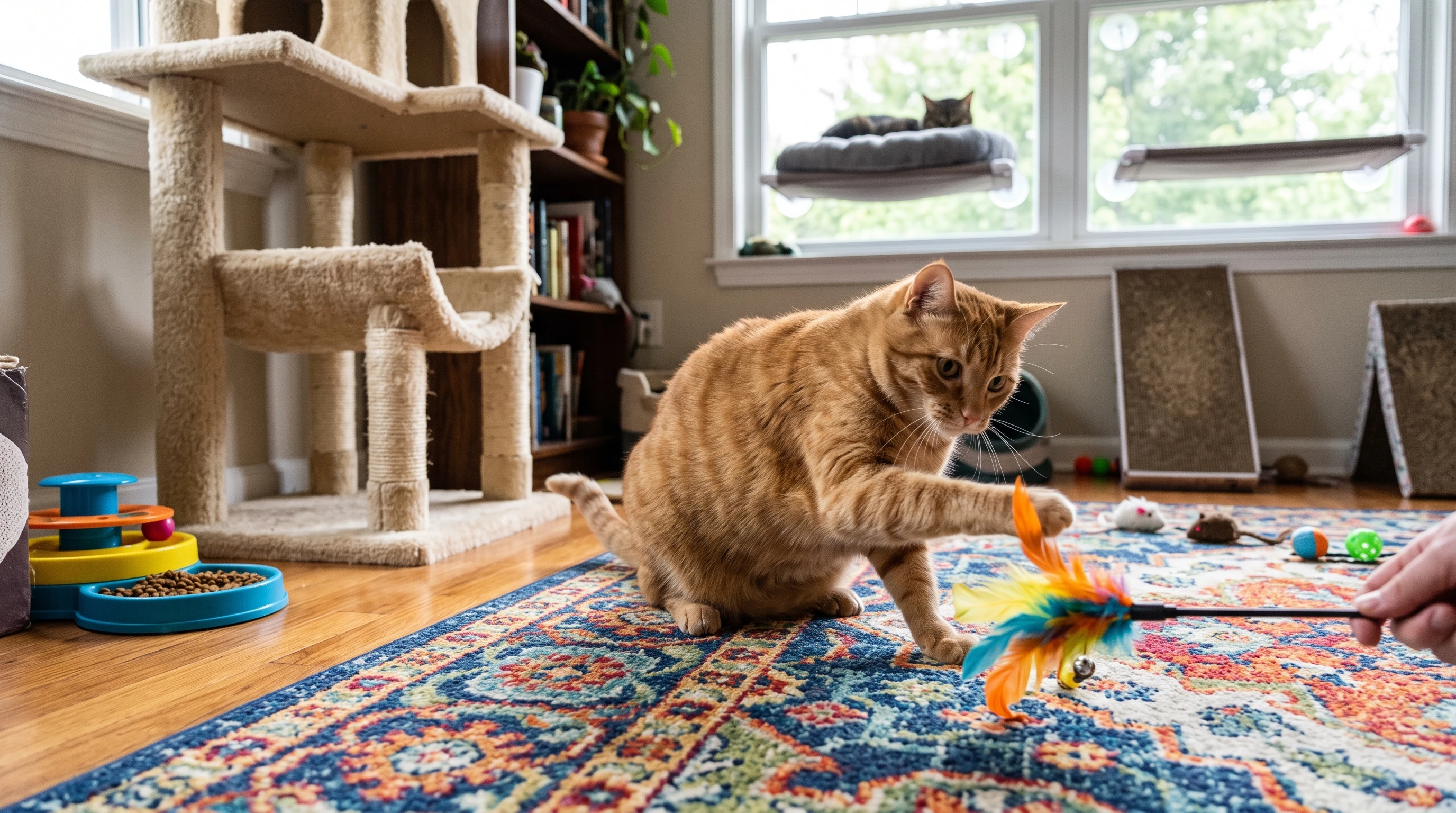
Why Exercise Is Really Important for Overweight Cats
Obesity in cats is much more common than many people realize. Carrying excess weight can increase the risk of health problems including diabetes, osteoarthritis and other mobility problems, respiratory disease, and other chronic conditions. Excess weight can also affect a cat’s quality of life and may contribute to a shorter lifespan. [1][2]
Exercise helps cats maintain muscle, stay mobile, and engage in normal physical and mental activities. However, exercise should be part of a broader weight-management plan rather than the only strategy for weight loss. Fast weight loss in cats can be dangerous and increase the risk of hepatic lipidosis, or fatty liver disease. Any activity should fit into a safe and steady weight-management plan made with a veterinarian. [1][3]
How Do I Know If My Cat Is Overweight?
Knowing if your cat has a weight problem isn’t always as simple as reading the number on the scale. Vets use a Body Condition Score (BCS), usually a 1 through 9 scale, to assess body fat. A score of 1 is severely underweight, while 9 is severely obese, and around 4–5 is considered ideal for most cats. A score of 6–7 is generally considered overweight, while 8–9 indicates obesity. [4]
When I check my own cats, I gently feel along their ribs. Ideally, the ribs should be easy to feel without a thick layer of fat, and the cat should have a visible waist when viewed from above. A veterinarian can provide the most accurate assessment because ideal body condition varies between individual cats. [4]
Why Exercise Makes Such a Difference
Exercise is good for more than just weight management. I’ve noticed my cats are more confident, curious, and lively when they get daily play. Regular movement helps maintain muscle and mobility and gives cats opportunities to engage in natural behaviors such as chasing, stalking, and pouncing.
Because cats naturally tend to be active in shorter periods throughout the day, keeping activity sessions relatively short and varied can work well. Mixing up toys and games based on your cat’s interests is an ideal setup. Over time, you’ll spot what makes your cat perk up or motivates them to move. Play isn’t just about burning calories; it also provides mental stimulation and environmental enrichment. [5]
How To Start Exercising An Overweight Cat Safely
Kicking things off with an exercise plan for an overweight cat takes a gentle approach. Start with short, manageable sessions and increase activity gradually as your cat becomes more comfortable. Some cats may happily play for 10–15 minutes, while others may initially tolerate only a few minutes at a time. [1]
If a cat is older or already has arthritis, heart disease, breathing problems, or another condition that could limit exercise, ask your veterinarian about an appropriate activity level before increasing exercise. Cats should never be pushed or chased. Any sign of pain, significant fatigue, or breathing difficulty is a cue to stop and talk to your vet.
Watch out for:
- panting
- lying down immediately or
- becoming unusually tired
- limping
- refusing to continue
- open-mouth breathing
If you notice these signs, stop the activity and let your cat rest. Open-mouth breathing or significant breathing difficulty is not normal exercise behavior in cats and warrants prompt veterinary attention, particularly if it does not quickly resolve. [6]
Fun and Practical Exercise Ideas for Overweight Cats
Making exercise enjoyable motivates both pet owners and their cats to stick with it. Here are the strategies that have worked best for me, and what I suggest:
- Interactive Toys: Toys with feathers, bells, or crinkly sounds capture my cats’ attention. I keep sessions short and positive.
- Laser Pointers: Use them in moderation and always finish with a physical toy so the cat feels victorious.
- Food Puzzles: These are great for getting cats both thinking and moving. Dry kibble or treat balls encourage batting and chasing for rewards.
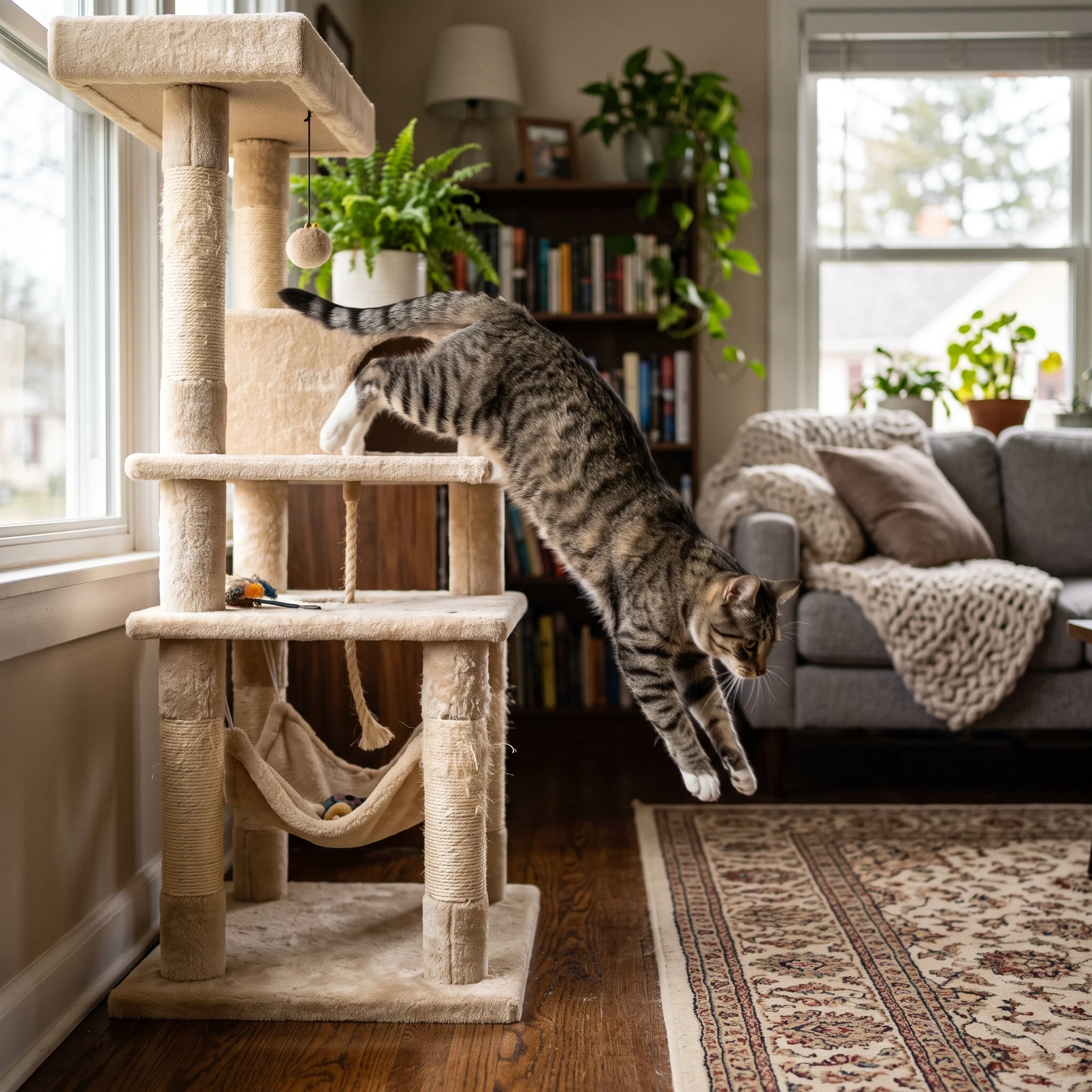
- Cat Trees, Shelves, and Window Perches: Providing vertical space inspires climbing and jumping. Even overweight cats enjoy new heights, so I encourage gentle climbs and easy jumps.
- Hide and Seek with Food: You might want to try breaking up meals and placing food in various safe spots around your home. Most cats enjoy spending time sniffing and searching, mimicking hunting behavior.
- Rotating Toys: Try switching toys every week to keep things interesting and reduce boredom.
- Play Before Meals: Scheduling play before food encourages more activity when cats are hungriest.
- Encouraging Movement: Place favorite resting spots, toys, and enrichment activities in different accessible areas of the home to naturally encourage movement. For cats with arthritis or mobility problems, keep essential resources such as food, water, and litter boxes easy to reach rather than making them travel farther.
- DIY Obstacle Courses: Setting up small boxes or tunnels lets cats crawl and maneuver at their own pace, turning movement into a game with no extra cost. Keep obstacles low and stable, especially for overweight or less mobile cats.
Read more: 20 Indoor Activities To Keep Your Cat Entertained: DIY Cat Playtime Activities
Puzzles And Challenges For Indoor Cats
How To Help Older or Less Mobile Cats Stay Active
Senior cats or those with arthritis need a softer strategy. Stick to multiple short play sessions using slow-moving wand toys or soft fabric balls. My older cat enjoys gentle games that let her bat objects while lying down. I introduce ramps or low shelves, so she doesn’t have to jump as high. Food puzzles that reward slow, thoughtful movements also work great for senior kitties. For cats struggling with mobility, you may ask your vet for new ideas or arthritis-friendly treatments to keep them comfortable and involved daily. Even stretching or simply playing with food puzzles spaced short distances away from each other can count toward gentle, low-impact exercises, and it helps them feel included and cared for.
Common Exercise Mistakes To Avoid
- Jumping into intense activity too fast. This can scare or hurt an overweight cat.
- Punishing or scolding a cat for not playing. Focus on keeping everything rewarding and pressure-free.
- Chasing a frightened cat or cornering them. That just causes stress and may lead to hiding or aggression.
- Giving too many treats after exercise. If treats are used, count them as part of the cat’s daily calorie allowance. Using affection, praise, or play as rewards can help keep extra calories in check. [1]
- Overlooking subtle signs of pain. If a cat limps, breathes loudly, or loses interest in play, check in with your vet.
- Expecting exercise to look like a dog’s workout. Cat play is different: short, stealthy bursts, plenty of hunting, and lots of breaks in between.
How Diet Works Together with Exercise
Diet control is crucial. Exercise supports overall health and activity, but dietary calorie control is usually the more important component of a structured feline weight-loss plan. Measuring food portions, controlling treats, and using a veterinarian-recommended weight-management diet can help create a safe calorie deficit while providing adequate nutrition. [1][3]
Track exactly how much your cat eats, including treats and other foods, and make adjustments with your veterinarian. Remember, cats need gradual changes. Cutting food too drastically or causing a cat to stop eating can lead to serious health problems, including hepatic lipidosis. [3]
Tracking Progress: What To Watch Out For
You can monitor your cat’s weight regularly using a pet scale or another accurate scale that can safely accommodate your cat. Weekly weigh-ins can help you notice trends, while your veterinarian can perform periodic checks of body weight, Body Condition Score, and muscle condition. [3][4]
You can also check their Body Condition Score and look for a visible waist from above, with the ribs easy to feel beneath a thin layer of fat.
According to the American Animal Hospital Association (AAHA), a healthy rate of weight loss for cats is generally around 0.5–2% of body weight per week, with the appropriate rate depending on the individual cat and veterinary plan. Losing weight too quickly can increase the risk of dangerous hepatic lipidosis. [1][3]
You might find that logging progress on a calendar or in a notebook keeps everything organized and shows when it’s time to ask the vet for an updated plan.
When To Involve A Veterinarian
Sometimes, weight problems are caused or made worse by underlying health conditions. A veterinary visit is especially important if a cat shows pain, sudden lethargy, unwillingness to walk or jump, unusual or heavy breathing, repeated vomiting, diarrhea, or other significant changes in behavior or appetite.
If a cat needs to lose a substantial amount of weight, or has an existing heart, liver, kidney, joint, or other medical condition, professional support is especially important throughout the weight-loss plan. The vet can recommend an individualized feeding and activity plan and check for underlying problems that home methods might miss.
If an overweight cat stops eating or eats substantially less than normal, contact your veterinarian promptly rather than trying to continue the weight-loss plan at home. Cats that stop eating are at risk of hepatic lipidosis, particularly when they are overweight. [3]
Frequently Asked Questions About Helping Overweight Cats Exercise
How much exercise do overweight cats need?
There isn’t one exercise schedule that works for every overweight cat. Start with short, manageable play sessions and gradually increase activity as your cat becomes comfortable. Some cats may work toward two or more 10–15 minute play sessions each day, while others may need shorter sessions spread throughout the day. [1]
Are indoor cats more likely to be overweight?
Indoor cats may have fewer opportunities for spontaneous activity, particularly in environments with limited enrichment. Providing interactive play, food puzzles, climbing opportunities, and other forms of enrichment can help encourage healthy activity levels. [1][5]
What are the top toys for encouraging big cats to move?
Wand toys with feathers, food puzzles, easy-rolling balls, and interactive or motorized toys can all encourage activity. Choose toys that match your cat’s mobility and interests, and supervise toys that contain small or detachable parts or batteries.
Is it safe to walk overweight cats on a harness?
Some cats enjoy supervised harness walks, while others find them stressful. If you want to try one, introduce the harness gradually indoors and allow your cat to become comfortable before going outside. Never force a cat to walk if she is frightened or resistant.
Can older cats really benefit from exercise?
Yes. Appropriate, gentle activity can help older cats maintain mobility, muscle function, and engagement with their environment. For cats with arthritis or other medical conditions, the type and amount of activity should be adapted to their comfort level and discussed with your veterinarian.
How quickly should cats lose weight?
A commonly recommended safe rate is about 0.5–2% of body weight per week, depending on the individual cat and veterinary plan. Faster weight loss can increase the risk of hepatic lipidosis, so gradual, monitored progress is important. [1][3]
Is play alone enough for fat loss?
Play helps support activity, muscle maintenance, and enrichment, but diet and calorie control are usually more important for achieving weight loss. The best results generally come from combining an appropriate feeding plan with safe, enjoyable activity. [1][3]
Key Facts To Always Consider
- More than half of pet cats are estimated to be overweight or obese in recent U.S. surveys, although estimates vary depending on how overweight and obesity are defined. [1]
- Very rapid weight loss puts cats at real risk.
- Indoor cats benefit from regular mental and physical enrichment to support healthy activity levels.
- Measuring food is just as crucial as playtime for weight control.
- Cats should never be starved: fasting can trigger deadly hepatic lipidosis.
Helping overweight cats become more active isn’t always easy, but it’s often the most rewarding part of being their caretaker. With time, gentle guidance, and trusted advice from your veterinarian, you can help your cat enjoy a longer, healthier, and happier life—one playful step at a time.
References
1. American Animal Hospital Association. Feline Fitness: How to Help Your Cat Lose Weight. 2024. https://www.aaha.org/resources/feline-fitness-how-to-help-your-cat-lose-weight/
2. American Animal Hospital Association. 2021 AAHA/AAFP Feline Life Stage Guidelines. 2021. https://www.aaha.org/resources/2021-aaha-aafp-feline-life-stage-guidelines/
3. American Animal Hospital Association. 2021 AAHA Nutrition and Weight Management Guidelines. 2021. https://www.aaha.org/resources/2021-aaha-nutrition-and-weight-management-guidelines/
4. American Animal Hospital Association. Screening Evaluation: 2021 AAHA Nutrition and Weight Management Guidelines. 2021. https://www.aaha.org/resources/2021-aaha-nutrition-and-weight-management-guidelines/screening-evaluation/
5. American Animal Hospital Association. 9 Things You Should Know About AAHA’s Weight Management Guidelines. https://www.aaha.org/resources/weight-management/
6. American Animal Hospital Association. Is My Pet Overweight? How to Tell and What to Do Next. 2020. https://www.aaha.org/resources/is-my-pet-overweight/
7. Cornell University College of Veterinary Medicine, Cornell Feline Health Center. Hepatic Lipidosis. https://www.vet.cornell.edu/departments-centers-and-institutes/cornell-feline-health-center/health-information/feline-health-topics/hepatic-lipidosis