
Post-operative care is really important for helping cats recover quickly and comfortably after being spayed. Surgery itself is just one part of the process. The care cats receive at home often determines how smooth their recovery will be. Most cats do very well after spaying, and with the right steps, any cat owner can help their cat stay comfortable, heal properly, and avoid complications. In this article, I’m sharing practical advice and firsthand experience to answer common concerns and help you feel confident caring for your cat after her surgery.
🐾 Purr-lease Note: FelineGo is an Amazon Associate, which means we may earn a small commission from qualifying purchases made through some of the Amazon links on this site. This comes at no extra cost to you and helps support FelineGo and our mission to create helpful content for cat parents. Thank you for supporting our little corner of the cat world! 🐱💕
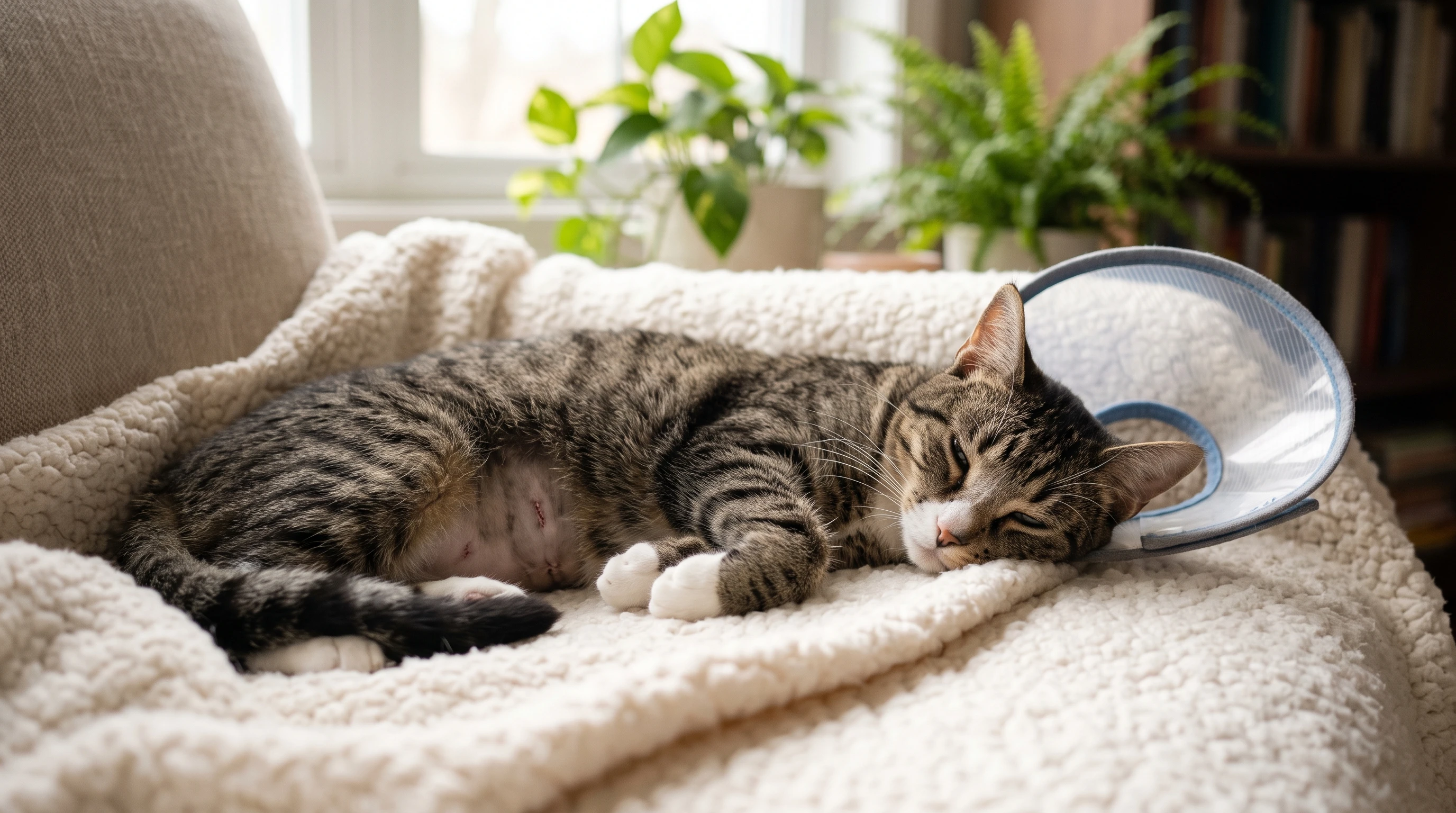
What to Expect After Your Cat Is Spayed
It’s normal for cats to act a little different just after coming home from their spay surgery. Anaesthesia can linger in the system for several hours, so don’t be surprised if your cat seems drowsy or even a bit wobbly when you first get her home. Sometimes, mild confusion or restlessness shows up but only lasts a short while.
During the first 24 hours, most cats need plenty of rest. Appetite may be reduced initially, but it should gradually return as the effects of anaesthesia wear off. Occasionally, I’ve noticed my cats sleeping much more than usual or hiding out quietly. Some tiredness can be normal after surgery, but your cat should show gradual improvement. If she has difficulty breathing, persistent vomiting, severe weakness, or seems to be getting worse rather than better, contact your veterinarian. [1][2]
For most cats, the first few days involve noticeable improvement, but the incision still needs time to heal. Activity is generally restricted for around 7–14 days, depending on the procedure and your veterinarian’s instructions. [2][3]
If you’re curious about the benefits of early spaying, you can check out our article on the benefits of early spaying in cats for more info on timing and lifelong health advantages of spaying young cats.
Some cats may act subdued and less affectionate for a few days. It isn’t unusual for a cat to want to rest in a closet or under the bed for a day after the procedure. As long as she comes out to eat and use the litter box, this quiet behavior isn’t cause for concern. Keeping an eye on her daily progress can help reassure you that she’s healing as expected.
Preparing Your Home Before Your Cat Comes Home
Setting up my home before pickup really makes the whole process easier for both me and my cat. First, I choose a quiet, safe recovery area, usually a separate room or a cozy corner that’s away from household traffic, noise, and other cats. I make sure her bedding is soft and clean. If possible, I place her food, water, and litter box within easy reach so she doesn’t have to go far when she wants to eat, drink, or use the bathroom.
Keeping other pets and young children away during the first few days helps reduce stress and prevents accidental bumps or rough play while she’s healing. I suggest using a baby gate or simply keeping the door closed to her recovery space until she’s feeling better.
I also check the space for hazards and do a walk-through to remove sharp objects, cords, or houseplants that could get chewed on or knocked over. A clean, peaceful area provides a safe place for recovery and makes it easier to monitor your cat while she heals.
Feeding and Hydration After Surgery
After surgery, follow your veterinary clinic’s instructions about when to offer food and water. Once my cat is fully awake and steady, my vet usually recommends offering a small amount of water and a small meal rather than a large meal immediately. Appetite may be reduced during the first several hours, but it should gradually return as the effects of anesthesia wear off. [1][2]
Some cats may vomit once after anesthesia, but this shouldn’t continue. Appetite should return gradually. Keeping fresh water available at all times helps encourage drinking, which is really important for a smooth recovery. For tips on getting cats to drink more water, see my water intake guide for cats.
I try to avoid making major dietary changes immediately after surgery. Keeping your cat on her usual diet can make it easier to monitor her appetite and notice potential problems during recovery. [1]
If my cat refuses to eat or drink for more than 24 hours, or if she’s having repeated vomiting or trouble swallowing, this is a good reason to call the vet and check in. Loss of appetite that continues after surgery can be a sign that something needs attention.
Restricting Activity During Recovery
It’s tempting to let my cat explore or be active right away, but restricting her movement is a big part of healing well. Too much jumping, running, or roughhousing can put stress on the incision and may cause bleeding, swelling, or delayed healing. [2][3]
For about 7–14 days after surgery, I keep my cat indoors and limit her activity, or follow the longer restriction period recommended by her veterinarian. Many cats do just fine in one quiet room. Using cat trees and high shelves is out, at least until the vet says she’s ready. [2][3]
Boredom can be an issue, so try using calm enrichment, gentle interaction, or safe toys that don’t encourage wild leaps. Avoid anything that makes your cat jump, run, or wrestle during the recovery period.
Caring for the Incision Site
Checking my cat’s incision once or twice daily helps me spot issues early. I gently look at the area, checking that the incision remains closed and appears clean. A normal incision may be slightly pink during the early healing period, but it should not become increasingly red, swollen, hot, or painful. It also should not produce a bad smell or thick discharge. [2]
Keeping the area clean and dry is really important. I avoid bathing my cat or letting her lick the incision. Licking can delay healing, introduce bacteria, and damage the incision. If a cat won’t stop licking, a recovery collar or suit may be necessary. [2][3]
Do not apply creams, ointments, disinfectants, or other products to the incision unless your veterinarian specifically recommends them. Persistent or increasing swelling, redness, discharge, bleeding, or an opening in the incision is a reason to contact the vet. [2]
#ad
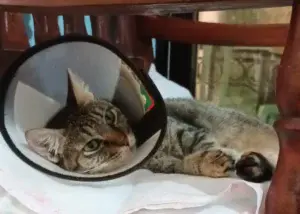
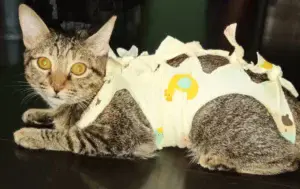
Sometimes our cats need a little extra help staying comfortable and protecting themselves while they recover. Tillie is modeling an e-collar, while Juju is showing off a recovery suit—two options that can help prevent unwanted licking or scratching. The products pictured are examples; the links below are for similar options you may want to consider.
Managing the Recovery Cone or Recovery Suit
The Elizabethan collar (often called the “cone of shame”) or a special recovery suit helps keep a cat from licking or scratching the incision. Your veterinarian may recommend keeping the protective device on during the recovery period, particularly if your cat tries to interfere with the incision. [2][3]
My tip: Give your cat enough time to get used to the collar before surgery if possible. Some cats sulk or refuse to move at first, but many adjust with time. Make sure she can eat, drink, and use her litter box while wearing it.
Avoid removing the cone unless your veterinarian says it is safe or you can supervise your cat closely. A cat that immediately licks or scratches the incision may damage it in a surprisingly short time.
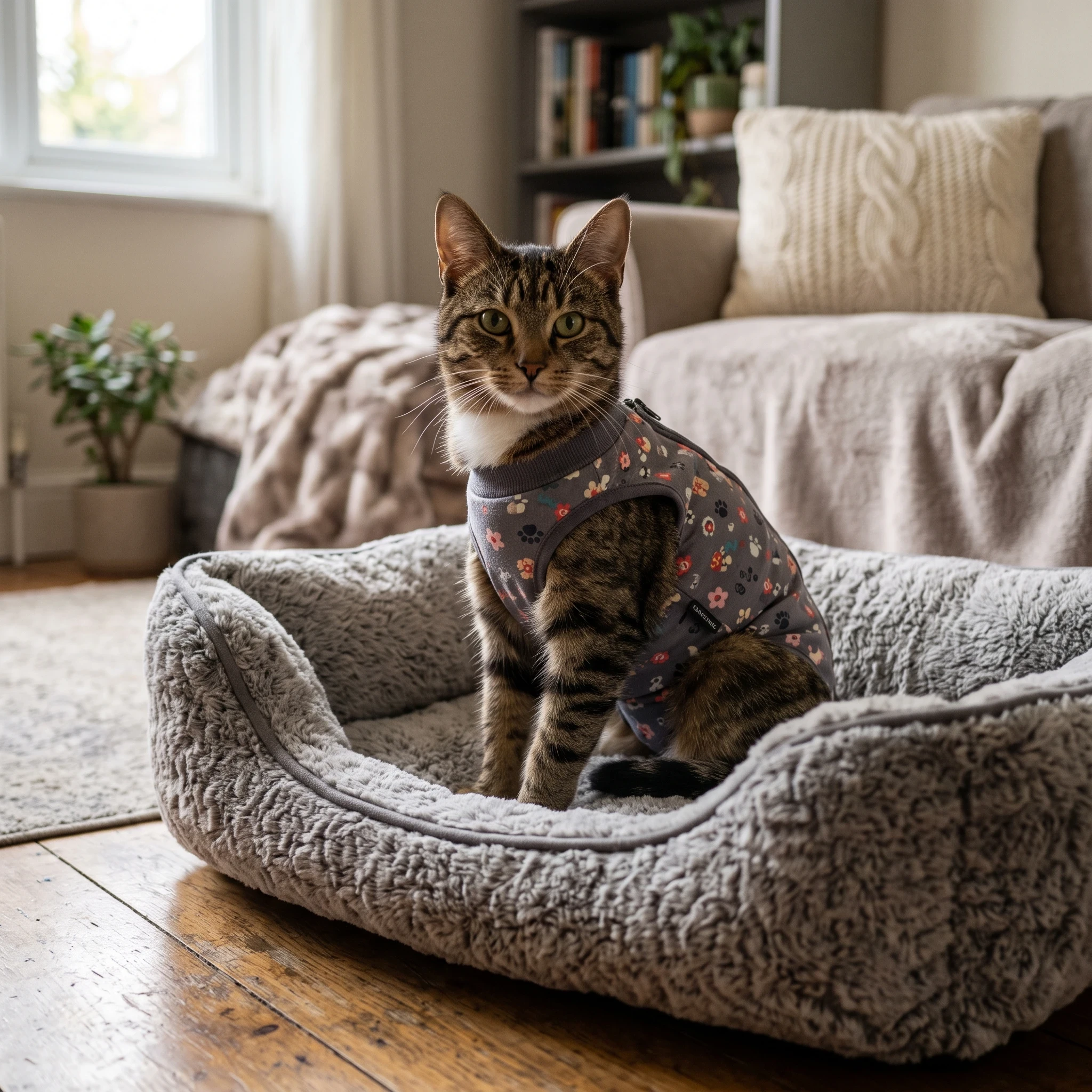
Some pet owners prefer a soft collar or a full-body recovery suit instead of a plastic collar. The important thing is that the option recommended by your veterinarian prevents your cat from reaching the surgical site and is used correctly.
Giving Medications Safely
Pain control is a key part of healing after spaying. Vets often send home pain medicine, which I always give on the schedule provided.
According to Merck Veterinary Manual, pain has been shown to delay recovery and adversely affect patient wellbeing. Although it was once an overlooked aspect of veterinary medicine, effective pain management is now recognised as an integral part of delivering optimal patient care.
Mild discomfort is expected after a spay procedure, but your cat should become progressively more comfortable over the following days. If your cat appears to be in significant pain despite medication or seems to be getting worse instead of better, contact your veterinarian.
I never give human medication unless my veterinarian specifically tells me to. Common human pain relievers such as acetaminophen (Tylenol), ibuprofen, and aspirin can be dangerous or toxic to cats when used incorrectly. [1][4]
Administering pills or liquids takes practice. I find wrapping my cat gently in a towel (like a kitty burrito) makes it easier and keeps both of us safe. Sometimes, hiding the pill in a soft treat works if the cat is a little food motivated. If you are struggling, calling the vet for tips or a demonstration helps a lot.
Missing doses, giving double doses, or guessing dosages should be avoided, and make sure to carefully follow instructions and call your vet clinic if you have any questions.
Using a medication chart or phone reminder can help owners keep track of dosing times, which is especially helpful with multiple prescriptions. If I have trouble giving the medication, my vet can sometimes provide more convenient alternatives or demonstrate techniques that make the process smoother.
Litter Box Care After Spaying
Keeping the litter box clean and easily accessible makes bathroom time more comfortable during recovery. I scoop the box at least once or twice daily and use an unscented litter.
Some veterinary clinics recommend paper-based or non-clumping litter immediately after surgery, particularly when there is concern about litter getting into or irritating a surgical site. Follow the specific litter instructions provided by your veterinarian or surgical clinic rather than assuming one type is required for every cat.
I watch for normal urination and bowel movements, taking note if my cat strains, cries, repeatedly enters the box without producing urine, or refuses to use the box. If your cat cannot urinate, this is an emergency and requires immediate veterinary attention.
Above all, a safe, accessible litter area helps prevent accidents and makes bathroom time less stressful for a cat in recovery.
Signs Your Cat Is Recovering Normally
Seeing gradual improvement is reassuring. I look for my cat having better energy each day, eating and drinking normally, and showing curiosity about her environment again. The incision should remain closed and clean, with no increasing redness, swelling, bleeding, or discharge.
- Steadily increasing appetite
- Wanting gentle interaction
- Normal use of the litter box
- Less time hiding, more lounging or playing
- Calm, steady breathing
Warning Signs That Require Veterinary Attention
Some issues mean you might need to call the vet promptly. Keep an eye out for these signs, which can signal infection or a bigger health problem:
- Excessive swelling or the incision getting bigger instead of smaller
- Persistent bleeding or thick discharge from the surgery site
- Incision appears to be opening up
- Severe or spreading redness around the incision
- Increasing lethargy, weakness, or loss of appetite
- Repeated vomiting or diarrhoea
- Not eating or drinking for more than 24 hours
- Peeing much less, straining, or not peeing at all
- Pain that appears severe or gets worse instead of better
- Open-mouth breathing, blue gums, or sudden collapse (Emergency. Get to a vet right away)
Common Recovery Questions
Here are answers to a few questions many cat owners have after their cat is spayed:
How long does recovery take?
Most cats need about 7–14 days of restricted activity after a routine spay, although the exact recovery period depends on the cat, the procedure, and the veterinarian’s instructions. Your cat may seem much better after a few days even though the incision is still healing. [2][3]
Can my cat jump on furniture while healing?
Jumping, climbing, running, and rough play are best avoided during the recovery period, commonly around 7–14 days or until your veterinarian says it is safe. Too much activity can put tension on the incision and interfere with healing. [2][3]
When can my cat have a bath?
Cats generally should not be bathed or allowed to get the incision wet while it is healing. Follow your veterinarian’s instructions, which commonly means waiting until the incision has healed and the recommended recovery period has passed. [2][3]
Is sleeping all day normal?
Extra sleep and tiredness can be expected during the first day after anesthesia and surgery. However, your cat should gradually become more alert and comfortable. Lethargy that persists, worsens, or is accompanied by other concerning signs should be discussed with your veterinarian. [1][2]
When can my cat go outside again?
Keep your cat indoors while the incision is healing and activity is restricted. Your veterinarian can tell you when it is safe to resume normal outdoor activity, which is commonly after the 7–14 day recovery period or once the incision has healed sufficiently. [2][3]
When should stitches be removed?
If your cat has non-dissolvable skin stitches or staples, your veterinarian will tell you when they need to be removed, commonly around 7–14 days after surgery. Many spay procedures use absorbable sutures beneath the skin that do not require removal. [2][3]
Helping Your Cat Recover Comfortably
Maintaining a calm routine goes a long way for a smooth recovery. I avoid loud noises, sudden changes, or extra handling unless necessary for checkups or giving medicine. Instead, I quietly check on my cat, keep her space tidy, and watch that her recovery collar stays put and incision is in good shape.
Scheduling and attending follow-up visits is also part of the process. If anything seems off, don’t hesitate to call your vet rather than wait and worry. Checking in early can prevent small concerns from becoming bigger problems. Creating a stress-free, gentle environment is one of the best ways any owner can support their cat’s successful recovery after being spayed.
Key post-operative steps include rest, monitoring for changes, following all vet instructions, and supporting your cat’s needs as she heals. Reliable, attentive care helps ensure spayed cats return to happy, playful lives as soon as possible. By keeping her comfortable, keeping an eye out for negative signs, and offering gentle care, you’ll help your cat bounce back to her usual, healthy self soon.
References
- Cornell Feline Health Center. Anesthesia. Cornell University College of Veterinary Medicine. https://www.vet.cornell.edu/departments-centers-and-institutes/cornell-feline-health-center/health-information/feline-health-topics/anesthesia
- VCA Animal Hospitals. Care of Surgical Incisions in Cats. https://vcahospitals.com/know-your-pet/care-of-surgical-incisions-in-cats
- ASPCA. Spay/Neuter Your Pet. https://www.aspca.org/pet-care/general-pet-care/spayneuter-your-pet
- Cornell University College of Veterinary Medicine. Small Animal Toxins. https://www.vet.cornell.edu/hospitals/pharmacy/consumer-clinical-care-guidelines-animals/small-animal-toxins