
Because cats are sensitive to their environment, even subtle changes around the home can affect their behavior and stress levels.Many indoor cats show signs of stress or anxiety—such as hiding, overgrooming, or restlessness. The spaces they live in play a huge role in how calm or unsettled they are. Recently, indoor plants have become popular not just for brightening rooms but also as a way to bring more life and engagement into a cat’s home. While plants are not a cure for cat anxiety, using them thoughtfully can make a home more inviting and soothing for both cats and people.
🐾 Purr-lease Note: FelineGo is an Amazon Associate, which means we may earn a small commission from qualifying purchases made through some of the Amazon links on this site. This comes at no extra cost to you and helps support FelineGo and our mission to create helpful content for cat parents. Thank you for supporting our little corner of the cat world! 🐱💕
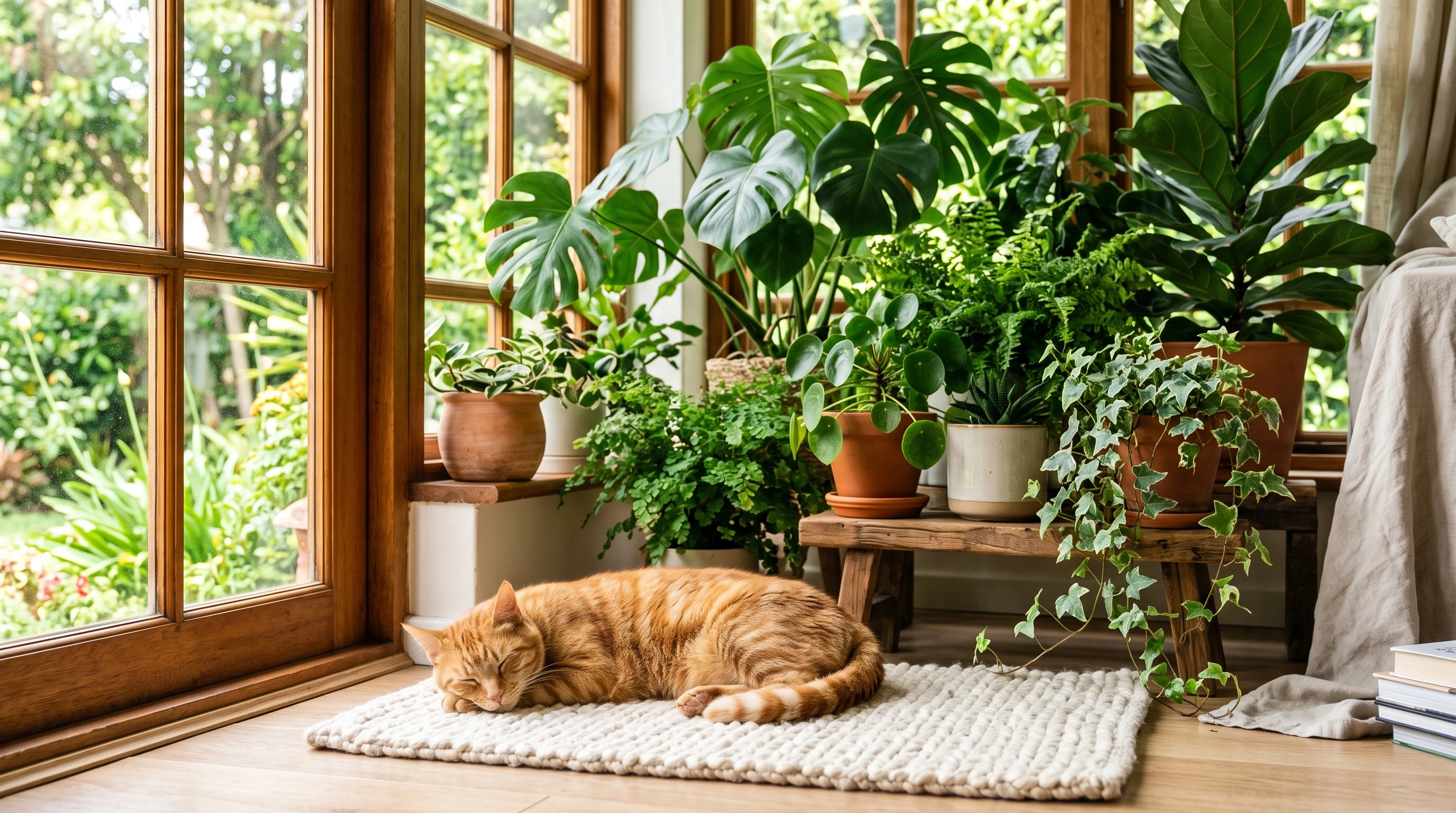
How the Indoor Environment Affects Cat Anxiety
Indoor cats depend entirely on their environment to meet their needs. When the home feels unpredictable or lacks things to do and see, stress can build up quickly. Factors like few hiding spots, not enough ways to play or scratch, or clashes with other pets all increase anxiety risk. [1,2] When there are no places to jump up high, loud noises blare from electronics, or basics like food and litter aren’t easy to reach, cats can easily feel out of control. Even small routine changes can make them uneasy. [1]
Enrichment matters because it gives cats opportunities to make choices and interact with their environment on their own terms. Cats relax when they get interesting new smells, objects to bat, textures to feel, and places where they can retreat if they want privacy. [1] Small changes—like setting out safe plants, providing new textures or creating vertical spaces—can bring a little adventure to their indoor landscape and help cats feel safe.
Related article: How To Create A Cat-friendly Home
Can Indoor Plants Reduce Cat Anxiety?
Many cat owners hope that adding indoor plants will give their cats a boost and help them feel calmer. Some plants can liven up a room, add pleasant scents and provide new textures for exploring. Cats might watch leaves sway, brush up against soft fronds, or sniff fresh dirt, and these little experiences may stave off boredom. However, any positive impact plants may have is likely to come from keeping cats engaged and giving them opportunities to express natural behaviors, rather than from a direct calming effect of the plants themselves. It’s about making daily life more engaging. [1]
At present, there is not much strong scientific evidence showing that simply adding plants treats anxiety in cats directly. Instead, plants work best as part of a bigger enrichment plan with things like toys, hiding spots, and perches. [1] For any cat that has ongoing stress, odd behavior, or major anxiety, your first move should be to call a veterinarian.
Why Cats Are Drawn to Plants
According to Cornell Feline Health Center, cats that chew on houseplants are often indoor cats with limited access to grass or other vegetation. Plant chewing may be part of normal exploration and play, although some cats may also seek out plant material. While many plants are harmless to cats, certain species can cause serious illness or even be fatal if ingested. [3]
Some cats are obsessed with indoor plants, while others barely notice them. For curious kitties, plants are a way to explore and use their nose and paws to dig into the world around them. The texture of leaves, movement of stems, and the scent of fresh dirt can all feel like an invitation to play or investigate. Some cats enjoy chewing greenery, perhaps mimicking grazing in the wild, while others like batting at leaves or simply watching plants do their thing. The stimulation of new colors, scents, and shapes breaks up otherwise dull surroundings.
Whether a cat goes for plants or ignores them depends a lot on age, personality, and energy. Some cats seem born to hunt and explore; others are more laid-back. It’s smart to see what your cat actually enjoys to figure out whether plants are a good match for them.
Potential Benefits of Cat-friendly Plants
Sensory Enrichment
Having houseplants can add new textures, smells, and sights to your space. The soft fronds of a Boston fern or the quirky, arching leaves of a spider plant give cats something different to investigate or just rest near. These little changes spark curiosity, especially in cats that get bored easily.
Encouraging Exploration
Strategically placing plants can encourage cats to move about and explore. They may hop up on shelves for a better view, nose around planters, or weave between greenery near a window. This kind of mini adventure can provide opportunities for movement and exploration indoors. [1]
Supporting Natural Behaviors
Some plants, like wheatgrass or oat grass, are safe for cats to chew on, which can give them a natural outlet. [4] Gently tapping swaying vines, sniffing new leaves, or checking out interesting smells is all part of a cat’s healthy play and investigation routine indoors. [3,4]
Making the Home More Engaging
For cats who never go outside, live plants are a great way to change up plain walls, floors, and furniture. They keep the environment fresher and more interesting, which can be helpful in staving off boredom and restlessness.
Adding More Layers of Enrichment
Plants work best when teamed up with scratching posts, cat trees, cozy hideaways, toys, and puzzle feeders. By pulling together a range of activities and places to relax, you can create a richer, more inviting space for your kitty to thrive. [1]
Related article: 20 Indoor Activities To Keep Your Cat Entertained: DIY Cat Playtime Activities
Can Cat Grass Help With Anxiety?
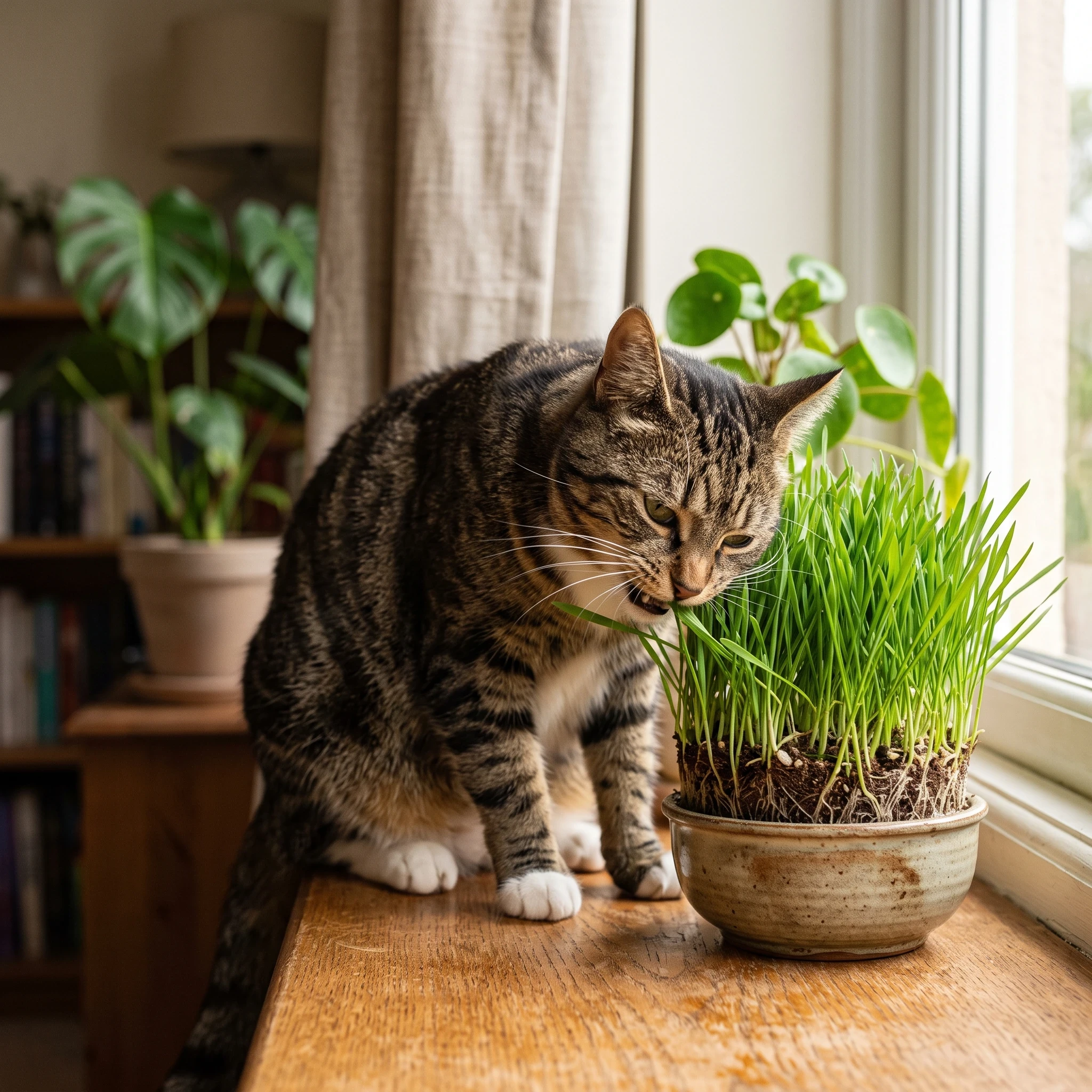
Cat grass—usually wheatgrass, oat, barley, or rye grown indoors—gives cats a safe way to chew on greens without the danger of toxic plants. While cat grass doesn’t directly treat anxiety, having a patch to nibble can provide an additional opportunity for natural plant-eating behavior and enrichment. [4] In my experience, plenty of cats happily graze on cat grass, which can become a favorite activity. Chewing grass is part of a normal plant-eating behavior for some cats, especially when they’re inside all day. [4]
#ad
Want to grow some fresh cat grass at home? If you already have your own pot and growing setup, The Cat Ladies organic cat grass seeds are a simple option to get started. Prefer something more convenient? The Cat Ladies organic cat grass kit provides an all-in-one option for growing your own little patch of cat grass.
Cat Safe Indoor Plants Worth Trying
- Cat grass (wheat, oat, barley) – Great for chewing and sensory enrichment. [4]
You can grow cat grass in two common ways: Soil: Plant cat-safe wheat, oat, or barley seeds in a clean container with drainage holes. Keep the soil slightly moist while the seeds germinate and avoid overwatering. Once established, provide adequate light and continue watering as needed.
Hydroponically: Cat grass can also be grown without traditional soil using a hydroponic growing kit. The seeds are typically sprouted and grown with access to water and, depending on the system, a growing medium. Follow the kit’s instructions and keep the growing setup clean to discourage mold and bacterial growth.
- Spider plant (Chlorophytum comosum) – Its long leaves can provide something interesting for cats to bat or sniff. Generally considered non-toxic, although eating large amounts may cause mild stomach upset. [5]
- Boston fern (Nephrolepis exaltata) – Its soft, textured fronds can provide an interesting sensory experience. Make sure you have the correct species, as asparagus fern is toxic to cats. [6]
- Areca palm (Dypsis lutescens) – Its tall foliage can add visual interest and greenery to a cat’s environment. Because not all palms are safe for cats, always verify the exact species before bringing one home. [7]
- Calathea (Calathea spp.) – Its bold patterns and textured leaves can add visual and sensory variety to an indoor space. Generally considered non-toxic to cats. [8]
- African violet (Saintpaulia spp.) – A compact, colorful option that can add visual interest without taking up much space. Generally considered non-toxic to cats. If your cat likes digging in pots, use pet-safe potting materials and keep fertilizers or other plant products out of reach. [9]
Please always double-check scientific names before getting new plants for your cat’s zone. Common names aren’t enough, since a single plant name can refer to various species—some safe, some dangerous. [5,10]
Plants That Are Harmful to Cats
Some common houseplants can be toxic to cats. The ASPCA has a comprehensive list of plants that are toxic and non-toxic to cats. [10]
True lilies and daylilies are particularly dangerous and can cause potentially fatal kidney injury, while plants such as pothos, dieffenbachia, peace lilies, and philodendrons can cause painful mouth irritation and gastrointestinal upset. Sago palms are also highly toxic and can cause severe illness, including liver failure. [10,11] If you ever think your cat might have chewed or swallowed a toxic plant, call your vet or an animal poison hotline right away. Acting quickly matters. [11] When it comes to plant safety for pets, don’t take chances—always check before bringing a new plant into your home.
How to Use Indoor Plants for Cat Enrichment
Setting up a spot for your cat with a collection of safe plants is a simple way to make the home more fun. Try arranging a few pots on steady shelves, a wide window ledge, or in a cozy corner where your cat likes to nap. Mix plants with old favorites like scratching posts, tunnels, or puzzle feeders for a cat-friendly hangout. Don’t pack too many pots together—keep a clear path so your cat can weave through or nap nearby. Rotate your plant choices from time to time to keep things new and engaging.
Always offer different options. Giving your cat the ability to choose between lying in the sun, smelling a fresh plant, or batting a leaf goes a long way toward making them feel at home. [1]
Related article: Puzzles And Challenges For Indoor Cats
How to Keep Cats Safe Around Indoor Plants
Stick only with plants well-known to be safe for cats, bought from a trustworthy source. Avoid plants treated with pesticides or other products that could leave harmful residues, and keep fertilizers and other plant-care products out of reach. If your cat takes too much interest in chewing, move the plant out of reach and offer a safer alternative like cat grass. If soil digging is an issue, try covering the surface with large, securely placed stones or a mesh barrier that your cat cannot swallow to discourage curious paws.
What To Do If Your Cat Already Seems Anxious
If your cat is showing serious signs of anxiety—such as hiding all the time, sudden aggression, or not eating—environmental tweaks with plants won’t be enough alone. Anxiety sometimes ties back to medical issues, pain, or past trauma. Schedule a vet visit first to look for underlying causes. Treatment may include medication or behavioral therapy, alongside environmental upgrades like added hiding spots, plants, and toys. [1,2]
Other Ways to Give Cats a Calm Environment
Creating a soothing space for an anxious cat takes more than plants. Consider adding lots of quiet hideouts, comfy beds, scratching places, high perches, and toys that invite gentle play. Keeping your routine steady and offering regular playtime really helps. If you have multiple cats, aim to give each their own set of essentials to keep things peaceful. [1,2] Some cat owners also like pheromone diffusers, which may help some cats feel safer. [1,2] There is no single fix—it’s about layering small upgrades to make your cat’s world more comfortable.
Frequently Asked Questions
Can plants help make cats less anxious?
Plants can bring a refreshing change to indoor areas and give cats more chances to explore and play, possibly easing boredom and mild anxiety. But they aren’t a direct fix for severe cases. [1]
What houseplants are good for cats?
Cat grass and non-toxic plants such as spider plants, Boston ferns, and calatheas can add a little sensory variety to your cat’s surroundings, giving them something new to sniff, explore, or investigate. Just remember that every cat is different—some will happily inspect your plants, while others may barely notice them. [1,4-8]
Is cat grass a good idea for nervous cats?
Cat grass supplies a safe option for chewing, foraging, and play. It’s a great add-on to enrichment routines, but not a standalone remedy for major anxiety. [4]
Which plants are safe for indoor cats?
Spider plant, cat grass, Boston fern, calathea, areca palm, and African violet are all popular safe species. [5-9] Always check using the scientific name to avoid confusion.
Which plants should cat lovers skip?
Steer clear of lilies, pothos, dieffenbachia, peace lily, philodendron, and sago palm. These are all toxic to cats and can cause serious harm. [10,11]
Should cats have plants in their favorite rooms?
If you pick truly safe varieties, keep things neat, and prevent over-chewing, adding plants is a fun way to give your cat new things to check out.
Do plants help with boredom for indoor cats?
Plants provide texture, scent, and even new spots to explore. They work best as part of a broader enrichment plan with toys, climbs, and puzzles. [1]
Why does my cat keep eating all the houseplants?
Your cat may enjoy the fun or tasting the leaves, or they just want something to chew. Planting safe cat grass and redirecting your kitty is the best bet for protecting both your feline and your plants. [3,4]
Indoor plants are not a magic cure for cat anxiety, but using them thoughtfully as part of a mix of fun, play, and comfort can make daily life brighter for cats and their owners. The right plants, set up with care, give more chances for play, exploring, and calm downtime—all of which help cats feel safe, happy, and right at home.
References
[1] Ellis SLH, Rodan I, Carney HC, et al. AAFP and ISFM Feline Environmental Needs Guidelines. Journal of Feline Medicine and Surgery. 2013;15(3):219–230. doi:10.1177/1098612X13477537.
[2] Rodan I, Ramos D, Carney H, et al. 2024 AAFP intercat tension guidelines: recognition, prevention and management. Journal of Feline Medicine and Surgery. 2024. doi:10.1177/1098612X241263465.
[3] Cornell University College of Veterinary Medicine, Cornell Feline Health Center. Feline Behavior Problems: Destructive Behavior — Houseplant Chewing.
[4] Hart BL, Hart LA, Thigpen AP, Willits NH. Characteristics of Plant Eating in Domestic Cats. Animals. 2021;11(7):1853. doi:10.3390/ani11071853.
[5] ASPCA. Toxic and Non-toxic Plants: Spider Plant (Chlorophytum comosum).
[6] ASPCA. Toxic and Non-toxic Plants: Boston Fern (Nephrolepis exaltata).
[7] ASPCA. Toxic and Non-toxic Plants: Areca Palm (Dypsis lutescens).
[8] ASPCA. Toxic and Non-toxic Plants: Calathea.
[9] ASPCA. Toxic and Non-toxic Plants: African Violet (Saintpaulia spp.).
[10] ASPCA. Toxic and Non-toxic Plants database.
[11] Merck Veterinary Manual. Houseplants and Ornamentals Toxic to Animals. Updated September 2024.